Here’s what Trump is looking most forward to at the NATO summit.
President Donald Trump says Turkish President Recep Tayyip Erdoğan is one of the biggest reasons he is attending this week’s NATO summit, highlighting a relationship that could play an increasingly important role in America’s foreign policy.
Speaking to reporters ahead of the summit in Ankara, Turkey, Trump described Erdoğan as “a friend” and “a respected leader,” while indicating that closer military cooperation between the United States and Turkey may be under consideration.
The comments come as NATO faces growing security challenges from Russia, continued instability across the Middle East, and heightened tensions in the Black Sea region. While disagreements between Washington and Ankara remain, many defense experts believe Turkey’s strategic importance has become too significant for the alliance to overlook.
Trump Signals Closer Cooperation With Turkey
Trump’s remarks mark a notable shift in U.S.-Turkey relations after several years of strained diplomacy.
The NATO summit, which begins Tuesday in Ankara, is expected to focus heavily on collective defense, military spending, support for Ukraine, and strengthening the alliance’s readiness against emerging global threats.
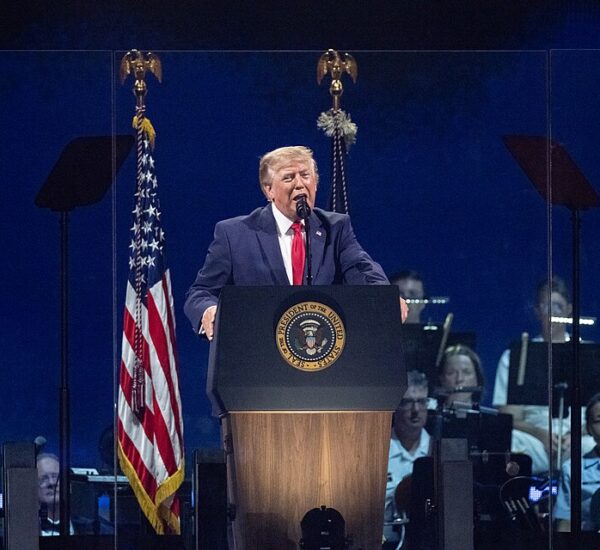
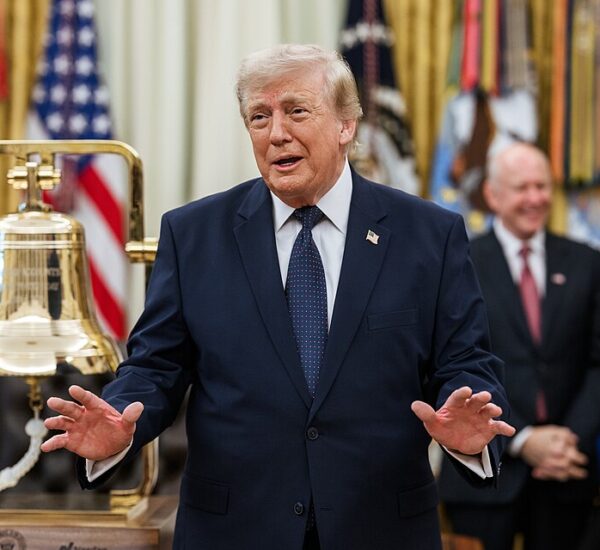
Before departing for the summit, Trump made clear that Erdoğan was a major reason for his attendance.
“I’m going because of Erdoğan,” Trump told reporters, adding that he considers the Turkish president both a friend and a respected leader.
The White House also confirmed the two leaders are expected to hold a bilateral meeting during the summit, where defense cooperation and regional security are likely to be among the top topics discussed.
From Tensions To Renewed Partnership
Only a few years ago, relations between Washington and Ankara were far more strained.
In 2019, Turkey purchased Russia’s S-400 air defense system despite repeated objections from the United States and other NATO allies. The move prompted Washington to remove Turkey from the multinational F-35 fighter jet program, arguing that operating the Russian-made missile system alongside America’s most advanced stealth aircraft could expose sensitive military technology.
The following year, the United States imposed sanctions on Turkey’s defense procurement agency, further complicating relations between the longtime allies.
Although those disputes have not disappeared, changing geopolitical realities have reshaped the conversation.
Russia’s continued war against Ukraine, escalating tensions throughout the Middle East, and growing competition in the Black Sea have increased Turkey’s strategic value within NATO.
Why Turkey Matters To NATO
Turkey occupies one of the most strategically important locations in the world.
The country controls the Bosporus and Dardanelles straits, the only maritime routes connecting the Black Sea to the Mediterranean. It also borders Syria, Iraq, and Iran, placing it at the center of several of the world’s most volatile regions.
In addition, Turkey maintains NATO’s second-largest military after the United States and has invested heavily in expanding its domestic defense industry.
Former U.S. Ambassador to Turkey James Jeffrey, who also served as Trump’s special representative for Syria during his first administration, believes those factors make Turkey indispensable.
“Turkey is crucial to the Trump administration,” Jeffrey told Fox News Digital.
According to Jeffrey, Trump’s relationship with Erdoğan is genuine, but America’s national security interests extend well beyond personal diplomacy.
He described Turkey as a critical partner because of its military strength, geographic position, and ability to influence events across Europe, the Middle East, and Central Asia.
Personal Diplomacy Meets Strategic Interests
The White House echoed Trump’s positive assessment of Erdoğan.
White House spokesperson Anna Kelly said Trump has developed a strong working relationship with the Turkish leader and emphasized that both presidents plan to meet privately during the NATO summit.
Jeffrey believes the personal relationship between the two leaders helps facilitate dialogue but says broader strategic interests are driving closer cooperation.
He noted that both leaders are known for decisive leadership styles, making communication more direct during periods of international uncertainty.
At the same time, Jeffrey argued that the United States has compelling national security reasons to strengthen ties with Turkey regardless of who occupies the White House.
NATO Returns To Collective Defense
Defense analysts say NATO has entered a new era.
After spending decades focused primarily on counterterrorism missions following the September 11 attacks, the alliance is once again prioritizing traditional military deterrence in response to Russia’s actions in Europe.
Can Kasapoğlu, a senior fellow at the Hudson Institute, said NATO members capable of providing significant military strength are becoming increasingly valuable.
“When the alliance is back to its Cold War default, the question of what you are bringing to the table is getting more important,” Kasapoğlu said.
The countries contributing real military strength to NATO are likely to receive preferred treatment.
That shift aligns with Trump’s long-standing calls for NATO members to increase defense spending.
For years, Trump argued that many European allies relied too heavily on American taxpayers for their security. In response to growing threats, NATO members have now committed to working toward defense spending equal to 5% of their gross domestic product.
Turkey’s Role In Ukraine
Analysts also point to Turkey’s contributions since Russia invaded Ukraine.
According to Jeffrey, Turkey helped limit Russia’s naval operations by enforcing the 1936 Montreux Convention, which restricts the movement of certain warships through the Turkish Straits during wartime.
Turkey also supplied Bayraktar drones to Ukraine early in the conflict and has served as an intermediary during negotiations between Kyiv and Moscow.
“You can’t contain Russia in the Black Sea without Turkey,” Jeffrey said.
Those actions have elevated Turkey’s standing inside NATO despite continuing disagreements over other issues.
Syria Changed The Equation
Events in Syria have also brought Washington and Ankara closer together.
Jeffrey argued that Turkey played an important role in supporting opposition groups that eventually contributed to the collapse of Bashar al-Assad’s government, weakening both Iran’s and Russia’s influence in the region.
As instability continues across the Middle East, analysts believe Turkey’s geographic position and military capabilities make it a valuable partner in addressing future regional security challenges.
Critics Remain Concerned
Despite the growing strategic partnership, Turkey continues to face criticism from lawmakers and foreign policy experts.
One major concern remains Turkey’s continued ownership of the Russian-made S-400 missile defense system.
Critics also point to Ankara’s efforts to strengthen relationships with organizations such as BRICS and the Shanghai Cooperation Organization while remaining a NATO member.
Another point of disagreement involves Erdoğan’s public support for Hamas following the October 7, 2023, attacks against Israel.
Several U.S. lawmakers argue those positions complicate efforts to deepen military cooperation between Washington and Ankara.
Congress Could Determine The Next Step
Some analysts believe Congress remains the biggest obstacle to expanding U.S.-Turkey defense ties.
Sinan Ciddi, a senior fellow at the Foundation for Defense of Democracies, recently argued that congressional approval will likely determine whether additional military agreements move forward.
Ciddi said the biggest obstacle to President Erdoğan’s goals is, in large part, the United States Congress.
The Trump administration has already faced questions from lawmakers regarding a proposed $700 million military sale to Turkey.
Representative Gregory Meeks, the ranking Democrat on the House Foreign Affairs Committee, criticized the administration for moving ahead with the sale without fully addressing concerns surrounding Turkey’s continued operation of the S-400 missile system.
The F-35 Debate Continues
Jeffrey believes there is an important distinction between selling military equipment to Turkey and restoring the country to the F-35 fighter program.
He argued that supplying F110 fighter engines presents a much smaller technical challenge than allowing Turkey to operate America’s fifth-generation stealth aircraft while simultaneously maintaining the Russian-made S-400 system.
According to Jeffrey, the concern is not simply political.
Defense officials worry that operating both systems together could expose highly sensitive American military technology.
As a result, restoring Turkey to the F-35 program remains far more complicated than approving other defense sales.
What Happens Next?
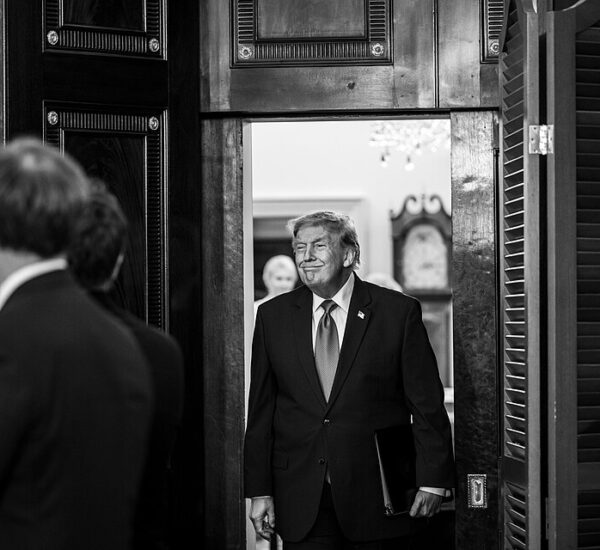
Trump’s upcoming meeting with Erdoğan is expected to be one of the most closely watched discussions at the NATO summit.
The talks could shape future cooperation on regional security, defense technology, military sales, counterterrorism efforts, and NATO’s long-term strategy toward Russia and the Middle East.
While disagreements remain over issues including the S-400 missile system and Turkey’s broader foreign policy, many analysts agree that Ankara’s strategic importance has grown significantly as global security challenges continue to evolve.
Whether Congress ultimately approves additional defense agreements remains uncertain, but Trump’s remarks underscore that Turkey has become an increasingly important partner as NATO adapts to a rapidly changing security environment.
As the summit unfolds, decisions made by allied leaders could influence not only U.S.-Turkey relations but also the future direction of NATO during one of the alliance’s most challenging periods in decades.