This was surprising to hear.
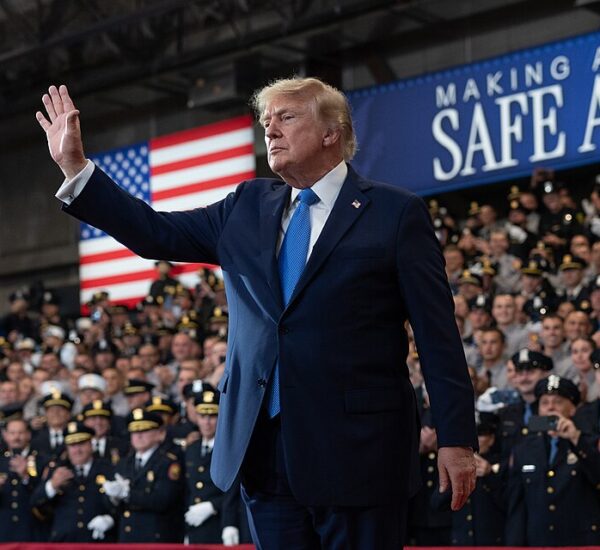
President Donald Trump has revealed surprising new details about a previously undisclosed effort by the United States during the recent Iran protests—raising fresh questions about what actions were taken behind the scenes.
In a phone interview with Fox News correspondent Trey Yingst, Trump stated that his administration attempted to send weapons through Kurdish groups with the intention of supporting anti-regime forces inside Iran.
However, according to the president, those weapons may not have reached their intended targets.
“We sent a lot of weapons through the Kurds,” Trump said, suggesting that the arms may have been intercepted or retained before reaching protesters.
Kurdish Groups Push Back On Trump’s Claim
Not all parties agree with the president’s account. Representatives tied to Kurdish organizations in the region have denied receiving any such shipments.
Hejar Berenji, a representative of the Democratic Party of Iranian Kurdistan (PDKI), responded to the claim by saying, “We did not receive any weapons during the time of the demonstrations.”
The conflicting statements have created uncertainty about what actually happened—and whether U.S. efforts were successful.
Iran Protests Spark Global Attention
The protests in Iran, which began in late 2025, were fueled by economic hardship, rising prices, and a rapidly declining currency. Demonstrators across the country voiced frustration with the ruling regime, leading to one of the largest waves of unrest in years.
President Trump publicly supported the Iranian people throughout the crisis, encouraging peaceful resistance and signaling that the United States was closely monitoring events.
In early January, Trump warned Iran’s leadership that harming peaceful protesters would have serious consequences.
Days later, he issued another strong message urging demonstrators to continue pushing for change, indicating that assistance could be forthcoming.
Reports Reveal High Casualty Numbers
Reports about the government’s response to the protests have been deeply concerning. The Human Rights Activists News Agency estimated that thousands of individuals lost their lives during the crackdown.
Other reports suggest the number could be significantly higher, though exact figures remain difficult to verify.
President Trump indicated in his interview that the true scale of the violence may exceed widely reported estimates.
Tensions Rise Over Strait of Hormuz
At the same time, tensions between the United States and Iran have escalated over the Strait of Hormuz—a vital shipping route responsible for a significant portion of the world’s oil supply.
President Trump made it clear that keeping the strait open is a top priority, warning that failure to do so could lead to serious consequences.
His remarks underscore growing concerns about global energy security and stability in the region.
Ongoing Negotiations With Iran
Despite rising tensions, diplomatic talks between the United States and Iran are still underway.
According to Trump, negotiations are active, though progress has been uneven. At one point, a potential agreement appeared close, but delays raised concerns about Iran’s level of commitment.
U.S. officials continue to pursue a resolution while maintaining pressure on the Iranian government.
A Critical Moment In U.S.-Iran Relations
As new details continue to emerge, the situation remains highly fluid. The combination of protest unrest, geopolitical tension, and ongoing negotiations has created a pivotal moment in U.S.-Iran relations.
For many Americans, the key question remains: what really happened behind the scenes—and what comes next?
One thing is clear—President Trump is signaling a strategy that blends strength, negotiation, and support for those seeking change inside Iran.