
Democrat Socialists Get More Support
Former Democratic presidential candidate Marianne Williamson is pushing back against criticism of Democrats associated with the Democratic Socialists of America, arguing that they should not automatically be characterized as opponents of capitalism or the U.S. Constitution.
Williamson made the remarks Monday during an appearance on Newsmax, where the discussion turned to socialism, the direction of the Democratic Party and the growing political influence of candidates associated with the DSA.
While Williamson acknowledged that some elements of the political left hold views that many Americans would consider extreme, she argued that voters should distinguish between radical activists and candidates actually seeking public office.
She also said Washington should devote more attention to an issue affecting millions of households: the rising financial pressure of everyday life.
Williamson Says Americans Are Struggling With Everyday Costs
Williamson argued that economic concerns should remain at the center of the national political conversation.
She specifically pointed to the cost of groceries, rent and medical care as examples of the financial burdens facing ordinary Americans.
For many households, those expenses have become major political concerns as voters evaluate which party offers the better approach to the economy, inflation, healthcare and the cost of living.
Williamson suggested that politicians risk losing sight of those bread-and-butter issues when political debates become dominated by ideological labels.
Her comments also highlight a larger disagreement inside the Democratic Party over how far the party should move toward the policies promoted by its progressive and democratic socialist wings.
Williamson Pushes Back on Claims About DSA Candidates
A major issue in the discussion was whether candidates associated with the Democratic Socialists of America should be considered anti-capitalist.
Williamson rejected such a broad characterization.
She argued that many DSA-linked candidates are campaigning primarily on increased economic regulation rather than calling for the complete elimination of America’s capitalist system.
According to Williamson, those candidates believe excessive deregulation has contributed to an economic system that is failing to provide enough financial security for working Americans.
That argument remains controversial.
Critics of democratic socialism have repeatedly warned that expanding government regulation, spending and control over portions of the economy could weaken free enterprise, increase the power of Washington and move the country further away from traditional market-based principles.
Supporters of progressive economic policies counter that stronger government intervention is necessary to make healthcare, housing and other necessities more affordable.
The disagreement represents one of the biggest economic debates in American politics: How large a role should the federal government play in the economy?
Hasan Piker Becomes Part of the Democratic Socialism Debate
Williamson also addressed efforts to connect controversial political streamer Hasan Piker with the broader Democratic Party.
Piker has faced intense criticism over inflammatory statements made during his career, including a past remark concerning the September 11 terrorist attacks.
He later said the comment was inappropriate and maintained that he was criticizing U.S. foreign policy in the Middle East rather than attempting to justify the terrorist attacks.
Williamson argued that Piker should not be treated as a spokesman for Democrats because he is neither an elected Democratic official nor a candidate for office.
She described him as representing a much more radical section of the political left and said she disagrees with some of his views.
At the same time, Williamson acknowledged Piker’s connections to progressive political circles, noting that he has appeared on the campaign trail alongside a number of DSA-linked candidates.
That association has helped fuel questions about whether controversial voices on the far left could become a political liability for Democrats.
Williamson Admits Parts of the DSA Platform Go Too Far
Williamson did not defend every position associated with the Democratic Socialists of America.
In fact, she said portions of the DSA platform are “absolutely outrageous.”
Her argument, however, was that individual candidates should be evaluated based on the policies they personally support rather than every position contained in a political organization’s broader platform.
Williamson specifically rejected claims that DSA-linked candidates are campaigning to dismantle America’s constitutional system.
“The candidates are not calling to get rid of the U.S. Constitution,” Williamson said.
Her comments draw an important distinction between the positions of individual candidates and the ideology or platform of organizations with which those candidates may be associated.
Socialism vs. Capitalism Remains a Major Political Divide
The controversy touches on a much larger question facing American voters.
For generations, capitalism, private property and free enterprise have played central roles in the U.S. economy. Democratic socialism generally advocates a substantially larger government role in certain areas of economic life, although candidates who use or are associated with the label can differ considerably in the policies they support.
The debate becomes especially significant when proposals involve healthcare, taxation, business regulation, government spending and social programs.
Williamson argued that progressive policies such as universal healthcare and expanded economic opportunity do not necessarily require abandoning capitalism.
Instead, she suggested that such policies could exist alongside a capitalist system that provides Americans with greater opportunities to succeed.
Opponents of that approach may question whether expanding federal programs and regulation would eventually produce higher taxes, additional government bureaucracy or greater federal control over the economy.
Those competing views ensure that capitalism versus socialism will remain an important political issue as voters consider the future direction of both major parties.
Democratic Party Faces Questions About Its Progressive Wing
The dispute also underscores an ongoing challenge for Democratic leaders.
The party includes traditional liberals, moderates, progressives and democratic socialists, and those groups do not always agree on the proper role of government or the best approach to economic policy.
Williamson’s comments suggest she believes Democrats can embrace certain progressive economic proposals without adopting the most radical positions associated with the political left.
She also argued that successful political movements may ultimately need to recognize good ideas from outside their own ideological camps.
For voters, however, the fundamental questions remain.
How much power should Washington have over the economy? How far should government go in attempting to reduce healthcare, housing and food costs? And where should the line be drawn between regulating capitalism and replacing parts of the free-market system?
Those questions are likely to remain at the center of America’s political debate as Democrats determine how closely their future should be tied to the country’s growing democratic socialist movement.

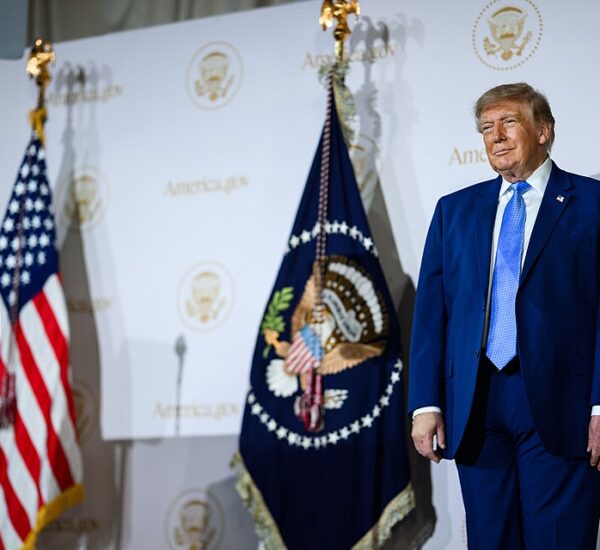
“Trump’s Approval Drops Over Iran Conflict, Can He Bounce Back?”
since the “polls” have proven to be faked with a leaning towards the extremist left, there’s no “bouncing” needed. if people will just do their own research, they will see that the REAL PROBLEMS with this country are TIED DIRECTLY to the DEMOCRATS and more specifically the anti-American, anti-Constitution, t r e a s o n i s t DSA organization.