Republican’s Warning To Trump
Sen. Rick Scott, R-Fla., is urging President Donald Trump to remain cautious as he holds high-level diplomatic talks with Chinese President Xi Jinping and Russian President Vladimir Putin. While Scott supports the president’s efforts to address international conflicts, he believes Washington must be prepared for the possibility that America’s two major adversaries will fail to honor their commitments.
During a Wednesday appearance on Newsmax’s Rob Schmitt Tonight, Scott expressed serious doubts about whether either foreign leader could be trusted to follow through on agreements involving trade, national security, and international stability.
The Florida Republican argued that both China and Russia have established records that should make American officials skeptical of promises made during diplomatic negotiations.
Scott specifically criticized China’s handling of previous trade agreements, claiming Beijing has repeatedly failed to meet its obligations. Nevertheless, he expressed confidence that Trump would continue defending American interests throughout the negotiations.
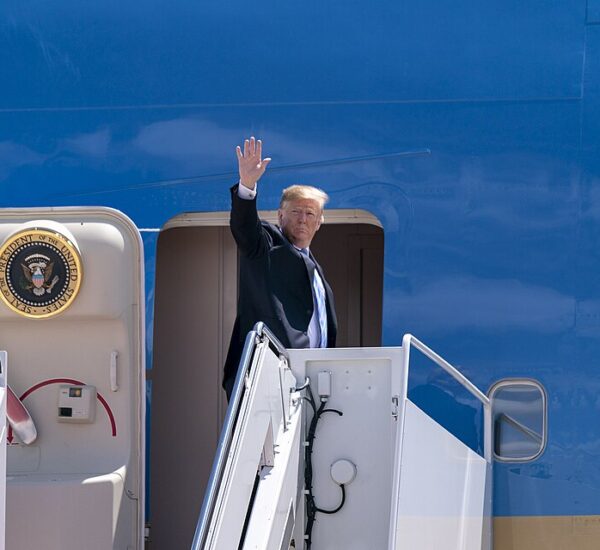
The senator’s warning came as Trump arrived in China on Wednesday for discussions with Xi and Putin. The meetings are expected to address several major international concerns, including nuclear weapons, the ongoing war in Ukraine, and broader security challenges facing the United States and its allies.
Despite his concerns about the intentions of the Chinese and Russian governments, Scott praised Trump’s decision to engage directly with both leaders.
Drawing on his own background in business, Scott explained that successful negotiations often require sitting down with individuals who have conflicting interests. He suggested that diplomatic engagement remains worthwhile even when the parties involved have significant disagreements.
However, Scott made clear that he believes any potential agreements must be approached with caution.
Among his primary concerns is China’s role in the international fentanyl trade, the loss of American manufacturing jobs, and allegations of Chinese espionage targeting the United States.
Scott also emphasized the importance of ending Russia’s military operations in Ukraine, where the continuing conflict has resulted in substantial casualties and widespread destruction.
Beyond those issues, the senator highlighted two additional national security priorities: preventing Iran from obtaining nuclear weapons and maintaining American commitments to Taiwan.
Scott argued that diplomatic negotiations alone would not be sufficient to address these threats. Instead, he maintained that a properly funded and capable U.S. military remains essential to discouraging aggression from hostile governments.
Military spending could become a major political issue in Washington as Democrats prepare to assume control of Congress in January, according to the senator.
Scott expressed concern that future disagreements over defense spending could complicate efforts to strengthen American military readiness. He called for lawmakers to address important funding priorities before the upcoming change in congressional leadership.
The Florida Republican also voiced skepticism about the possibility of Putin voluntarily ending Russia’s military campaign in Ukraine.
While Scott acknowledged the importance of diplomatic efforts to reduce international tensions, he argued that negotiations must be supported by credible military strength and a willingness to defend American security interests.
His remarks underscore a difficult challenge facing the Trump administration as it attempts to balance diplomatic engagement with competition against China and Russia.
For Trump, the upcoming discussions present an opportunity to pursue agreements on some of the world’s most pressing security problems. Whether those negotiations produce meaningful results will depend not only on the commitments made during the meetings but also on whether the participating governments follow through.
Scott’s central message was that diplomacy remains important, but American leaders should be cautious about relying on promises from governments whose actions have previously raised serious concerns in Washington.