
Here’s what President Trump just did.
President Donald Trump signed two major executive orders Thursday targeting birthright citizenship and birth tourism, opening a new front in his administration’s immigration battle following a setback involving the U.S. Supreme Court.
Trump says the new approach will give his administration stronger tools to prevent people from exploiting America’s immigration and citizenship laws.
The president specifically took aim at what he described as businesses built around obtaining U.S. citizenship through childbirth.
Trump said the administration is changing its approach because he believes the current system is unfair and has allowed businesses to profit from helping people obtain U.S. citizenship through birthright rules. He argued that the system was never intended to operate that way and vowed to put a stop to the practice.
The announcement could reignite one of the most consequential immigration debates in America: Who is entitled to automatic U.S. citizenship under the 14th Amendment, and how much authority does a president have to restrict it?
For millions of Americans concerned about illegal immigration, border security and the integrity of U.S. citizenship, the answer could have lasting consequences.
Trump Changes Strategy After Supreme Court Setback
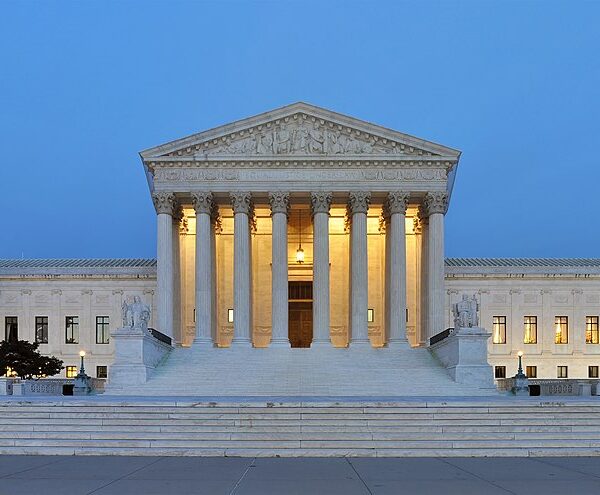
Trump’s latest executive action follows a Supreme Court setback involving his previous attempt to restrict automatic birthright citizenship.
Instead of abandoning the issue, the Trump administration is pursuing a different legal strategy.
White House officials say the new executive orders rely on existing presidential and immigration authorities. The administration intends to narrow eligibility for automatic citizenship in certain circumstances while simultaneously cracking down on foreigners who travel to the United States specifically to give birth.
That practice is commonly known as birth tourism.
Trump argues that the current system has created an opportunity for people outside the United States to take advantage of American citizenship laws.
“They’re buying their way in, and we’re not going to let it happen,” Trump said.
What Is Birthright Citizenship?
Birthright citizenship has been a major part of America’s immigration debate for decades.
The 14th Amendment states that people born or naturalized in the United States and subject to its jurisdiction are citizens of the United States and the state where they reside.
For generations, that language has generally been understood to grant U.S. citizenship to most children born on American soil, regardless of their parents’ immigration status.
Trump and other immigration restriction advocates have challenged how broadly that protection should apply.
The debate centers in part on the meaning of the phrase “subject to the jurisdiction thereof.”
Supporters of Trump’s position argue that the Constitution should not automatically provide citizenship in every circumstance simply because a child was physically born inside the United States.
Opponents argue that longstanding interpretations of the 14th Amendment provide broad constitutional protection for birthright citizenship and that a president cannot substantially change that principle through executive action alone.
The dispute could ultimately produce another major constitutional showdown.
White House Expands Categories Targeted by New Order
White House Deputy Chief of Staff for Policy Stephen Miller provided additional details about the first executive order.
Miller said the administration is broadening the list of individuals who would not automatically qualify for U.S. citizenship at birth.
According to Miller, the expanded restrictions would apply to individuals considered enemies of the United States, members of designated foreign terrorist groups, and certain people representing or advocating for foreign governments.
The administration’s approach appears designed to focus on specific categories rather than relying exclusively on the broader strategy used in Trump’s previous birthright citizenship action.
That distinction could become important when federal judges examine the new executive order.
Trump Targets Birth Tourism
Trump’s second executive order takes direct aim at birth tourism in the United States.
Birth tourism generally refers to foreign nationals traveling to America primarily to give birth so that their child can obtain U.S. citizenship.
The Trump administration argues that the practice represents an abuse of America’s immigration system.
Miller said the administration is moving to prohibit birth tourism in a way no previous administration has attempted.
Under the new policy, the federal government could deny visas to people believed to be seeking entry into the United States primarily for the purpose of giving birth and obtaining American citizenship for their children.
The administration also intends to target individuals and organizations that arrange or facilitate birth-tourism trips.
That could potentially include businesses that market American childbirth packages to foreign clients.
White House Says Immigration Law Gives Trump Authority
One of the biggest questions surrounding Trump’s executive orders is whether they will survive the inevitable legal scrutiny.
Miller cited Section 215(a) of the Immigration and Nationality Act while explaining the administration’s legal reasoning.
He characterized birth tourism as an abuse of the American immigration system and argued that the federal government has authority to prevent foreign nationals from using temporary entry into the country for that purpose.
White House Staff Secretary Will Scharf also defended the administration’s approach.
Scharf said the executive orders will target organized birth-tourism operations through measures including visa denials and law enforcement.
The White House argues that these actions rely on existing legal powers and therefore do not conflict with the Supreme Court’s earlier ruling.
Whether federal courts agree could determine the ultimate fate of Trump’s policy.
Trump Promises “Big Crackdowns”
Trump made clear Thursday that his administration intends to aggressively enforce the new directives.
“We’re cracking down very big, very big, big crackdowns,” Trump said.
The president said the executive action would give his administration the ability to pursue violations in a “much more forceful manner.”
The announcement fits into Trump’s broader effort to reshape federal immigration enforcement and tighten rules governing entry into the United States.
Immigration has remained one of Trump’s signature political issues, with the president repeatedly arguing that the federal government must put the interests of American citizens first when determining who can enter and remain in the country.
For many conservative voters, particularly older Americans who have watched the immigration debate continue for decades, the dispute touches on larger questions involving national sovereignty, border enforcement and the value of American citizenship.
Could Trump’s Executive Orders Survive the Courts?
Legal challenges are likely to become the next major obstacle.
When Trump was asked whether he believes his latest executive orders will withstand court challenges, he gave a straightforward answer:
“I think it will.”
That confidence could soon be tested.
Birthright citizenship involves constitutional questions surrounding the 14th Amendment, while birth tourism also involves federal immigration law and the president’s authority over the admission of foreign nationals.
Those are related but legally distinct issues.
As a result, courts could potentially reach different conclusions about different portions of Trump’s new policies.
The 14th Amendment Could Be at the Center of the Fight
The larger battle over birthright citizenship goes far beyond one executive order.
Ratified in 1868 following the Civil War, the 14th Amendment fundamentally reshaped American citizenship and constitutional law.
Its Citizenship Clause declares:
The 14th Amendment establishes U.S. citizenship for people born or naturalized in America who fall under the nation’s jurisdiction, while also recognizing them as citizens of the state in which they live.
The meaning and reach of those words could once again become central to a major national legal battle.
Trump’s administration is effectively arguing that automatic citizenship should not be interpreted as an unlimited guarantee covering every possible circumstance involving a birth on U.S. soil.
Critics of the administration are expected to argue that the Constitution leaves little room for a president to impose significant new restrictions without congressional action or a constitutional amendment.
Ultimately, federal judges — and potentially the Supreme Court — may have to determine where that line should be drawn.
Why Birth Tourism Has Become a Political Issue
Birth tourism has attracted attention because American citizenship provides significant long-term rights and benefits.
A child who becomes a U.S. citizen can live and work permanently in the United States, obtain an American passport and receive the constitutional protections available to other citizens.
Those benefits have helped create an international market in which some companies advertise childbirth-related travel to prospective parents overseas.
Supporters of tougher immigration enforcement argue that U.S. citizenship should never become a product that can effectively be obtained through a carefully planned temporary visit.
Critics of tighter restrictions warn that aggressive enforcement could affect legitimate travelers and raise difficult constitutional and immigration-law questions.
Trump’s new order attempts to address the practice through immigration enforcement, particularly the federal government’s authority over visas and entry into the country.
Immigration Remains Central to Trump’s Agenda
The announcement reinforces just how central immigration remains to Trump’s presidency.
From border enforcement and deportations to visas and citizenship, the administration has pushed for a dramatically different approach to federal immigration policy.
Trump and his supporters argue that decades of weak enforcement have created loopholes that encourage abuse of the system.
The president has consistently presented his immigration agenda as part of an “America First” approach focused on sovereignty, public safety and protecting the interests of U.S. citizens.
His opponents contend that some of those policies push presidential power beyond constitutional limits.
Those competing views have repeatedly resulted in courtroom battles, and the latest executive orders appear likely to follow the same path.
What Happens Next?
The most important details will be contained in the actual language of Trump’s executive orders.
At the time of publication, the White House had not yet publicly released the complete text of the directives.
That means several critical questions remain unanswered, including exactly who will be affected, how the government will determine whether someone is engaging in birth tourism and what legal standards federal agencies will use when implementing the policies.
Once the complete orders and accompanying federal guidance are available, immigration attorneys, constitutional scholars and advocacy organizations will likely scrutinize every provision.
Court challenges could follow quickly.
For now, one thing is clear: Trump is not backing away from his fight over birthright citizenship.
After encountering resistance to his earlier approach, the president has changed strategies and is once again attempting to use executive authority to reshape how America’s immigration and citizenship laws are enforced.
Whether the strategy succeeds may eventually be decided in the same place where the previous battle encountered trouble — the federal courts.
Two foreign nationals can’t have an american citizen in the USA as two american citizens can’t go to Germany France or Africa to get the wives pregnant to have a German , French or African born baby in those countries on those grounds am I Correct
trump has caused enough hate and distrust division with his misinformation, cruel ., crude dictatorial attitude..THE ABSOLUTE WORST PRESIDENT OR LEADER EDVER, HIS LEGACY BEING THE MOST SELF ABSORBED, LYING, CHEATING, RIGGING DISRESPECTED WORLD WIDE, A DISGRACE AND EMBARRASSMENT TO REAL AMERICANS, NOT UNAMERICAN TWITS .. this country was built by immigrants, even bean head baldy Steven Miller have ancestors that were immigrants. THESE FREELOADING MAGA AND SUPPORTERS ARE JUST THAT, SU[PERFICIAL BOASTERS FULL OF IT, THEY ARE BETTER, YET PROOF GALORE PROVEN OVER AND OVER THEY ARE NOTHING BUT LOW CLASS DEGENERATTES. WHAT ABOUT MELANIA AND VANCES WIFE FOREIGNERS PLUS HALF THE WIVES OR HUSBANDS OF SENATE, CONGRESS OR POLITICS GENERALLY? RIGHT ACCORDING TO LARD ASS TRUMP, LET’S [PICK AND CHOOSE ALRIGHTY THEN PLEASE MIGHT BE EDUCATED BOOK WIDE BUT NO COMMON SENCE OR AMERICAN SAVEY.