
This move has shocked the entire North America.
President Donald Trump is floating another dramatic change to the map — and this time, one of North America’s Great Lakes is at the center of the controversy.
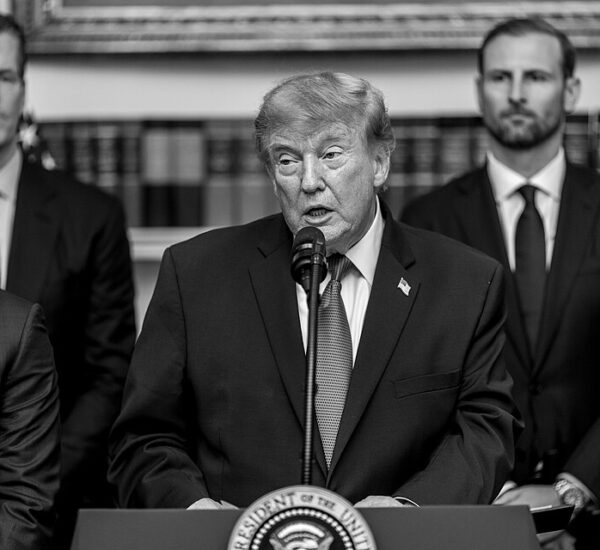
Trump said Tuesday that the United States is giving “serious consideration” to calling Lake Ontario “Lake America” as his administration’s trade battle with Canada grows increasingly heated.
The surprising proposal immediately drew attention because Lake Ontario is not exclusively American. The massive body of water is shared by New York and the Canadian province of Ontario.
But Trump’s remarks appear to be about much more than geography.
They came amid a rapidly escalating economic confrontation between the United States and Canada involving tariffs, automobiles, American manufacturing and allegations of unfair treatment.
For Americans watching prices, jobs and the future of domestic manufacturing, the dispute could ultimately have consequences far beyond what appears on a map.
Trump Floats New Name: ‘Lake America’
Trump introduced the idea Tuesday morning in a Truth Social post while criticizing America’s deteriorating economic relationship with Ontario.
“The United States is giving serious consideration to changing the name of Lake Ontario to Lake America,” Trump wrote.
He connected the possible change to his expectation that the United States may conduct less business with Ontario.
It is not yet clear whether the administration will take formal action to pursue the name change.
For now, Trump’s statement represents a proposal rather than a completed renaming.
Still, the remark is significant because Trump has already demonstrated a willingness to challenge long-established geographic names.
Trump Has Done This Before
The Lake Ontario controversy may sound familiar.
Trump previously ordered the federal government to adopt “Gulf of America” as the U.S. government’s name for the Gulf of Mexico.
That decision became both a political and cultural flashpoint.
Supporters viewed the move as another expression of Trump’s “America First” philosophy. Critics argued that changing a historic geographic name was unnecessary.
Now Trump appears to be applying similar thinking to Lake Ontario — although this situation presents an obvious complication.
Lake Ontario is an international body of water shared by the United States and Canada.
Even if Washington officially adopted “Lake America” for U.S. government purposes, that would not automatically require Canada or other countries to use the same name.
Bigger Battle Brewing With Canada
The proposed name change comes as relations between Washington and Ottawa have deteriorated sharply.
Trade negotiations between the two countries recently collapsed, with American and Canadian officials offering competing explanations for what went wrong.
The dispute is especially important because the two economies have been deeply connected for generations.
Cars, trucks, automobile components, agricultural products, energy and other goods routinely cross the northern border.
That means a prolonged trade confrontation could eventually affect businesses and consumers on both sides.
Trump, however, has argued that the existing relationship has been unfair to American producers and that Canada needs to provide better treatment to U.S. businesses.
The administration is using tariffs as one of its primary tools for applying pressure.
Trump Threatens 50% Canadian Auto Tariffs
Trump announced that tariffs on Canadian cars, trucks and automotive parts would rise to 50% beginning Jan. 1, 2027.
The move represents a major escalation in the trade confrontation.
Trump’s argument is straightforward: If companies want to avoid tariffs, they should manufacture more of their products inside the United States.
That message fits squarely into the economic nationalism that has defined much of Trump’s political career.
Supporters of the approach argue that tougher trade policies can encourage companies to build factories in America, protect domestic industries and provide Washington with leverage against countries accused of treating U.S. products unfairly.
Critics counter that tariffs can increase costs for American importers and that some of those expenses may eventually be passed along to consumers.
That debate becomes particularly important when automobiles are involved.
Why Ontario Matters to American Drivers
Ontario isn’t just another Canadian province.
It is the country’s most populous province and one of the most important manufacturing centers in North America.
The American and Canadian automobile industries have become closely interconnected over decades, with components sometimes crossing the border during different stages of production.
Major changes to that system could therefore affect factories, dealerships, workers and potentially vehicle prices.
That is why Trump’s dispute with Canada deserves attention even from Americans who have little interest in diplomatic disagreements.
For families already dealing with the cost of vehicles, groceries, energy and other necessities, the economic outcome matters considerably more than the political theater.
Trump Rejects Claim About French Language
Trade wasn’t the only issue Trump addressed Tuesday.
The president also strongly denied allegations that his administration sought concessions involving French-language protections in Canada.
“I would never interfere with Canadians speaking French!” Trump wrote.
Trump said he had never considered doing such a thing and accused Canadian Prime Minister Mark Carney of misrepresenting the dispute.
He also declared: “I love French Canadians!”
Carney has presented a different account.
The Canadian prime minister has argued that protections surrounding French-language content and Canadian culture are fundamental rights and should not be treated simply as bargaining chips in a trade negotiation.
The disagreement illustrates just how far apart the two governments have become.
Streaming Services Become Part of Trade Fight
Behind the heated language is a more technical dispute involving regulations affecting American companies.
U.S. officials have objected to Canadian requirements involving streaming platforms and Canadian content.
For American technology and entertainment companies, such rules can create additional regulatory obligations when doing business north of the border.
Canadian leaders, however, maintain that protections for French-language and domestic cultural content are legitimate parts of Canadian law.
That leaves Washington and Ottawa with very different interpretations of the same issue.
Trump says the dispute is not about stopping Canadians from speaking French.
Canadian officials argue that some American demands could nevertheless weaken protections surrounding French-language content.
Those are not identical claims — an important distinction as the political rhetoric intensifies.
JD Vance Defends Trump Administration’s Position
Vice President JD Vance has also defended the administration’s tougher approach toward Canada.
During an appearance in Maine, Vance argued that Ottawa has treated some Chinese products more favorably than goods coming from its American neighbor.
Vance argued that Canada gives products from China more favorable treatment than goods produced by businesses and workers in Maine, calling the situation unreasonable.
His comments reflect a larger argument coming from the Trump administration: The United States should not tolerate trade arrangements that officials believe place American workers and manufacturers at a disadvantage.
For many older Americans who watched factories close or manufacturing jobs move overseas during previous decades, that argument may sound familiar.
Trump has made rebuilding American manufacturing a central component of his political message for years.
But Tariffs Carry Risks for Americans, Too
There is another side to the equation.
Tariffs are paid when imported products enter the United States, and businesses facing higher import costs can respond in several ways.
They can absorb the additional expense, find alternative suppliers, shift more production into the United States — or raise prices.
The actual effect varies considerably depending on the product and industry.
That makes the outcome of the Canada dispute particularly important.
If Trump’s strategy convinces manufacturers to move additional production into the United States, supporters will likely point to it as evidence that aggressive trade policies work.
If the confrontation instead produces significantly higher costs without additional domestic investment, critics will argue the strategy backfired.
American consumers will ultimately be watching their wallets.
Canada Strikes Back
Canada isn’t standing still.
Ottawa announced retaliatory tariffs Tuesday covering more than 700 American-made products, with duties reaching as high as 50% on some goods.
That raises the stakes considerably.
When two major trading partners impose tariffs on each other’s products, businesses on both sides can face higher costs and greater uncertainty.
The confrontation could therefore become an important economic issue heading into the months ahead.
Could the U.S. and Canada Still Reach a Deal?
Despite the increasingly hostile rhetoric, negotiations may not be finished forever.
Vance has indicated that he still believes the United States and Canada should eventually reach an agreement.
Vance said he believes the two countries should ultimately reach an agreement, while emphasizing that the United States wants a trade relationship based on fair terms.
That may ultimately be the most important part of the story.
Trump’s “Lake America” proposal is generating headlines, but the real battle involves billions of dollars in trade, manufacturing jobs and the future economic relationship between two neighboring countries.
What Happens to Lake Ontario Now?
For the moment, Lake Ontario remains Lake Ontario, and Trump’s “Lake America” idea should be understood as a proposal rather than a completed change.
Whether the administration eventually takes official action remains to be seen.
But Trump’s remarks send a broader message.
The president appears determined to use economic pressure — and sometimes symbolic gestures — to reinforce his America First approach to international relations.
Supporters see that strategy as a long-overdue effort to demand better treatment for American workers and businesses.
Critics worry an extended trade war with one of America’s closest economic partners could increase costs and disrupt industries that depend on cross-border commerce.
Either way, the stakes are becoming much larger than the name of a lake.
The real question now is whether Trump’s pressure campaign brings Canada back to the negotiating table — or pushes America’s northern neighbor even further away.
Why can’t we just call all the great lakes by one name? Lake America.
Why not call all the great lakes “Lakes of America”. Screw those toads. Eh! 🐸