Why 1 Key Race Is So Close
A closely watched U.S. Senate race in South Carolina is becoming far more competitive than many political observers originally expected, raising concerns among Republicans as the November midterm elections approach.
Republican Sen. Darline Graham is facing an unexpectedly strong challenge from Democrat Annie Andrews in a state that has historically favored conservative candidates. With Election Day approaching, recent polling suggests the contest could be decided by a relatively small number of voters.
The surprising development has attracted national attention, particularly because South Carolina was widely considered a reliable Republican state.
President Donald Trump carried South Carolina by nearly 18 percentage points in the 2024 presidential election. However, the current Senate contest is demonstrating that a state’s presidential voting history does not necessarily guarantee victory for every Republican candidate.
Several factors are contributing to the unusually competitive race.
One major issue is Graham’s relatively limited political experience. She was appointed to the Senate following the death of her brother, longtime Republican Sen. Lindsey Graham, earlier this year.
Although her family name is well known throughout South Carolina, Darline Graham entered the political spotlight without the extensive campaign experience possessed by many established lawmakers.
That has created an opening for Andrews, a pediatrician and former congressional candidate who has focused much of her campaign on health care and other issues affecting South Carolina families.
Democrats have also invested significant resources in the contest, with outside political organizations spending millions of dollars on advertising intended to strengthen Andrews’ position and challenge Graham’s record.
Recent polling shows just how competitive the election has become.
Some surveys have placed the two candidates within only a few percentage points of each other, while other polls have shown Graham maintaining a modest advantage.
The narrow margins have made voter enthusiasm, campaign organization, and turnout increasingly important as both parties prepare for the final weeks of the election.
Republicans still have significant advantages in South Carolina, where conservative voters have helped the GOP maintain control of statewide offices for years.
However, political analysts recognize that even traditionally Republican states can produce competitive elections when unusual circumstances, strong challengers, and substantial outside spending come together.
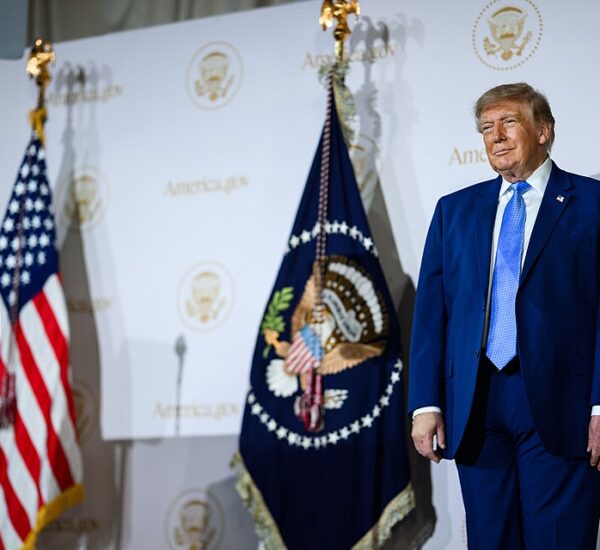
President Trump is now taking a more visible role in the contest.
The president is scheduled to campaign in South Carolina next week in an effort to strengthen Republican enthusiasm and support Graham’s candidacy.
Trump has already expressed his support for Graham and encouraged Republican voters to participate in the upcoming election.
His involvement could prove important, particularly among conservatives who strongly support his administration and want to see Republicans maintain their influence in Washington.
The outcome could also have broader consequences for the balance of power in the U.S. Senate.
Republicans are working to protect their majority while Democrats hope to capitalize on unexpectedly competitive races across the country.
For Graham, the challenge is convincing South Carolina voters that she can continue representing the state’s conservative priorities while establishing her own political identity.
For Andrews, the objective is attracting enough independent voters and persuading some traditionally Republican voters to consider a Democratic alternative.
Early voting in South Carolina begins October 19, giving residents an opportunity to cast their ballots before the November 3 general election.
Despite the tightening polls, Graham remains competitive and benefits from South Carolina’s longstanding Republican voting patterns.
Nevertheless, the race serves as a reminder that no election should be considered decided before voters have their say.
With President Trump preparing to campaign in the state and both parties intensifying their efforts, South Carolina could become one of the more closely watched Senate contests of the 2026 midterm elections.
Whether Republican voters turn out in sufficient numbers to preserve the seat, or Democrats manage to deliver a major political upset, will ultimately be determined at the ballot box.