This was shocking to see.
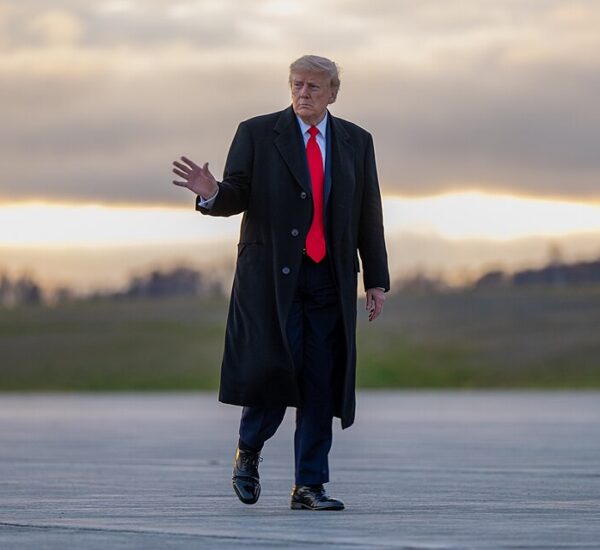
President Donald Trump has found an unexpected area of agreement with some of his most prominent Democratic opponents as Washington considers a plan aimed at bringing film and television production — and the jobs that come with it — back to the United States.
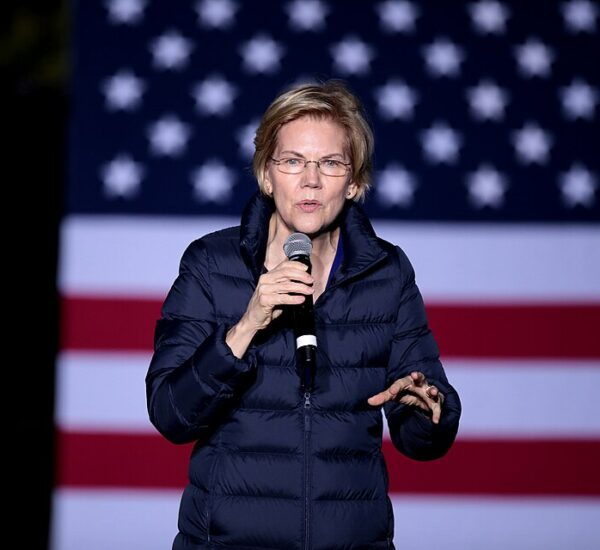
Sen. Adam Schiff and Rep. Nancy Pelosi of California, along with Rep. Ilhan Omar of Minnesota, have expressed support for the broader push for federal incentives designed to make filming in America more competitive.
The agreement is notable considering the years of political battles between Trump and Democrats such as Schiff and Pelosi.
But this time, both sides are focused on an economic issue that has increasingly concerned Hollywood workers and lawmakers: American film and television productions moving to foreign countries.
Trump Wants More Movies Made In America
Trump recently called on Republicans and Democrats in Congress to develop legislation establishing a federal production incentive for the entertainment industry.
The president said the goal is to create and preserve American entertainment jobs while making the United States more competitive with foreign filming locations.
Countries including Canada and the United Kingdom have used financial incentives to attract productions that otherwise might have been made in the United States.
The issue affects far more than famous actors and studio executives.
Film and television productions employ electricians, carpenters, drivers, camera operators, set builders, costume designers, makeup artists, caterers and other workers. Productions can also generate business for hotels, restaurants, transportation companies and local vendors.
When those projects move overseas, much of that economic activity moves with them.
Pelosi Finds Common Ground With Trump
Pelosi welcomed Trump’s involvement when questioned about the proposal on Capitol Hill.
Pelosi told Fox News Digital that Democrats had been advocating for the idea for years and said she welcomed Trump’s decision to embrace it.
It is an unusual moment of agreement between two political figures who have spent years on opposite sides of some of Washington’s biggest disputes.
But Pelosi isn’t the only longtime Trump opponent supporting the general idea.
Schiff Says He Agrees With Trump
Schiff also publicly backed Trump’s push, saying he was in “strong agreement with the president.”
That statement immediately stood out because of the contentious history between the two men.
Schiff played a major role in Trump’s first impeachment proceedings and has remained one of the president’s most recognizable Democratic critics. Trump, in turn, has repeatedly attacked Schiff.
Their differences apparently haven’t stopped them from finding common ground on American film production.
Schiff has called for Congress to approve a federal film incentive aimed at recovering jobs that have moved abroad.
He said Republicans and Democrats should work together to bring more movie and television production back to the United States.
Why Hollywood Is Looking Overseas
The debate comes amid growing concern about America’s ability to compete with foreign production centers.
Figures referenced by Schiff and the Los Angeles Times indicate that about 45% of American films and scripted TV productions were filmed abroad last year, up from approximately one-third in 2022.
That shift has created concerns about the long-term future of American entertainment jobs.
California remains synonymous with Hollywood, but the issue extends well beyond Los Angeles.
States including Georgia and New York have developed major film industries of their own, while numerous other states offer incentives intended to attract productions.
A federal incentive could potentially work alongside those state programs.
How Would Trump’s Film Tax Incentive Work?
The final details have not been decided by Congress.
However, one proposal backed by allies of actor Jon Voight would establish a 20% federal tax credit covering qualifying U.S. labor costs associated with domestic film and television productions.
Trump has endorsed the broader idea of federal incentives rather than laying out a complete legislative framework himself.
Supporters believe a national incentive could help American locations compete against foreign countries offering attractive financial packages to studios.
Critics of film incentives, meanwhile, could raise questions about their cost to taxpayers and whether the economic benefits justify federal support for the entertainment industry.
Those details are likely to become important if Congress moves forward with legislation.
Omar Points To Minnesota’s Film History
Omar has also voiced support for attracting more entertainment production to the United States.
She pointed to her previous experience in the Minnesota Legislature, where she supported state subsidies intended to encourage filmmakers to bring projects to Minnesota.
The state has a long history with Hollywood.
The 1996 Coen brothers film “Fargo” was associated with Minnesota, while “The Mighty Ducks” franchise brought additional attention to the Twin Cities during the 1990s.
Omar said increased production could provide an economic benefit for states that attract projects.
“It could be a really cool thing [and] also bring us money to states that can use it,” she told Fox News Digital.
Trump Enlists Hollywood Stars
Trump has also turned to several well-known Hollywood veterans as he searches for ways to strengthen domestic film production.
He previously named Jon Voight, Mel Gibson and Sylvester Stallone as special ambassadors to Hollywood.
Voight has become particularly involved in the effort to encourage more domestic production.
The Motion Picture Association, entertainment unions and other industry representatives have also shown interest in a national production incentive.
Mel Gibson has previously highlighted the enormous cost differences producers can encounter when deciding where to film.
Gibson told Fox News that, for one recent project, flying an entire crew to Europe for three days was cheaper than shooting for one day in Los Angeles.
“There’s something really wrong there,” Gibson said.
Those kinds of cost differences help explain why policymakers are increasingly discussing whether the federal government should intervene.
Newsom Has Called For Federal Action
California Gov. Gavin Newsom, another frequent Trump political opponent, has also supported federal involvement.
“California built the film industry – and we’re ready to bring even more jobs home,” Newsom previously said while calling for a federal partnership.
California already provides substantial state incentives to encourage productions to remain there.
But supporters of a national program argue that individual states are competing against entire countries, making a federal incentive necessary if the United States wants to remain globally competitive.
More Than A Hollywood Issue
Although the proposal centers on the entertainment industry, the larger debate is about American jobs, taxes and international economic competition.
Supporters believe incentives could encourage companies to spend more money inside the United States, employing American workers and supporting businesses surrounding production sites.
Opponents of government subsidies could question whether taxpayers should provide incentives to an industry containing some of the world’s largest entertainment companies and highest-paid celebrities.
That debate will become increasingly important if lawmakers begin writing the details of an actual bill.
Trump And Democrats Find Rare Agreement
Perhaps the most surprising element is the political coalition forming around the idea.
Trump, Pelosi and Schiff have been central players in years of fierce political conflict.
Yet on this particular issue, they have arrived at a similar conclusion: the United States should do more to compete for film and television production.
Whether Congress ultimately approves a federal film tax incentive remains uncertain.
For now, however, Trump has managed to find common ground with several Democrats who have spent years opposing him — all around the goal of bringing more entertainment jobs and production back to America.