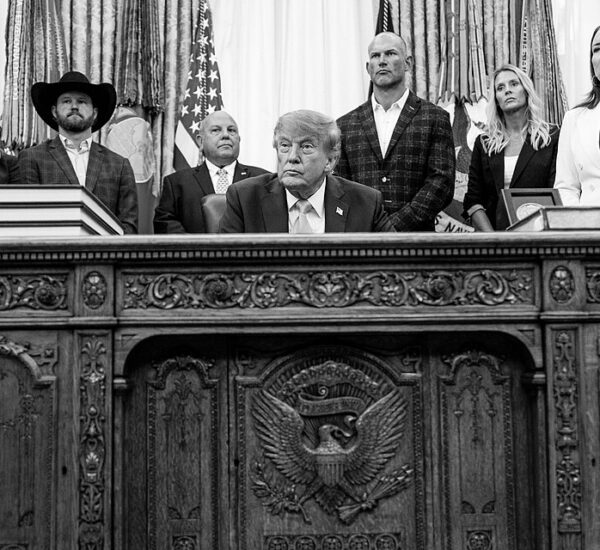
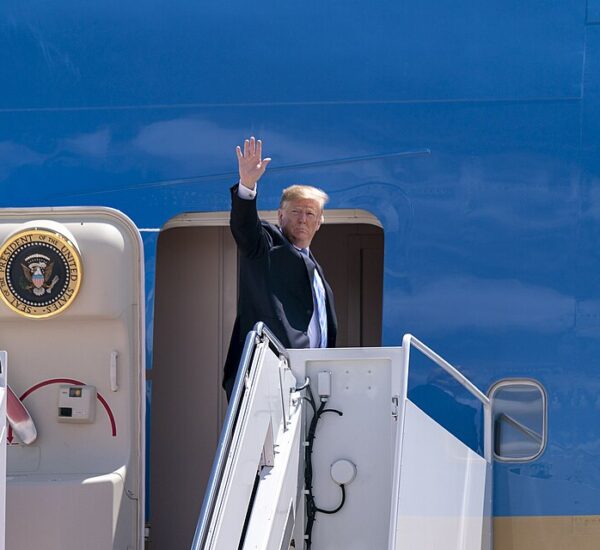
President Donald Trump’s handling of the economy is facing renewed scrutiny as some American workers say they continue to struggle with rising living costs despite his campaign promises to improve affordability. While the White House points to cooling inflation and stronger wage growth, workers interviewed by The Guardian described ongoing difficulty paying for groceries, housing, utilities, and other basic expenses.
BACKGROUND
According to The Guardian, workers from Arizona, Wisconsin, Virginia, and elsewhere said their budgets remain under pressure from higher prices and stagnant wages, with some reporting reduced work hours or living paycheck to paycheck. The report also cited data showing food prices were 2.9% higher than a year earlier, utility costs had risen by more than 6%, household debt reached $18.8 trillion by the end of 2025, and food insecurity increased during the year. It noted that the Trump administration has backed additional tariffs, while Republicans passed the One Big Beautiful Bill Act, which includes major reductions to Medicaid, Medicare, and SNAP funding over the coming decade. The White House disputed the report’s assessment, with spokesperson Kush Desai saying recent inflation data shows continued improvement and arguing that the administration’s tax, tariff, deregulation, and trade policies are laying the groundwork for stronger economic growth.
Congressional Staffers Urge Congress To Do What?
A coalition representing more than 1,500 congressional staff members is urging Congress to strengthen its ethics system after two high-profile lawmaker resignations exposed what the group describes as serious weaknesses in Capitol Hill’s workplace misconduct reporting process.
In a letter sent Tuesday to House and Senate leaders, the Congressional Progressive Staff Association (CPSA) argued that congressional employees often lack a clear path for reporting misconduct and are left navigating a confusing network of offices with overlapping responsibilities. The organization is calling for sweeping reforms designed to improve accountability, expand employee protections, and make the complaint process easier to understand.
The letter was addressed to House Speaker Mike Johnson, House Minority Leader Hakeem Jeffries, Senate Majority Leader John Thune, Senate Minority Leader Chuck Schumer, along with the leaders of the House Administration Committee and the Senate Rules Committee.
Congressional Staff Call for Ethics Reform
According to the CPSA, recent events demonstrated that Congress’ current system for handling workplace misconduct complaints leaves many staff members uncertain about where to turn for help.
The organization’s recommendations are based on a survey of its members conducted after two members of Congress resigned earlier this year while facing ethics investigations.
Among the group’s proposals are:
- Establish a Senate Office of Employee Advocacy similar to the office already operating in the House.
- Expand legal assistance available to congressional employees.
- Permanently establish the Office of Congressional Conduct through federal law rather than temporary House rules.
- Give the independent watchdog limited subpoena authority during investigations.
- Provide staff members with clear guidance explaining which office handles specific complaints.
Supporters argue these reforms would create a more transparent process while ensuring congressional employees understand their rights and available resources.
High-Profile Resignations Spark New Calls for Accountability
The renewed push follows the April resignations of former Representatives Eric Swalwell, D-Calif., and Tony Gonzales, R-Texas, who both stepped down within hours of one another while facing separate House Ethics Committee investigations and expulsion resolutions.
Swalwell resigned after multiple women, including a former staff member, accused him of misconduct in reports published by the San Francisco Chronicle and CNN. He has denied allegations of assault.
Gonzales resigned after acknowledging he had engaged in an affair with a staff member who later died by suicide.
Although the allegations involved separate circumstances, the CPSA argues both cases highlighted weaknesses in Congress’ internal accountability system and demonstrated the need for clearer reporting procedures.
Office of Congressional Conduct Could Receive More Authority
One of the group’s top priorities is strengthening the Office of Congressional Conduct, the independent body responsible for reviewing misconduct allegations before referring cases to the House Ethics Committee.
Currently, the office operates under authority granted through the House rules package adopted at the beginning of each Congress. Because those rules can be revised by House leadership, reform advocates argue the office’s independence could be vulnerable to future political changes.
The CPSA is urging lawmakers to permanently establish the office in federal law and grant it limited subpoena power, arguing those changes would improve oversight while reducing the burden on House and Senate ethics committees, whose members are often tasked with investigating fellow lawmakers.
CPSA spokesperson Michael Suchecki said his organization attempted to trace the complaint process but found employees were frequently directed from one office to another without clear answers.
He described the reporting system as a “spiderweb,” saying many congressional staff members simply do not know which office is responsible for handling specific complaints, particularly after experiencing a traumatic workplace incident.
Bipartisan Lawmakers Already Exploring Changes
Congressional leaders have already begun discussing potential reforms.
In May, Speaker Mike Johnson and Minority Leader Hakeem Jeffries appointed Representatives Kat Cammack, R-Fla., and Teresa Leger Fernandez, D-N.M., who lead the Republican and Democratic women’s caucuses, to oversee a bipartisan effort aimed at identifying improvements to Capitol Hill workplace policies.
According to a person familiar with the discussions, the bipartisan working group is in the final stages of its review and hopes to release recommendations in the coming months.
Whether those recommendations become law—or join a long list of congressional reform proposals that fail to gain momentum—remains uncertain.
Why This Matters
Supporters of the proposed reforms say congressional employees deserve a reporting system that is straightforward, transparent, and capable of handling misconduct allegations fairly and efficiently.
Critics, however, may argue that any expansion of investigative authority should include safeguards to prevent politically motivated complaints or abuses of the process.
As Congress weighs possible changes, the debate highlights a broader question facing Capitol Hill: whether lawmakers are willing to apply stronger accountability standards to their own institution while asking Americans to trust the government’s oversight of others.
Frequently Asked Questions
Why are congressional staff members calling for reforms?
The Congressional Progressive Staff Association says recent ethics investigations exposed confusion over how congressional employees report misconduct and seek assistance.
What is the Office of Congressional Conduct?
It is an independent office that reviews misconduct allegations involving House members before referring cases to the House Ethics Committee for further action.
What changes are being proposed?
The recommendations include creating a Senate employee advocacy office, expanding legal support for staff, strengthening the Office of Congressional Conduct, granting it limited subpoena authority, and making the reporting process easier for congressional employees to navigate.