Here’s what happened.
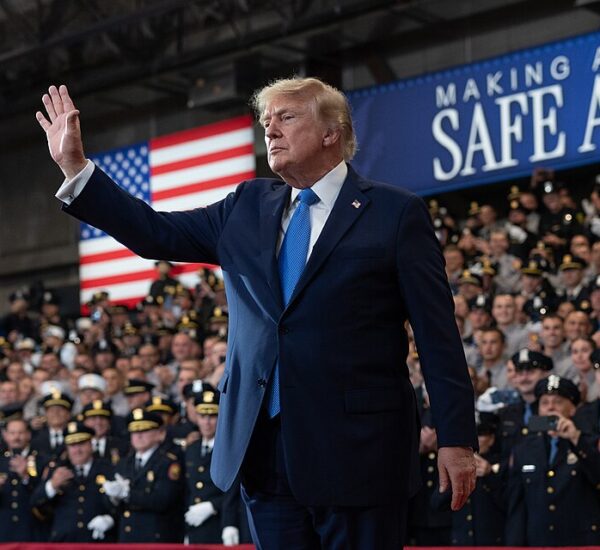
President Donald Trump found unexpected bipartisan support on Capitol Hill this week as a large group of House Democrats joined Republicans in backing legislation aimed at strengthening the federal government’s fight against fraud.
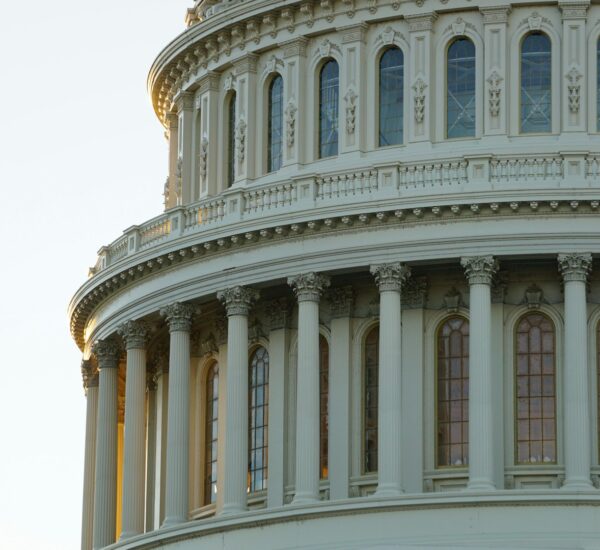
The House voted 352-72 to approve legislation making the National Fraud Enforcement Division a permanent part of the Department of Justice.
The vote crossed traditional party lines, with 139 Democrats joining Republicans in supporting the measure. House Minority Leader Hakeem Jeffries of New York also voted in favor of the bill.
At a time when Washington remains deeply divided over the Trump administration, the vote revealed one area where lawmakers from both parties found substantial common ground: preventing taxpayer money from being lost to fraud.
What Is the National Fraud Enforcement Division?
The Trump administration announced the National Fraud Enforcement Division in January 2026.
According to the Justice Department, the division focuses on investigating and prosecuting fraud involving federal money, government-funded programs, businesses, nonprofit organizations and individuals.
Its responsibilities include coordinating fraud investigations across federal, state, local and tribal agencies and using data analysis to identify suspicious activity involving taxpayer-funded programs.
The House legislation would make the division permanent rather than leaving its future dependent on executive branch policy.
Supporters say that could give federal investigators greater continuity as they pursue complicated fraud schemes that sometimes take years to uncover and prosecute.
Taxpayer Fraud Becomes a Major Washington Issue
Fraud involving government programs has received increased attention in Congress as lawmakers debate federal spending, government efficiency and oversight.
One of the most closely watched examples has come from Minnesota, where federal prosecutors have pursued multiple cases involving alleged misuse of taxpayer-funded programs.
In May 2026, the Justice Department announced charges against 15 defendants accused of participating in health care fraud schemes involving more than $90 million in intended losses.
The allegations involve Medicaid and other publicly funded programs. As with all criminal cases, those charged are presumed innocent unless proven guilty.
The cases have fueled a wider political debate over whether state and federal agencies have adequate safeguards in place to prevent abuse of government programs.
Minnesota Controversy Sparks Political Fight
The fraud issue has also become politically contentious.
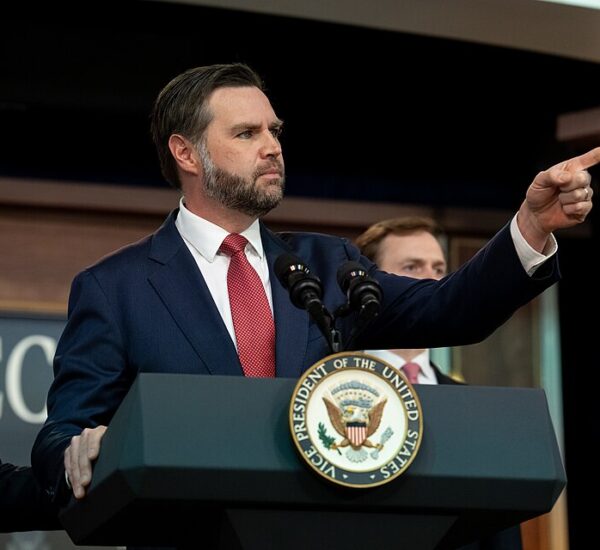
Vice President JD Vance previously called for federal authorities to investigate Minnesota Gov. Tim Walz and Attorney General Keith Ellison over Republican allegations concerning the handling of fraud within state-administered programs.
Walz and Ellison have disputed Republican descriptions of the situation and have argued that political opponents have exaggerated the controversy.
That disagreement illustrates one of the challenges facing the new federal fraud division.
While lawmakers from both parties broadly agree that government fraud should be prosecuted, they remain divided over how investigations are conducted and whether political considerations could influence enforcement decisions.
Jamie Raskin Backs Bill While Criticizing Republicans
Rep. Jamie Raskin of Maryland was among the Democrats who supported the legislation despite expressing reservations about how Republicans have promoted the proposal.
During debate on the House floor, Raskin argued that the Justice Department has prosecuted fraud for decades and suggested that the legislation should not be portrayed as creating an entirely new law-enforcement mission.
His position highlighted an important distinction in the debate.
The federal government already has prosecutors and investigative units that handle health care fraud, financial crimes and fraud involving government programs.
The Trump administration says the National Fraud Enforcement Division is intended to centralize those efforts and strengthen coordination between agencies.
Republicans Focus on Protecting Taxpayer Money
Republican supporters of the legislation said the issue should extend beyond party politics.
Rep. Jeff Van Drew of New Jersey argued that Americans are frustrated by reports of wasted or stolen government money and said lawmakers should work together to combat fraud.
Rep. Harriet Hageman of Wyoming also pointed to recent Minnesota cases as evidence that stronger oversight may be necessary.
For supporters, the central argument is straightforward: money approved by Congress for health care, food assistance, public benefits and other programs should reach the people those programs were intended to help.
When fraud occurs, taxpayers ultimately bear the cost.
Democrats Raise Concerns About Trump Administration
The bipartisan vote did not erase broader disagreements over the Trump administration.
During the House debate, Raskin criticized presidential pardons and other administration decisions involving individuals convicted of financial crimes.
Republicans pushed back and attempted to keep the debate focused on the fraud legislation itself.
The exchange showed that lawmakers can agree on the goal of fighting fraud while remaining sharply divided over the Trump administration’s broader record and use of presidential authority.
Why the Bipartisan Vote Matters
Large bipartisan votes have become less common on major political issues, making the 352-72 margin notable.
All Republicans participating in the vote supported the legislation, while nearly 140 Democrats joined them.
That does not mean Democrats and Republicans suddenly agree on Trump’s broader agenda.
Instead, the vote suggests there is considerable congressional support for maintaining a dedicated federal operation focused on fraud involving taxpayer dollars.
For Americans concerned about federal spending, the more important issue may be what happens next.
Creating a permanent enforcement division is one step. Its effectiveness will ultimately depend on whether investigators successfully uncover fraud, recover taxpayer money and pursue cases consistently regardless of politics.
What Happens Next?
House passage does not automatically make the legislation law.
The measure must complete the remaining congressional process and receive presidential approval before the division receives permanent statutory status.
If enacted, the legislation could give the federal government a long-term institutional structure for pursuing fraud cases even after the current administration leaves office.
That is one reason the bipartisan nature of the vote could prove significant.
What began as an initiative created by the Trump administration could ultimately become a permanent federal enforcement operation supported by lawmakers from both parties.
For taxpayers, the key question will be whether that expanded effort produces measurable results — including fewer fraudulent payments, stronger oversight and the recovery of money improperly taken from federal programs.