
House Speaker Mike Johnson is considering legislation that would target birth tourism by limiting the ability of pregnant women to enter the United States to obtain citizenship for their children, according to Politico. The proposal comes as conservative Republicans push for action on immigration following the Supreme Court’s recent ruling against the Trump administration’s efforts to curb birthright citizenship.
BACKGROUND
Johnson is exploring the measure as he faces pressure from House conservatives who say Republican leaders have not moved quickly enough on immigration priorities. The legislation would likely face major obstacles in the Senate because of the 60-vote filibuster threshold, making it largely symbolic if passed by the House. The discussions follow Johnson’s earlier commitment to bring forward legislation reflecting President Donald Trump’s border security priorities in exchange for support on a narrower immigration funding bill. Republican leaders are still working to find an agreement as lawmakers remain divided over broader immigration changes, including proposals involving seasonal farm worker visas.
Retired General’s Shocking Advice To Trump
Retired Army Lt. Gen. Keith Kellogg says President Donald Trump should move beyond diplomacy with Iran and adopt a tougher strategy aimed at dismantling the country’s nuclear program while increasing pressure on the Iranian regime.
Speaking Wednesday on Newsmax’s Rob Schmitt Tonight, Kellogg argued that the Trump administration has already given diplomacy every reasonable opportunity and that negotiations have reached their limit.
According to Kellogg, the next phase should focus on protecting U.S. national security, defending America’s allies in the Middle East, and preventing Iran from becoming a nuclear-armed nation.
Kellogg Says Diplomacy Has Run Its Course
Kellogg praised President Trump for attempting to resolve the standoff through negotiations before considering stronger options.
“The president deserves full credit,” Kellogg said. “He gave diplomacy every opportunity to work before deciding stronger action may be necessary.”
Kellogg added that he believes further negotiations are unlikely to produce meaningful results.
“We gave diplomacy its chance,” he said. “Now it’s time to move forward.”
Three-Part Strategy for Dealing With Iran
Kellogg outlined what he described as a practical three-step plan designed to increase pressure on Tehran while limiting the risk of a wider regional conflict.
His proposal includes:
- Securing Iran’s enriched uranium and nuclear centrifuges through international inspections supported by American advisers.
- Keeping the Strait of Hormuz open to international shipping, including the possible use of military force if commercial vessels are threatened.
- Demanding that Iran immediately end support for terrorist organizations operating throughout the Middle East.
Kellogg said Iran should no longer be allowed to back groups including Hamas, Hezbollah, and the Houthis, arguing that those organizations continue to fuel instability across the region.
Kharg Island Could Become a Key Target
Kellogg also discussed reports that President Trump has considered the possibility of taking control of Kharg Island, the terminal that handles the vast majority of Iran’s oil exports.
Rather than describing the idea as an invasion, Kellogg said it would involve a narrowly focused military objective.
“When people hear boots on the ground, they think invasion,” Kellogg explained. “That’s not what we’re talking about. We’re talking about securing a strategic location.”
Because Kharg Island serves as Iran’s primary oil export hub, Kellogg argued that controlling it would dramatically reduce the regime’s ability to generate revenue.
“You’re taking away their economic lifeline,” he said. “Once that revenue disappears, the pressure on the regime grows significantly.”
Kellogg Supports Future Political Change in Iran
Kellogg also said the United States should be prepared to support a provisional government if the Iranian people eventually decide to replace the current regime.
He stressed that any political transition should ultimately be determined by the Iranian people themselves but said America should be prepared to support stability if that opportunity arises.
Kellogg Believes Americans Would Support Trump’s Plan
Some critics have questioned whether Americans would back a tougher approach toward Iran, but Kellogg believes public support would follow if President Trump clearly explains the stakes.
He argued that preventing Iran from acquiring nuclear weapons would strengthen America’s long-term security while helping stabilize the Middle East.
Kellogg credited Trump with reshaping the strategic balance in the region and said stopping Iran’s nuclear ambitions could have lasting global consequences.
Air Force One Decision Sparks Questions
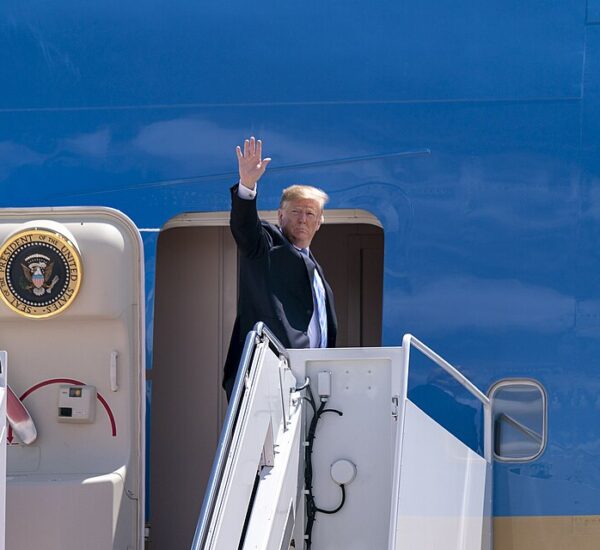
Kellogg also addressed speculation surrounding President Trump’s decision to fly home from Turkey aboard the current Air Force One instead of using the replacement aircraft donated by Qatar.
He dismissed suggestions that the decision reflected growing concerns over Iran, saying it was simply another example of Trump’s judgment.
“I think the president made the right decision,” Kellogg said. “One thing I’ve learned about President Trump is that his instincts are usually right.”
Bottom Line
Kellogg’s remarks reflect a growing debate over the future of U.S. policy toward Iran as concerns over Tehran’s nuclear program continue. While President Trump has repeatedly emphasized that Iran must never obtain a nuclear weapon, questions remain about whether diplomacy can still achieve that goal or whether stronger measures will ultimately be required.



I have waited 47 years for ordinance to fall on Iran. Wimp Carter should have finished Iran in 1979 when American hostages were taken, but he and subsequent presidents refused. Pres. Trump needs to stop talking and let the “big ones” fall on Tehran like the late Harry Truman did to end World War II.