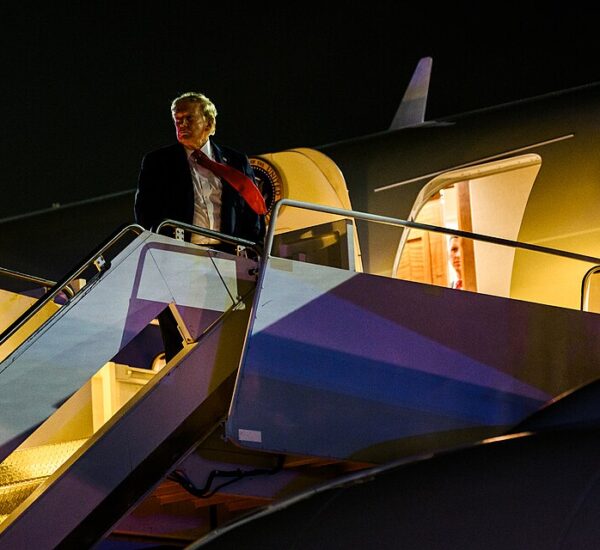
The Secret Service reportedly recommended that President Donald Trump return from Turkey aboard the older Air Force One instead of the newly retrofitted Qatari-donated jet after fighting between the United States and Iran resumed during his trip for the NATO summit. Officials said the change was made out of an abundance of caution and stressed there was no specific or credible threat against the president, underscoring the heightened security measures used during periods of international tension.
BACKGROUND
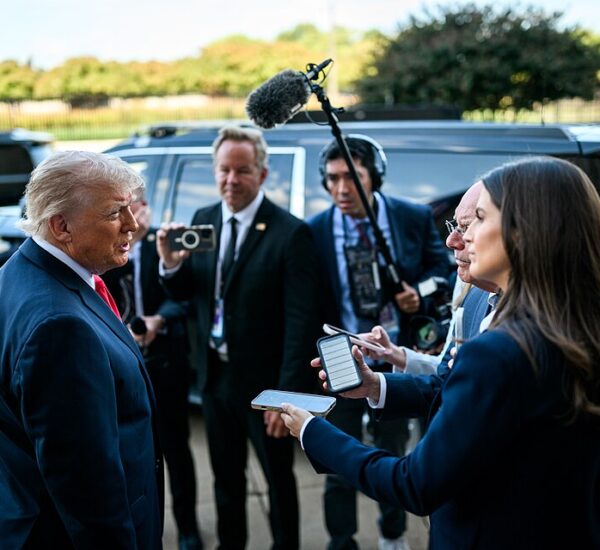
Trump flew from Turkey on one of the long-serving Boeing VC-25A aircraft before rejoining the newer Boeing 747-8 at RAF Mildenhall in England for the flight back to Washington. During departure, passengers were instructed to keep their window shades down, and flight-tracking data showed the aircraft’s transponder remained off until it crossed the Black Sea, a security practice used in higher-risk environments. Trump denied that security concerns prompted the aircraft switch, saying the newer jet traveled separately so U.S. service members in England could tour it, while also acknowledging Iran’s threats by telling reporters he is “No. 1 on the kill list for Iran.” The decision has renewed questions about whether the Qatari-donated aircraft includes all of the classified defensive systems found on the long-serving VC-25A fleet, although the Air Force says it meets all required security, safety, and communications standards, and the White House has defended the aircraft’s security capabilities.
Trump’s Only CNN Ally Speaks On Iran Problem
Conservative commentator Scott Jennings says the collapse of the temporary U.S.-Iran ceasefire comes as no surprise, arguing that Iran has consistently failed to negotiate in good faith despite President Donald Trump’s diplomatic efforts. His remarks come as U.S. military operations and Iranian retaliatory attacks continue to escalate, raising new concerns about stability across the Middle East.
Speaking during a CNN panel discussion, Jennings said Iran has spent decades positioning itself as one of America’s most persistent adversaries. He argued that President Trump first pursued diplomacy before deciding military action was necessary after negotiations failed to produce meaningful results.
According to Jennings, there was always a strong possibility that Iranian leaders would not seriously engage in the peace process.
“I believed from the beginning there was a significant chance Iran wasn’t going to come to the negotiating table in good faith,” Jennings said. “I’m not surprised things have ended this way.”
Jennings also revealed that he spoke with President Trump on the day the memorandum of understanding was signed. According to Jennings, Trump made it clear that military operations would resume if Iran failed to honor its commitments under the agreement.
“He told me exactly what he had said publicly,” Jennings explained. “If Iran didn’t meet its obligations or changed its behavior, the military campaign would restart. That’s the decision he’s now made.”
Rather than expecting a broader peace agreement, Jennings said the administration is unlikely to move forward with proposals that would have eased sanctions or released frozen Iranian assets.
Instead, he argued the United States has already achieved significant strategic goals.
“Our military severely weakened Iran’s capabilities and pushed many of its neighboring countries closer together against Tehran,” Jennings said. “From that perspective, the administration can reasonably argue it accomplished its mission.”
Fighting Intensifies Across the Middle East
The collapse of the temporary agreement marks another major escalation in the confrontation between Washington and Tehran.
U.S. Central Command announced late Wednesday that American forces struck approximately 90 Iranian military targets. Iran responded by launching missile and drone attacks through Kuwaiti and Bahraini airspace, highlighting the growing risk of a wider regional conflict.
Kuwaiti officials said the country’s air defense systems intercepted 10 hostile drones, three ballistic missiles, and one cruise missile during the early morning hours Thursday.
Major General Saud Abdulaziz Al-Otaibi said falling debris caused property damage in several locations and injured one person, who remains in stable condition while receiving medical treatment.
Bahrain’s military also announced that its air defense forces successfully intercepted and destroyed several Iranian aerial attacks before they reached their intended targets.
Trump Declares Interim Agreement Finished
President Trump declared Wednesday that the temporary agreement with Iran was officially over.
Speaking with reporters aboard Air Force One while departing Turkey, Trump warned that any future attacks against the United States would be met with an overwhelming military response.
“Every time they hit us, we’ll hit them twenty times harder,” the president said.
Iranian officials responded with their own warning.
Ebrahim Rezaei, spokesperson for the Iranian Parliament’s National Security and Foreign Policy Committee, said Iran would place no limits on defending its territory. In a message posted on X and translated from Persian, Rezaei warned Gulf nations that have aligned with the United States to protect their oil and gas infrastructure, adding that Iran has “no red lines” when it comes to defending what it considers its national security.
Why This Matters
The end of the temporary ceasefire significantly increases the possibility of a prolonged conflict between the United States and Iran. Any continued escalation could affect American allies throughout the Middle East, disrupt global energy markets, threaten key shipping routes, and place additional pressure on U.S. military forces stationed across the region.
With both Washington and Tehran signaling they are prepared to continue military operations, hopes for renewed diplomacy appear to be fading. Regional governments remain on high alert as officials closely monitor whether the conflict can be contained or develops into a broader Middle East crisis.
This latest escalation also puts renewed focus on the Trump administration’s national security strategy, as supporters argue a strong military posture is necessary to deter Iran, while critics continue to question whether diplomacy can still play a meaningful role in preventing a wider regional war.