Republican Trashes Trump?
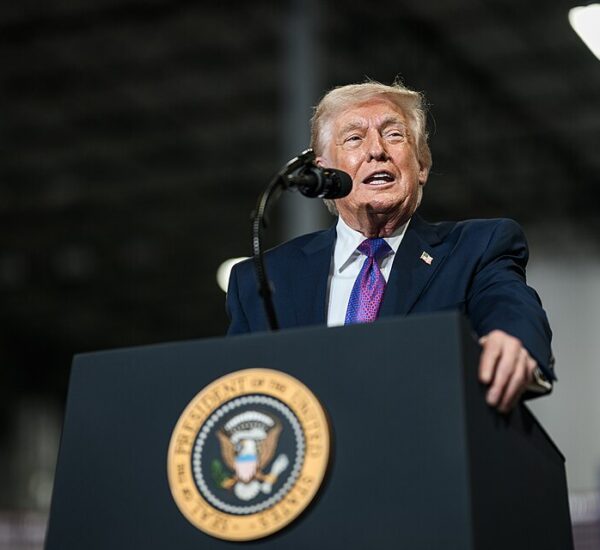
As President Donald Trump enters another year in office, some lawmakers are warning that Congress risks further weakening its constitutional role—at a time when voters are increasingly concerned about inflation, tariffs, and the overall direction of the economy.
Rep. Don Bacon (R-Neb.) has cautioned that Congress has allowed too much authority to shift to the White House, particularly on major issues such as trade policy, federal spending, and military action. Bacon, who is not seeking reelection, says the imbalance could have long-term consequences regardless of who occupies the Oval Office in the future.
With the next midterm elections approaching, lawmakers from both parties are quietly debating whether Congress still has the willingness—or political strength—to reassert itself. These concerns come as Americans continue to face rising costs, economic uncertainty, and questions about how federal decisions affect their daily lives.
Republicans currently control both chambers of Congress, yet formal oversight of the administration has remained limited during Trump’s return to office.
Over the past year, the White House has moved quickly on several major initiatives. These actions have included renaming the John F. Kennedy Center for the Performing Arts, withholding funds previously approved by Congress, asserting broad authority over tariffs traditionally handled by lawmakers, and authorizing military strikes near Venezuela without prior legislative approval.
Bacon has argued that stronger engagement from Congress could ultimately improve policy outcomes and help refine the president’s agenda.
“The president would actually benefit from more pushback from the Republican House,” Bacon said in remarks reported by The New York Times. He suggested that congressional input could lead to better results on trade policy and U.S. involvement overseas, including strategy related to Ukraine.
He also warned that when lawmakers fail to assert themselves, presidents may feel fewer institutional constraints.
According to Bacon, the structure of Congress itself makes it difficult to respond quickly to an assertive executive branch.
“An activist president is always going to have an advantage,” he said. “With 435 members of Congress, we simply can’t move at the same speed.”
White House officials have defended the administration’s actions, emphasizing that voters returned President Trump to office with a mandate to act decisively on national priorities, including economic security, trade fairness, and national defense.
Still, frustration has grown on Capitol Hill. Democrats have attempted to slow or block spending bills, citing what they describe as unilateral decisions by the administration, including the dismantling of a federal climate center in Boulder and the veto of a bipartisan water infrastructure project.
At the same time, some Republicans are exploring procedural tools—such as discharge petitions—to force votes on issues that are not part of the White House’s immediate agenda.
With another government funding deadline set for January 30, appropriators are weighing whether to take a firmer stand, including the possibility of challenging a presidential veto. Such a move would test how far Congress is prepared to go in reasserting its constitutional authority.
“If Congress keeps stepping aside,” Bacon warned, “this pattern won’t end with one administration—it will continue from one presidency to the next.”