Media Hiding Trump’s New Win
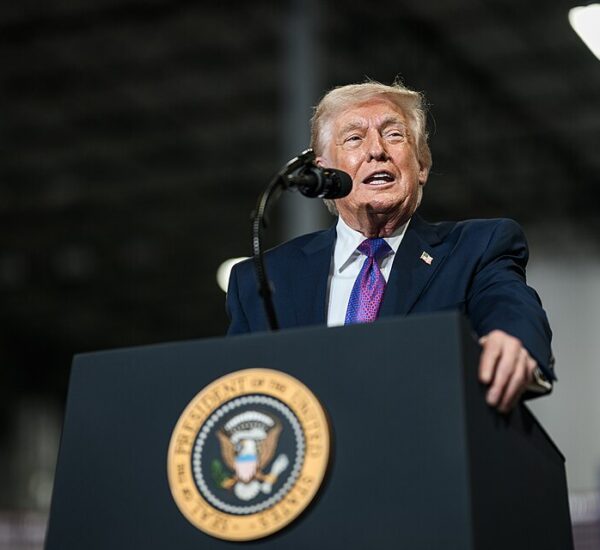
FBI Director Kash Patel said new crime data shows the largest single-year decline in murders in modern U.S. history, crediting President Donald Trump’s renewed law-and-order agenda during the first year of his second term.
According to Patel, nationwide homicide levels dropped sharply in 2025 after years of elevated violent crime, signaling what federal officials describe as a major public-safety turnaround.
A report released Thursday by the Council on Criminal Justice, a nonpartisan criminal justice research group, found that murders fell 21 percent from 2024 to 2025 across 35 large U.S. cities included in its analysis. Researchers estimate the decline equals approximately 922 fewer killings in a single year.
Crime Down Across Nearly Every Category
The report reviewed 13 major crime categories and found reductions in 11 of them, suggesting the improvement was broad rather than isolated.
Violent crimes such as aggravated assault and carjacking declined, while property crimes also showed notable drops. Vehicle theft fell 27 percent, and shoplifting declined by 10 percent. Drug-related offenses rose slightly, while reported sexual assaults remained largely unchanged compared with the previous year.
Federal Enforcement Takes Center Stage
In public comments, Patel said the decline reflects expanded federal enforcement efforts aimed at violent fugitives, repeat offenders, and organized criminal networks. He also argued that some media outlets have underreported the administration’s impact, noting significant increases in arrests and gun seizures tied to federal operations.
Patel highlighted Operation Summer Heat, a coordinated summer initiative involving federal, state, and local law enforcement agencies. Officials say the operation resulted in thousands of arrests and the removal of large numbers of illegal firearms from American streets.
Experts Urge Caution on Cause
Researchers involved in the study cautioned that crime trends are influenced by many factors and warned against attributing the decline to any single policy. Violent crime surged nationwide during 2020 and 2021 and has gradually eased in the years since, following pandemic-era disruptions.
Analysts point to a mix of influences that can affect crime levels, including policing strategies, community-based intervention programs, shifts in daily routines, changes in gun carrying, and evolving drug markets.
Political Debate Likely to Intensify
Despite those cautions, the scale of the decline is expected to fuel political debate. Republicans have emphasized tougher enforcement and federal deployment strategies, while Democrats and some researchers argue the trend reflects broader national improvements rather than direct White House action.
The report also acknowledged important limitations. The data does not cover all U.S. jurisdictions and excludes cities such as Jackson, Mississippi, and Birmingham, Alabama, which have reported some of the nation’s highest homicide rates per capita. Critics say such omissions can shape public perception if readers assume the data represents every high-crime city.
Washington Shows Sharp Decline
One of the most striking reductions occurred in Washington, D.C., which posted one of the largest year-to-year homicide drops in the country. Federal officials cited task-force operations and aggressive action against illegal guns, while local leaders pointed to targeted investigations and focused violence-prevention efforts.
Researchers cautioned that crime trends can reverse quickly and stressed that it remains too early to determine whether the 2025 decline will continue into 2026.