Senate GOP Clashes With Trump
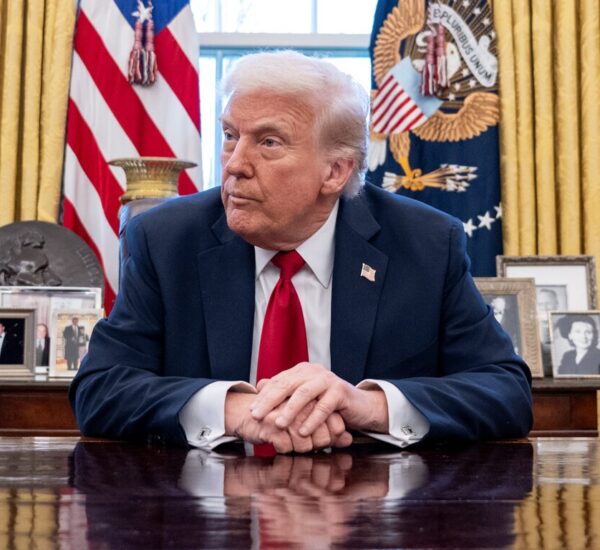
President Donald Trump is facing growing resistance from members of his own party after calling on Congress to approve another massive spending package that would provide an additional $350 billion for the Pentagon.
While Republicans overwhelmingly support a strong national defense, many GOP senators are warning that another high-stakes budget fight could hurt the party politically, increase federal deficits, and jeopardize Republican control of the Senate in the 2026 midterm elections.
Several senators say they are simply exhausted after recently completing an all-night voting marathon to pass a $70 billion immigration and border security package. Now, many are questioning whether Congress has the votes—or the public support—to approve another enormous spending bill.
Republicans Fear Another Political Minefield
Behind closed doors, Senate Republicans are expressing deep concerns about launching a third budget reconciliation battle.
The process would allow Republicans to bypass a Democratic filibuster, but it would also trigger another lengthy series of politically difficult amendment votes that Democrats could use in campaign advertisements against vulnerable GOP incumbents.
One Republican senator described the most recent voting marathon as exhausting and frustrating, noting that lawmakers spent nearly 18 hours debating amendments that ultimately changed little in the final legislation.
Many Republicans fear another similar showdown could expose divisions within the party while giving Democrats fresh ammunition heading into a critical election cycle.
Growing Concerns About Federal Spending
Trump’s proposal arrives as concerns continue to grow over Washington’s spending habits and the nation’s soaring debt.
Fiscal conservatives within the Republican Party are demanding that any additional Pentagon funding be fully offset by spending reductions elsewhere in the federal budget.
Several lawmakers argue that adding another $350 billion to federal spending without significant cuts would be difficult to justify to taxpayers already worried about inflation, government debt, and economic uncertainty.
These concerns are creating a major obstacle for Republican leaders attempting to build support for the proposal.
John Cornyn Issues Warning
Sen. John Cornyn of Texas, who strongly supports military readiness and national security, acknowledged that passing another reconciliation package would be extraordinarily difficult under current political conditions.
Cornyn warned that forcing Republicans in competitive states to vote on another controversial spending package could make it harder for the GOP to maintain its Senate majority.
According to Cornyn, races once considered safe for Republicans are becoming increasingly competitive, making every major vote more politically significant.
His comments reflect growing concern among Senate Republicans that another divisive spending battle could weaken the party’s position ahead of the midterms.
Key Republicans Cast Doubt On The Plan
Sen. Lisa Murkowski of Alaska openly questioned whether another reconciliation package could succeed, describing the challenge as extremely difficult.
Meanwhile, Senate Appropriations Committee Chair Susan Collins and former Republican Leader Mitch McConnell have both signaled skepticism that a third reconciliation package could gather enough support to pass.
Their opposition underscores the uphill battle facing GOP leadership as it tries to unite Republicans behind another major spending proposal.
With Republicans holding only narrow majorities in Congress, even a handful of defections could derail the effort.
Democrats Signal They Will Fight Back
Democrats are already indicating they will strongly oppose additional defense funding tied to ongoing military tensions involving Iran.
Some Democratic lawmakers argue that Congress should first debate and formally authorize any military conflict before approving billions of dollars in additional funding.
That position makes bipartisan support for Trump’s proposal highly unlikely, increasing pressure on Republican leaders to find a path forward using only GOP votes.
Trump Pushes Broader Conservative Agenda
Trump’s proposal extends beyond defense spending.
The president has also urged Congress to include election integrity reforms, stricter voter identification requirements, limits on mail-in voting, protections for women’s sports, and restrictions on gender-transition procedures for minors.
Those issues remain popular among many conservative voters but have already exposed divisions among Senate Republicans.
A similar proposal recently failed to win enough support when several Republican senators joined Democrats in opposition.
Why This Matters
The debate over Trump’s Pentagon proposal is about far more than military funding.
It represents a growing struggle inside the Republican Party over spending, government debt, election strategy, and the future direction of the GOP.
With control of the Senate hanging in the balance and voters increasingly focused on economic issues, Republican lawmakers must decide whether another major spending fight is worth the political risk.
For now, many Senate Republicans appear reluctant to launch another costly battle on Capitol Hill—even one backed by President Trump himself.