Governor Hits Back At Trump
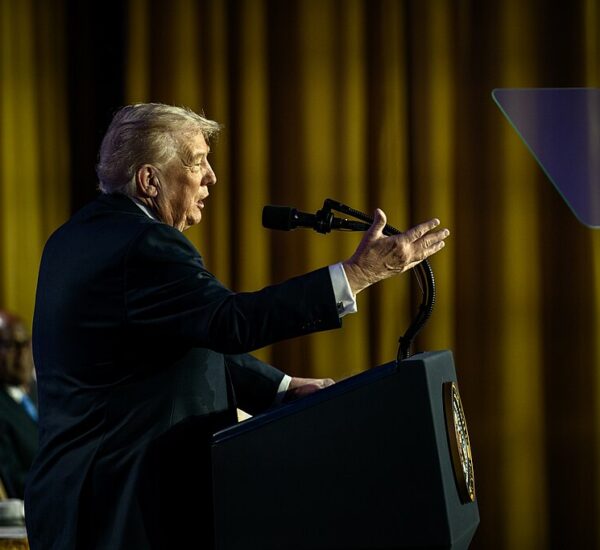
A growing political clash unfolded this week after President Donald Trump criticized Maryland Governor Wes Moore over a major sewage spill into the Potomac River — an incident that has raised serious concerns about infrastructure oversight, environmental safety, and federal disaster funding.
The exchange comes as federal agencies step in to monitor water quality across Maryland, Virginia, and Washington, D.C., while residents seek answers about accountability and public health protections.
President Trump Blames “Local Democrat Leadership” for Infrastructure Failure
The controversy began after a section of the Potomac Interceptor — a critical sewage pipeline in Maryland — collapsed, causing wastewater to flow into the Potomac River.
President Trump described the spill as the result of “gross mismanagement” by local Democratic officials, specifically naming Governor Moore. He stated that federal authorities are being directed to provide management, coordination, and oversight to protect:
- The Potomac River
- The capital region’s water supply
- National resources in Washington, D.C.
Trump also emphasized that federal agencies will play a key role in ensuring a swift response.
Gov. Moore Fires Back — And Raises FEMA Funding Dispute
Governor Moore responded publicly, stating the sewage spill is “basically contained.” However, he used the moment to pivot toward another issue — FEMA disaster funding.
Federal Emergency Management Agency previously denied Maryland’s appeal for federal disaster relief following historic flooding in Garrett and Allegany counties last year.
According to state officials, those floods caused approximately $33.7 million in damages to:
- Homes
- Schools
- Libraries
- Public infrastructure
Moore renewed his call for FEMA assistance, arguing Western Maryland communities are still rebuilding.
Who Owns the Potomac Interceptor?
One critical detail often overlooked in political debate: the collapsed sewer line is owned and operated by DC Water.
Reconstruction efforts are being overseen by DC Water, while regulatory authority falls under the Environmental Protection Agency.
Additional agencies involved in monitoring and recovery include:
- Maryland Department of the Environment
- Maryland Department of Health
- Virginia environmental and health departments
Officials have stated that drinking water in the capital region remains safe. However, residents are being advised to avoid recreational contact with the Potomac River, including swimming, fishing, and kayaking.
DHS Funding Issues Complicate FEMA Operations
Another layer to the situation: the Department of Homeland Security is currently facing funding constraints, which affects FEMA’s operational capacity.
This raises larger questions for taxpayers and residents:
- Is federal disaster relief being applied consistently?
- Are infrastructure inspections being properly funded?
- Who ultimately bears responsibility for aging sewer systems?
For many Americans over 50, these concerns hit close to home. Decades of deferred maintenance across the country have left critical infrastructure vulnerable — from water systems to highways and bridges.
Infrastructure Accountability in the Capital Region
The Potomac River is more than just a scenic waterway — it supplies drinking water to millions in the Washington, D.C. metropolitan area.
Incidents like this reignite debate about:
- Urban infrastructure oversight
- State vs. federal responsibility
- Long-term investment in public works
- Environmental safeguards
While officials say the immediate public health threat is limited, the political fallout is likely to continue.
The Bottom Line
This dispute between President Trump and Governor Moore highlights a broader issue facing many states: aging infrastructure, disaster funding battles, and questions about leadership accountability.
Residents across Maryland, Virginia, and Washington, D.C. will be watching closely as cleanup and reconstruction efforts move forward.
The bigger issue may not be partisan politics — but whether lessons are learned to prevent similar failures in the future.