GOP Divided Over Trump
The federal government shutdown is now dragging into historic territory — and the biggest obstacle may not be Democrats alone, but growing divisions inside the Republican Party over how to handle border security and immigration enforcement.
With the Department of Homeland Security (DHS) still unfunded, thousands of federal workers remain affected, and concerns about national security, border control, and government stability are intensifying.
Border Security at the Center of the Shutdown Battle
At the heart of the standoff is a familiar issue: immigration enforcement and border security funding.
Republicans have made it clear they want full funding for key agencies like Immigration and Customs Enforcement (ICE) and Customs and Border Protection (CBP). However, Democrats have refused to support any DHS funding bill unless stricter limitations are placed on those agencies.
GOP leaders argue this is part of a broader push by the left to weaken law enforcement and maintain what many conservatives see as an ongoing border crisis.
Senate Majority Leader John Thune pointed directly to what he described as the Democrats’ “open borders” wing, accusing them of blocking critical funding for national security.
Republicans Control Washington — But Can’t Agree on a Plan
Despite holding the House, Senate, and White House, Republicans have struggled to unite behind a clear strategy to end the shutdown.
The Senate recently passed a two-step DHS funding plan, separating general agency funding from additional money for ICE and CBP. The measure passed unanimously, signaling strong support in the upper chamber.
But in the House, conservative lawmakers pushed back hard.
Many argued that funding DHS without first securing border enforcement money would weaken national security and reward Democrat obstruction.
Trump’s Strategy Shift Adds to the Confusion
President Trump initially appeared to oppose any plan that funded DHS without prioritizing ICE and CBP. However, in a surprising turn, he later backed a version of the Senate’s approach — prompting a rapid shift from House leadership.
This change created confusion among conservatives, many of whom now question whether the Senate can be trusted to follow through on future border security funding.
For many Republicans, the concern is simple: pass enforcement funding first — not later.
House Conservatives Draw a Hard Line
Several House Republicans are refusing to support any deal that delays funding for immigration enforcement.
Their position reflects a broader concern among conservative voters: that Washington often promises strong border policies — but fails to deliver once deals are made.
This has put Speaker Mike Johnson in a difficult position, caught between advancing a deal that could pass quickly or standing firm with conservatives demanding stronger guarantees.
A No-Win Situation for GOP Leadership
Johnson now faces two risky options:
- Pass the Senate bill with Democrat support, which could trigger backlash from conservatives and threaten his leadership
- Delay the deal to prioritize border enforcement funding, which could extend the shutdown and fuel criticism from the media and political opponents
Meanwhile, Senate Republicans insist their plan is the most realistic path forward — even if it’s not perfect.
Shutdown Pressure Eases as Trump Steps In
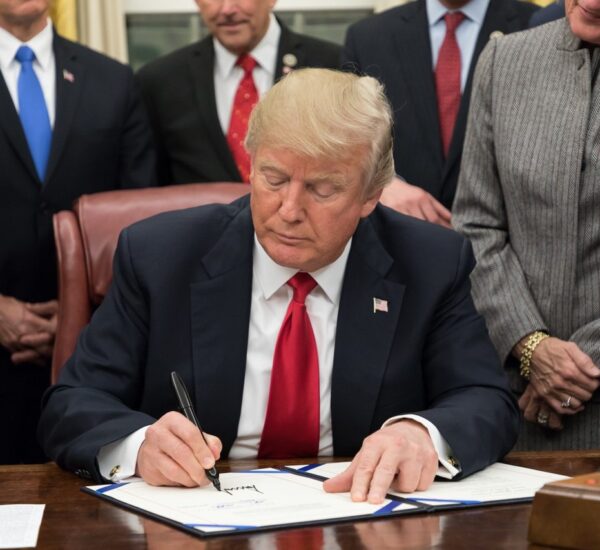
In a move that has shifted the political pressure, President Trump has taken executive action to ensure some federal workers — including TSA employees — continue receiving pay during the shutdown.
He has also proposed extending pay protections to additional DHS workers, reducing the immediate financial impact on affected families.
While this has helped ease public concern, it has also reduced urgency in Congress to reach a fast resolution.
What Happens Next?
With lawmakers out of Washington until mid-April, there is no immediate solution in sight.
The longer the shutdown continues, the more pressure builds — not only on federal agencies, but on Republican leadership to prove they can govern effectively while prioritizing border security.
For many Americans, especially older voters who value stability, law enforcement, and national security, the stakes couldn’t be higher.