Trump Considering New Executive Order
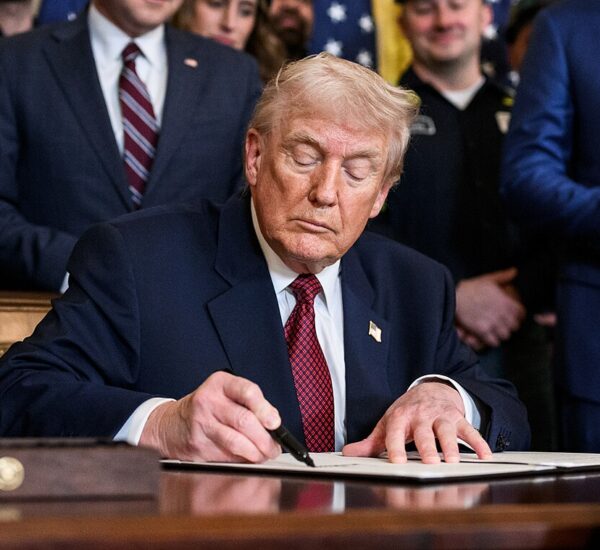
President Donald Trump announced Friday that he is prepared to issue an executive order requiring proof of citizenship and voter identification if the Senate does not pass the Safeguard American Voter Eligibility (SAVE) Act.
The House of Representatives passed the SAVE Act earlier this week, but the bill now faces uncertainty in the Senate.
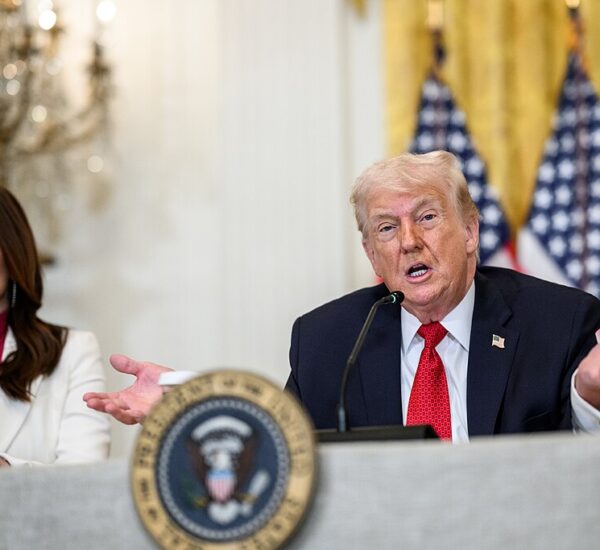
In a post on Truth Social, President Trump declared that voter ID will be in place for the upcoming midterm elections — with or without congressional approval.
“There will be Voter I.D. for the Midterm Elections,” the president wrote, emphasizing that many Americans are calling for proof of citizenship requirements and tighter rules on mail-in ballots, while preserving exceptions for military personnel, voters with disabilities, illness, or those traveling.
He later followed up, stating that if Congress does not advance the SAVE Act, his administration will present legal justification for executive action.
What the SAVE Act Would Do
The SAVE Act is designed to strengthen election integrity by requiring individuals to provide proof of U.S. citizenship when registering to vote in federal elections.
Key provisions include:
- Mandatory proof of citizenship for voter registration
- Voter ID requirements for mail-in ballots
- Submission of a photocopy of a valid state-issued ID
- Or an affidavit with the last four digits of a Social Security number if ID is unavailable
Supporters argue that these measures increase public trust in elections and ensure that only eligible citizens participate in federal voting.
Opponents have raised concerns about implementation logistics and timing.
Senate Outlook Remains Uncertain
The SAVE Act passed the House in a narrow 218-213 vote. However, the legislation faces resistance in the Senate.
Sen. John Fetterman (D-Pa.) has indicated potential support, while Sen. Lisa Murkowski (R-Alaska) has voiced opposition, citing concerns about imposing new federal requirements close to Election Day.
Senate Majority Leader John Thune (R-S.D.) has stated that Republicans are evaluating procedural options, including extended floor debate. However, he has also acknowledged that prolonged negotiations could delay other legislative priorities such as housing reform, infrastructure funding, and agricultural legislation.
Why Voter ID Remains a Central Issue
Voter ID and proof of citizenship laws continue to be major topics ahead of the midterm elections.
Supporters of voter identification requirements often point to polling that shows broad public support for showing ID when voting. They argue that consistent national standards help protect election integrity and reinforce confidence in election outcomes.
Critics argue that states are already preparing for elections and caution that new federal mandates could create administrative burdens.
The debate reflects a broader national conversation about how to balance accessibility and security in American elections.
Could an Executive Order Change the Landscape?
If the Senate does not pass the SAVE Act, President Trump has signaled that he will move forward with executive action.
While the exact scope of such an order remains to be seen, the administration appears prepared to argue that federal law already provides authority to require proof of citizenship in federal elections.
Legal experts note that any executive order related to election procedures would likely face court scrutiny.
What This Means for the 2026 Midterm Elections
With midterm elections approaching, voter ID requirements and proof of citizenship standards are becoming defining issues.
For many older Americans — who consistently turn out in high numbers — election integrity remains a top priority.
Whether through congressional legislation or executive action, the coming months could reshape how federal elections are administered.
One thing is clear: the debate over voter ID and election security is not going away.