Trump Delivers Another Win For America
President Donald Trump is highlighting a major manufacturing milestone after new data confirmed that the United States outproduced Japan in steel during 2025—the first year of his second term.
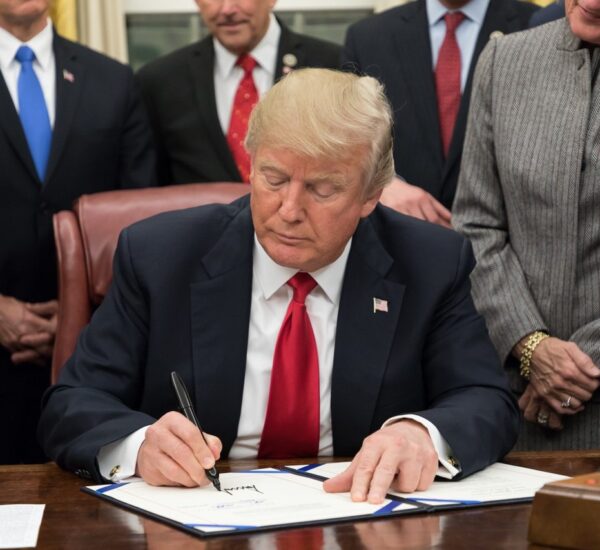
Trump shared the news Sunday in a post on Truth Social, calling the achievement a sign that American industry is regaining its global footing after decades of decline.
“For the first time in many years, the United States made more steel than Japan, one of the world’s largest steel producers,” Trump wrote while attending a private event at Mar-a-Lago in Palm Beach, Florida.
According to reporting from Nikkei Asia, the U.S. surpassed Japan in steel production for the first time in more than 25 years. Industry analysts say the shift represents both an economic and symbolic turning point for American manufacturing.
Data from the World Steel Association show U.S. crude steel output rose 3.1% in 2025 to approximately 82 million metric tons. That increase moved the United States into third place globally, behind only China and India.
It was the first time since 1999 that American steelmakers outpaced Japan, ending a long period in which U.S. production steadily lagged foreign competitors.
Tariffs and Trade Policy Drive Output
Industry experts point to trade policy as a central factor in the rebound.
In March, the Trump administration imposed a 25% tariff on imported steel and aluminum. That measure was expanded in June, when the tariff rate was increased to 50%. With foreign steel becoming significantly more expensive, U.S. producers moved quickly to increase domestic output.
The tighter supply pushed prices higher. Hot-rolled steel, a key input used in construction and manufacturing, reached $983 per ton in January, according to SteelBenchmarker. That figure represents a sharp rise from early 2025 levels and stands well above global export prices.
Despite higher costs, demand has remained strong.
Figures from the American Iron and Steel Institute show domestic steel shipments increased 5% year over year in November, signaling sustained activity across multiple sectors of the economy.
AI Boom Fuels Steel Demand
One of the fastest-growing sources of steel consumption is artificial intelligence infrastructure.
Data centers, power generation facilities, and supporting construction projects require large volumes of steel. According to the U.S. Department of Commerce, private spending on data-center construction more than doubled in the two years leading up to 2025.
That surge has turned advanced technology development into a major driver of traditional heavy industry.
Foreign Investment Flows Into U.S. Steel
Global investors have taken notice of the changing landscape.
Japan-based Nippon Steel completed its $14.1 billion acquisition of U.S. Steel last year and has announced plans for additional investment in American facilities. The company has indicated it intends to focus on high-grade steel products used in data centers and advanced manufacturing.
At the same time, steel producers in other regions are facing growing challenges.
China, which accounts for roughly one-third of global steel consumption, is experiencing weaker demand due to a prolonged slowdown in construction. Excess steel from China is increasingly being sold into export markets at discounted prices, putting pressure on manufacturers abroad.
“The global steel market is becoming increasingly divided,” said Atsushi Yamaguchi of SMBC Nikko Securities, noting that export-dependent producers in Japan, South Korea, and Taiwan could face worsening conditions in the years ahead.
America’s Manufacturing Revival
In contrast, the U.S. steel industry is benefiting from strong domestic demand, trade protections, and renewed investment.
Supporters of the administration say the production surge underscores how tariffs, infrastructure demand, and private-sector confidence can combine to strengthen American manufacturing—particularly in industries critical to national security and economic stability.
For the first time in a generation, the United States is once again setting the pace in global steel production.