Nato Chief Says Trump Is Right?
NATO Secretary-General Mark Rutte delivered a blunt reality check this week that underscored a long-standing concern shared by many American voters: Europe is not capable of defending itself without U.S. military power — and doing so would require astronomical spending increases.
Speaking before lawmakers in Brussels, Rutte dismissed the idea of European military independence as unrealistic. He warned that anyone who believes Europe or the European Union could protect itself without American support is “dreaming,” emphasizing that the transatlantic alliance remains indispensable.
According to Rutte, Europe and the United States do not merely cooperate — they depend on one another, particularly when it comes to military deterrence and global stability.
Trump Pressure Forces NATO Reality Check
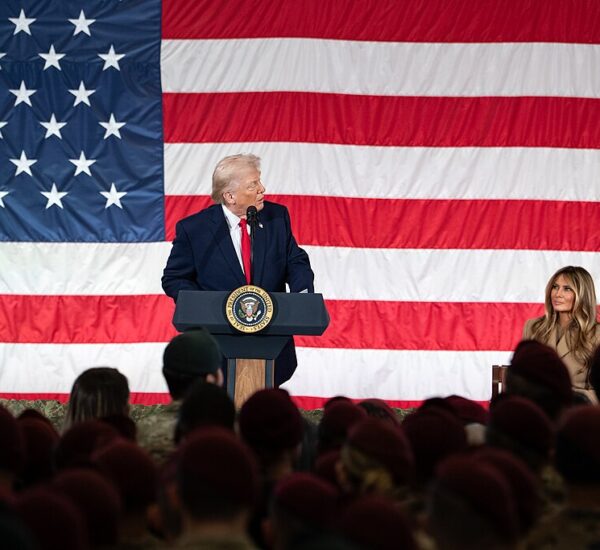
Rutte’s remarks come as internal tensions continue to grow inside NATO, driven in large part by President Donald Trump’s renewed demands that European nations carry their fair share of the defense burden.
In recent weeks, Trump has reignited debate across Europe by floating the idea of bringing Greenland under U.S. control — a move that rattled European leaders and highlighted America’s dominant role in Arctic security. Greenland is a semi-autonomous territory of NATO ally Denmark, making the issue especially sensitive.
Trump also threatened new tariffs aimed at Greenland’s European backers. Those threats were later paused after a preliminary framework agreement was reached concerning access to the island’s strategic mineral resources — negotiations in which Rutte reportedly played a behind-the-scenes role. Few details of that agreement have been made public.
NATO’s Defense Promise — And Its Limits
At the core of NATO is Article 5, the alliance’s mutual defense clause, which commits all member nations to defend any ally under attack. But at NATO’s July summit in The Hague, Trump made it clear that words alone are not enough.
Under pressure from the Trump administration, nearly all European allies — along with Canada — agreed to dramatically raise defense spending over the next decade. Spain was the lone country to resist the plan.
The agreement calls for nations to spend a combined 5 percent of GDP on defense and security by 2035 — 3.5 percent on core military forces and an additional 1.5 percent on infrastructure and readiness.
Yet even that level, Rutte admitted, would fall far short if Europe ever attempted to separate itself from American protection.
“You’d Need 10% — And Nuclear Weapons”
Rutte issued a stark warning: if Europe truly wanted to defend itself without the United States, it would need to spend closer to 10 percent of GDP and build its own nuclear deterrent — a move that would cost “billions and billions of euros.”
Without American involvement, Europe would also lose what Rutte called its ultimate shield: the U.S. nuclear umbrella, which has safeguarded the continent since the Cold War.
Calls for so-called “strategic autonomy,” long championed by France, have gained momentum in recent years. But Rutte made clear that such ambitions come with enormous costs and serious risks.
Without U.S. leadership, he warned, Europe would be left exposed — economically, militarily, and strategically.
His closing message was unmistakable: America remains the backbone of Western security — and Europe knows it.