Democrats Looking For Leadership?
House Democrats are quietly preparing to support a bipartisan extension of enhanced ObamaCare subsidies — but only after party leaders signal it is politically safe to do so.
With enhanced Affordable Care Act tax credits scheduled to expire on December 31, lawmakers backing two bipartisan proposals have launched discharge petitions in an attempt to force House votes. The maneuver bypasses party leadership and reflects growing concern that inaction could trigger sharp insurance premium increases for millions of Americans.
So far, however, Democratic leadership has refused to commit.
House Minority Leader Hakeem Jeffries (D-N.Y.) has declined to endorse either bipartisan proposal, instead continuing to push a Democratic-only plan to extend the subsidies for three years. That plan has already failed to advance in the Senate, raising doubts about its viability.
Behind closed doors, rank-and-file Democrats admit they are waiting for explicit guidance from leadership before taking action.
Several lawmakers say that stance could shift next week if it becomes clear that neither Republicans nor Democrats can move a partisan bill through Congress. If that happens, Democratic leaders are expected to rally behind one of the bipartisan measures — potentially unleashing enough signatures to force a vote on the House floor.
“We’ve got to do one or the other,” said Rep. Gregory Meeks (D-N.Y.). “We need to make sure something gets done so health care costs don’t spiral out of control.”
Asked whether Democrats were waiting on approval from Jeffries, Meeks was blunt.
“That’s exactly right,” he said.
Rep. Ami Bera (D-Calif.) confirmed that members have received no direction so far, but warned that delay cannot continue indefinitely.
“If nothing moves and no vote happens,” Bera said, “then I think members will try to force a vote.”
Two Bipartisan Plans, Two Different Paths
At the center of the dispute are two bipartisan discharge petitions aimed at preventing the subsidies from expiring.
One proposal, sponsored by Reps. Brian Fitzpatrick (R-Pa.) and Jared Golden (D-Maine), would extend the subsidies for two years while implementing eligibility reforms. Those include income caps, the elimination of zero-premium plans, and expanded use of health savings accounts.
A second proposal, led by Reps. Jen Kiggans (R-Va.) and Josh Gottheimer (D-N.J.), offers a one-year extension with fewer eligibility restrictions and more limited reforms.
Both efforts have already drawn support from more than 10 Republicans — a rare sign of open frustration with GOP leadership. But neither petition can succeed without substantial Democratic backing, which has not yet materialized.
Jeffries said Friday that Democrats are “actively reviewing” both proposals and promised more clarity in the coming days.
Why Democrats Are Delaying
Democrats privately acknowledge that the delay is strategic.
First, party leaders want Republican disagreements over health care policy to remain in the spotlight. Jumping in too early could shift blame away from GOP leadership.
Second, Democrats worry that rushing to sign discharge petitions would make the legislation appear partisan rather than bipartisan — potentially weakening its chances in the Senate and at the White House.
“If Democrats take over the process, it stops being bipartisan,” one House Democrat said anonymously. “We’re waiting to see who moves first.”
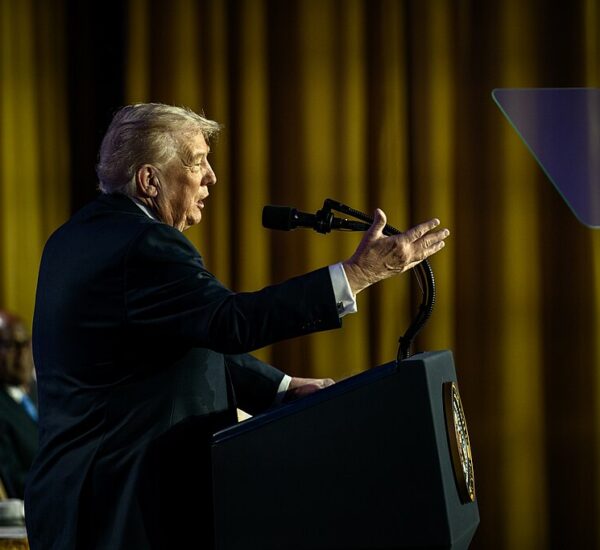
Some Democrats also hope the pressure forces Republican leaders — including President Trump — to step in and push a compromise from their side.
Jeffries continues to argue that his three-year extension remains the “cleanest” option. His discharge petition already has 214 signatures and would require just four Republicans to succeed.
Republicans say that will not happen.
“It’s a blank check with no reforms,” said Rep. Jeff Van Drew (R-N.J.). “That approach is dead on arrival.”
GOP Plan Faces Its Own Problems
Meanwhile, Republican leaders are advancing their own health care package, which includes conservative priorities such as expanded health savings accounts and association health plans. The package would also allow a separate vote on extending ACA subsidies.
But even Republicans concede the bill may struggle to pass the House — and would face even steeper odds in the Senate, where Democrats can block it with a filibuster.
Jeffries’s three-year extension already failed in the Senate, falling well short of the 60 votes required.
That reality leaves the bipartisan bills as the most realistic path forward, supporters say.
“If you want a deal, you have to work across the aisle,” said Golden.
Among Democrats, the Kiggans-Gottheimer proposal appears to be gaining more traction because it includes fewer conservative policy changes. Still, resistance remains among progressives, who oppose shifting emphasis toward private savings tools like HSAs.
“This has to be something people can actually rely on,” said Rep. Pramila Jayapal (D-Wash.). “It can’t limit access when families are struggling.”
Pressure Is Building
After months of warning about looming premium hikes, Democrats also face political risk of their own. Allowing the subsidies to expire could spark backlash from voters already squeezed by inflation and rising health care costs.
For now, Democratic leaders are watching, waiting, and calculating.
“It’s a wait-and-see moment,” Bera said. “But no one wants families hit with sudden premium increases.”