
Court Hands Trump Key Immigration Win
A federal appeals court has delivered a ruling that could significantly impact immigration enforcement nationwide — and supporters of President Trump’s law-and-order agenda are calling it a major step forward.
On Tuesday, the U.S. Court of Appeals for the District of Columbia Circuit rejected a request from migrant advocacy groups seeking to temporarily block the Internal Revenue Service (IRS) from sharing certain information with the Department of Homeland Security (DHS).
The decision reinforces the authority of federal agencies to cooperate in enforcing immigration laws passed by Congress.
What the Court Decided
The legal challenge was brought by Centro de Trabajadores Unidos and other immigration advocacy organizations after a lower court in Washington, D.C., refused to grant a preliminary injunction in May.
The plaintiffs attempted to stop an April memorandum of understanding between DHS and the Treasury Department. Under that agreement, Immigration and Customs Enforcement (ICE) officials are allowed to request limited information — such as names and addresses — of individuals suspected of residing in the United States without legal status.
In a comprehensive 35-page ruling, Judge Harry T. Edwards stated that the organizations opposing the agreement are not likely to prevail based on the substance of their legal arguments.
The court concluded that the IRS is legally permitted to share certain data if it does not qualify as protected “taxpayer return information” under federal law.
That distinction proved critical.
Why This Matters for Immigration Enforcement
The ruling supports interagency cooperation between tax authorities and immigration enforcement officials — something many Americans believe is essential for restoring border security and upholding federal law.
Under existing law:
- Individuals living in the U.S. without legal status may still pay federal taxes, often using Individual Taxpayer Identification Numbers (ITINs).
- Employers who knowingly hire unauthorized workers can face fines, sanctions, and enforcement action from ICE.
Supporters argue that allowing agencies to share limited information strengthens the enforcement framework already written into federal statutes.
Critics claim it may discourage tax compliance.
The appeals court, however, focused strictly on the legal authority granted by Congress.
Internal IRS Controversy
The agreement has not been without controversy inside the federal government.
Then-acting IRS Commissioner Melanie Krause resigned following the data-sharing arrangement earlier this year.
Additionally, earlier this month, IRS Chief Officer Dottie Romo admitted in a court filing that the agency had improperly disclosed taxpayer information to ICE in certain instances where identifying details were insufficient.
That admission could play a role in future litigation, but it did not persuade the appeals court to block the broader agreement.
Trump Administration Applauds Decision
Attorney General Pam Bondi praised the ruling on social media, calling it “a crucial victory for President Trump’s agenda to Make America Safe Again.”
Bondi emphasized that the decision affirms a foundational principle: laws enacted by Congress must be enforced as written.
For voters concerned about border security, federal accountability, and immigration policy, the ruling is seen as reinforcing the executive branch’s authority to carry out enforcement responsibilities.
The Bigger Picture: Immigration, Taxes, and the Rule of Law
This case highlights a growing national debate:
- Should federal agencies share information to enforce immigration laws?
- Where does taxpayer privacy end and national security begin?
- How should courts balance confidentiality statutes with enforcement authority?
The appeals court’s decision suggests that, at least for now, interagency cooperation within the limits of federal law will be allowed to continue.
Legal challenges may persist. But this ruling signals that courts are not automatically siding with advocacy groups seeking to block enforcement mechanisms.
What Comes Next?
The case could still face additional appeals or further litigation over how the agreement is implemented. However, the immediate effort to halt IRS-DHS data sharing has been denied.
For Americans following immigration policy closely, this decision marks another chapter in the broader effort to address border security and federal law enforcement coordination.
Final Takeaway
The D.C. Circuit’s ruling does not create new immigration law. Instead, it affirms the authority already granted by Congress — and allows federal agencies to operate within that framework.
As immigration remains one of the defining issues facing the country, decisions like this will continue shaping how enforcement policies unfold in the years ahead.



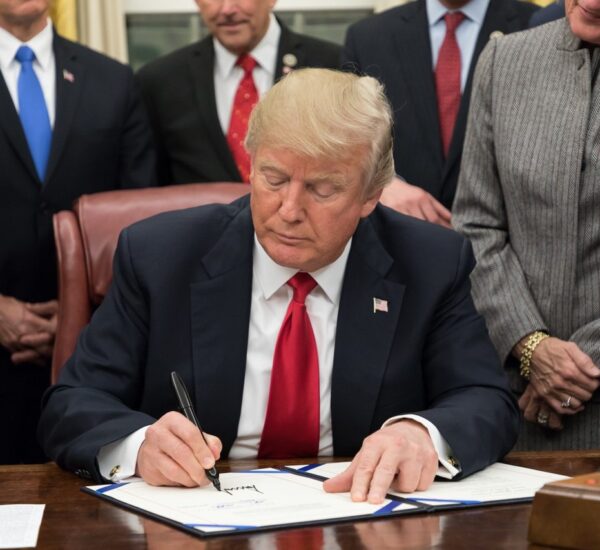


The media says a of things that are not accurate. But it obviously was not popular with democrat politicians and marxists.