Trump Causes Another Resignation
The leadership shake-up at Washington’s most famous performing arts venue just took another turn.
Jean Davidson, executive director of the National Symphony Orchestra (NSO), announced Friday that she will step down from her position, pointing to the growing controversy surrounding major changes implemented at the Kennedy Center under President Donald Trump.
Davidson confirmed her departure in an interview with The New York Times, saying she had already begun looking for a new opportunity months ago as tensions around the center intensified.
“It’s no secret this has been an extremely difficult year,” Davidson said. “I started exploring other opportunities several months ago.”
She added that the ongoing turmoil made it increasingly difficult to continue leading the orchestra effectively.
“I didn’t see how I could be effective as a leader in the current climate,” she explained.
Trump Moves to Reshape the Kennedy Center
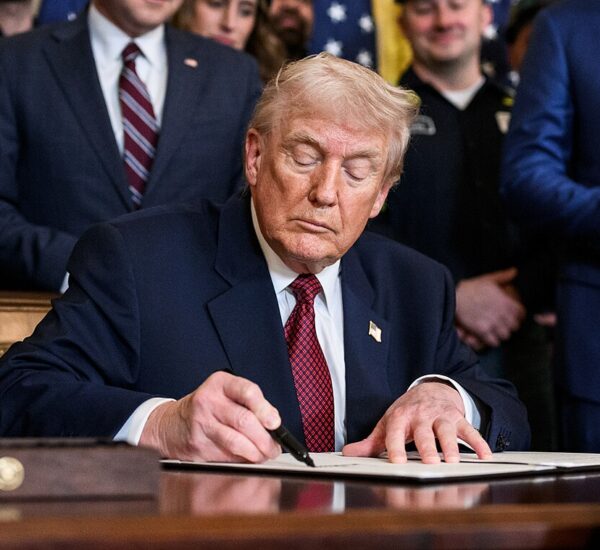
Since returning to the White House, President Trump has pushed several high-profile changes aimed at reshaping the historic Kennedy Center.
In February 2025, Trump removed multiple members of the center’s board of trustees and installed a new board largely made up of allies. The president also named himself chairman of the new board.
Later that year, the center was officially renamed the “Donald J. Trump and the John F. Kennedy Memorial Center for the Performing Arts.” The decision has sparked legal challenges that are still working their way through the courts.
Trump’s name was also added to the exterior of the building alongside President John F. Kennedy, who the center originally honored after his assassination in 1963.
Supporters say the changes reflect a new vision for the iconic venue, while critics argue the moves have injected politics into a traditionally nonpartisan cultural institution.
Planned Renovation Triggers Lawsuit
The controversy escalated again last month when Trump announced plans to temporarily close the Kennedy Center for major renovations beginning in July.
According to the plan, the facility could remain closed for roughly two years while upgrades and repairs are completed.
The announcement immediately drew political pushback.
Rep. Joyce Beatty (D-Ohio) filed a lawsuit Friday asking a federal court to block the closure. She argues the shutdown could allow sweeping structural changes — or even the demolition of parts of the building — while the public cannot access the facility.
Performers Begin Pulling Out
The uncertainty surrounding the Kennedy Center has already begun affecting scheduled performances.
Several artists and organizations have canceled appearances, and reports suggest ticket sales have fallen for events that remain scheduled.
In January, legendary composer Philip Glass withdrew a new symphony that had been scheduled to premiere with the National Symphony Orchestra. The piece was intended to serve as a musical portrait of Abraham Lincoln.
Glass said the center’s new direction did not align with the spirit of his work.
Acclaimed banjo virtuoso Béla Fleck also canceled a planned performance with the orchestra, saying the atmosphere around the venue had become too politically charged.
Around the same time, the Washington National Opera announced it would leave the Kennedy Center entirely.
That departure left the National Symphony Orchestra as the only major musical organization still based at the venue.
Orchestra Scrambling After Closure Announcement
Despite the turmoil, Davidson previously made it clear that the orchestra intends to remain connected to the Kennedy Center.
The venue has served as the orchestra’s home for more than 55 years.
However, Davidson admitted the sudden announcement of the two-year closure created serious logistical challenges.
She said the orchestra received no advance notice before the renovation plans were revealed publicly.
While she acknowledged the building likely needs repairs, the lack of communication forced the orchestra to quickly search for alternative venues where it can perform during the closure.
“There’s been a lot of change happening and very little communication,” Davidson said. “We’re often learning about decisions through the press — at the same time as everyone else.”
A Final Message to Washington Audiences
As she prepares to step down, Davidson urged Washington residents and longtime supporters to continue backing the National Symphony Orchestra.
She said strong community support will be essential for the orchestra’s future during the uncertain period ahead.
“The orchestra has never sounded better than it does right now,” she said. “But we need Washington — our audiences and donors — to continue supporting it if it’s going to survive.”
At the time of publication, neither the Kennedy Center nor the White House had responded to requests for comment regarding Davidson’s resignation.