Trump Reverses Course On Threats
President Donald Trump moved Wednesday to ease escalating tensions with Europe after days of controversy surrounding Greenland and potential tariffs, but some lawmakers warn the episode may have already strained long-standing U.S. alliances.
While Trump signaled a shift away from confrontation, critics in both parties argue that merely raising the possibility of military or economic pressure against a NATO partner could have lasting diplomatic consequences.
Trump Signals Shift at Davos
Trump has long expressed interest in Greenland, a semi-autonomous territory governed by Denmark, pointing to its strategic importance in the Arctic. In recent weeks, that interest intensified into public speculation about force or trade retaliation, drawing swift reactions from European leaders.
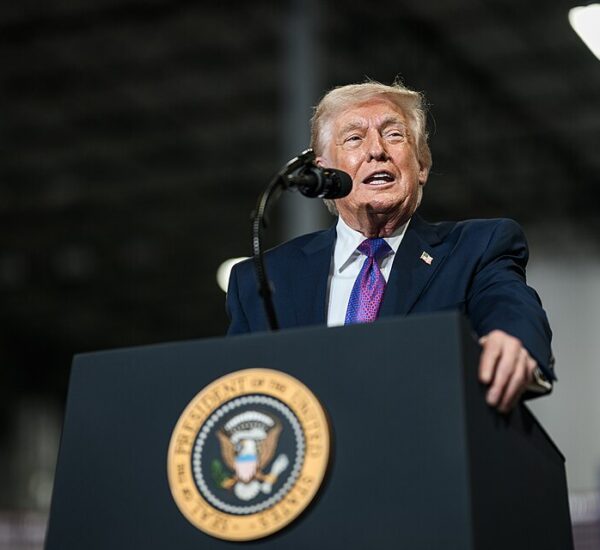
During remarks at the World Economic Forum, Trump struck a more measured tone. He indicated the United States would pursue negotiations rather than coercion and emphasized dialogue with European partners.
Shortly after, Trump announced what he described as a “framework for a future agreement” following talks with Mark Rutte. He also said previously threatened tariffs on European allies would not move forward, citing renewed commitments to respect Denmark’s sovereignty over Greenland.
Lawmakers React With Caution
The rapid de-escalation brought relief to some lawmakers on Capitol Hill who had warned that aggressive rhetoric toward NATO allies could weaken decades of cooperation.
Others, however, said the uncertainty itself may have already done damage.
Rep. Adam Smith, the top Democrat on the House Armed Services Committee, said threats against an allied nation cannot simply be undone and may prompt partners to reconsider their reliance on U.S. leadership.
Republican Rep. Don Bacon of Nebraska echoed concerns about the approach, noting that Greenland remains Danish territory and arguing that expanded U.S. military access could be achieved through cooperation rather than confrontation.
Concerns Over Economic Fallout
Rep. Michael McCaul of Texas, former chair of the House Foreign Affairs Committee, said threatening a NATO ally — militarily or economically — is counterproductive. While welcoming Trump’s apparent retreat from military options, McCaul stressed that NATO alliances have played a critical role in preventing global conflict and countering hostile powers.
Some lawmakers also pointed to early signs of economic fallout. Canada recently finalized a new trade agreement with China, and at Davos, Canadian Prime Minister Mark Carney encouraged European nations to diversify trade relationships amid growing uncertainty.
Debate Over Long-Term Impact
Democratic Rep. Don Beyer of Virginia, a former U.S. ambassador, said the episode highlights growing frustration among U.S. allies. He argued that prolonged uncertainty risks expanding China’s influence across Europe, Africa, and North America.
Others were more optimistic. Rep. Brian Fitzpatrick of Pennsylvania said there is a bipartisan bloc in Congress firmly committed to NATO, regardless of political tensions. Fitzpatrick, a member of the NATO Parliamentary Assembly, said he plans to reinforce that message directly with allied leaders overseas.
At the same time, he cautioned against publicly threatening allies, saying such tactics may generate leverage in negotiations but can also weaken trust.
What Comes Next
Supporters of Trump argue his negotiating style is designed to extract stronger commitments and better terms for American taxpayers. Critics counter that even temporary uncertainty can carry long-term diplomatic costs.
As negotiations continue, the broader impact on NATO unity, global trade, and U.S. leadership remains an open question — one that may take years to fully answer.