Pope Declines Trump’s Offer
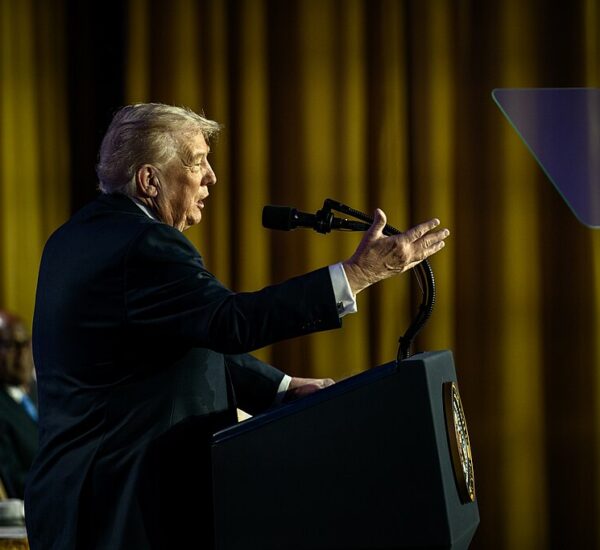
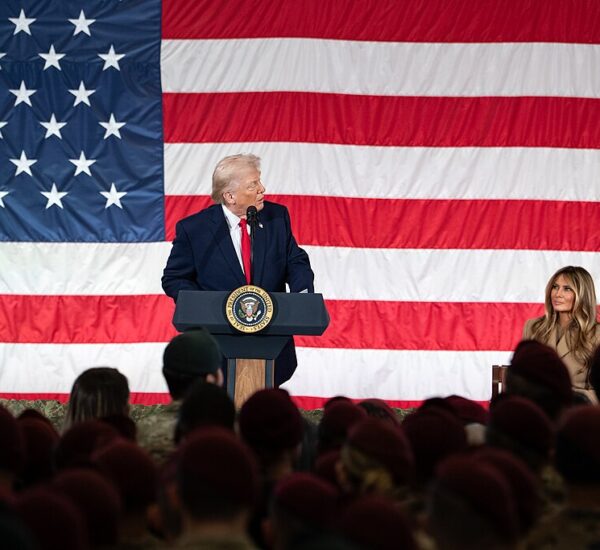
In a move that underscores the growing debate over global leadership, the Vatican announced Tuesday that it will not participate in President Donald Trump’s newly created Board of Peace, choosing instead to reaffirm its support for the United Nations as the primary body for handling international conflicts.
The decision comes as President Trump works to establish a new diplomatic coalition aimed at addressing major global crises — particularly the ongoing war in Gaza — outside the traditional U.N. framework.
Vatican Explains Why It Is Staying Out
Pope Leo XIV will not take part in the initiative, according to Cardinal Pietro Parolin, the Vatican’s secretary of state.
Speaking in Rome following a meeting commemorating the anniversary of the 1929 Lateran Pacts, Parolin explained that the Holy See’s “particular nature” makes participation complicated.
“The Holy See will not participate in the Board of Peace,” Parolin stated.
He emphasized that while efforts to resolve international conflicts are important, there are “critical points” within the U.S.-backed proposal that must be clarified.
For longtime observers of Vatican diplomacy, this reflects the Church’s traditional preference for established international institutions rather than newly formed political coalitions.
Vatican Signals Continued Support for the United Nations
One key issue raised by Vatican officials is the role of the United Nations.
“At the international level, it is primarily the U.N. that manages these crisis situations,” Parolin said.
The Vatican has historically supported multilateral diplomacy through the United Nations system. Its latest comments suggest it sees the U.N. — despite criticisms from many Western leaders — as the legitimate central authority in global crisis management.
For many American conservatives, however, frustration with U.N. gridlock and bureaucracy has grown in recent years.
What Is President Trump’s Board of Peace?
President Trump’s Board of Peace is structured as an independent international coalition designed to respond to global conflicts more decisively and efficiently than the United Nations.
Supporters argue that the U.N. has often struggled with political deadlock, veto power disputes, and slow response times — particularly regarding conflicts in the Middle East.
The new coalition has reportedly gained support from more than 25 nations, including:
- Argentina
- El Salvador
- Paraguay
- Belarus
- Bulgaria
- United Arab Emirates
- Hungary
- Egypt
- Morocco
Several Western European nations — including the United Kingdom, Germany, France, and New Zealand — have declined to join.
The Vatican had previously indicated it was reviewing its participation before making its final decision this week.
A Larger Debate Over Global Authority
This development reflects a deeper question facing the international community:
- Should global conflict resolution remain under the United Nations?
- Or should sovereign nations create alternative coalitions when existing institutions appear ineffective?
For voters and readers over 50, many of whom remember the Cold War era and the formation of modern international institutions, the question of global authority carries significant historical weight.
President Trump’s Board of Peace represents a shift toward a coalition-of-the-willing model, while the Vatican’s position reinforces traditional multilateral diplomacy.
What Happens Next?
Although the Holy See declined participation, Vatican officials stopped short of directly criticizing the initiative. Instead, they emphasized the need for clarity and coordination in international efforts.
As President Trump continues building international backing for the Board of Peace, the coming months will reveal whether this alternative diplomatic model gains broader traction — or whether global institutions like the United Nations retain their central role.