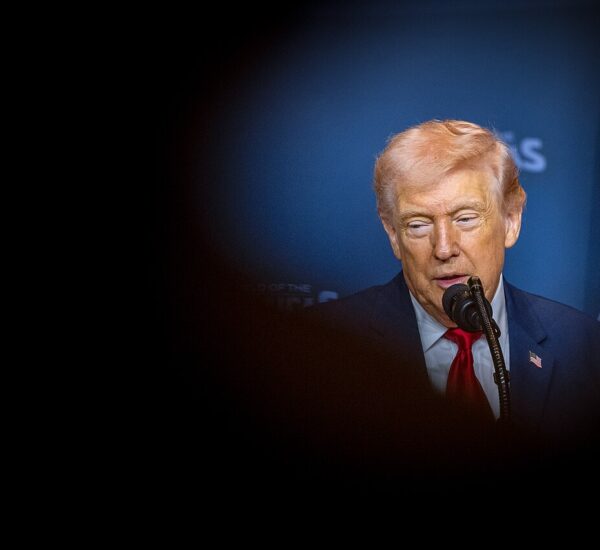
Trump Makes Progress On Major Deal
The United States and Japan are taking early steps to approve the first projects tied to a massive $550 billion joint investment framework, a key pillar of the trade agreement reached earlier this year under President Donald Trump.
Initial discussions are expected to focus on energy-related projects, signaling a priority on strengthening domestic production and long-term economic security.
First Review Meeting Set in Washington
According to individuals familiar with the process, a newly created consultation panel is scheduled to meet Wednesday in Washington, D.C. This meeting marks the first formal review of potential projects that could receive funding under the agreement.
Because the talks are still in their early stages, officials have not publicly disclosed which industries or states may benefit.
Trump Retains Final Authority Over Investments
Under the framework finalized in July, proposals will be evaluated by an investment committee chaired by Commerce Secretary Howard Lutnick. That committee will submit recommendations directly to President Trump, who has final approval power over all projects.
The consultation panel is expected to meet again next week, and projects could reach the president’s desk early next year.
Trade Deal Tied to Tariff Relief
The investment fund was a central element of the broader U.S.–Japan trade agreement, which helped ease tariffs imposed by the Trump administration while securing long-term commitments from Tokyo.
As part of the deal:
- Tariffs on Japanese automobiles were reduced to 15%
- Most other covered Japanese goods were also set at 15%
Negotiations initially centered on a $400 billion investment pledge. President Trump later pushed Japan to raise the commitment to $550 billion, reinforcing his administration’s aggressive stance on trade enforcement.
Enforcement Mechanisms Built Into the Deal
Under the governing memorandum of understanding, Japan is expected to finance projects selected by the president following bilateral consultations.
If Japan declines to fund an approved project, the agreement allows the United States to:
- Adjust how investment returns are distributed
- Impose higher tariffs on Japanese imports in certain cases
Supporters say these provisions protect American leverage and prevent the deal from becoming symbolic or unenforceable.
Energy Projects Lead the Way
Energy initiatives are expected to be the first projects formally considered, reflecting the administration’s emphasis on energy independence, infrastructure, and industrial strength.
The agreement allows investments to be made through January 19, 2029, the final full day of President Trump’s second term. There is no requirement that the full $550 billion be spent by that date.
Skepticism Over Full Funding
Some analysts have questioned whether the entire funding level will ever be realized.
Paul Nadeau, a professor at Temple University’s Japan campus and a visiting research fellow at the Institute of Geoeconomics, said he doubts the entire $550 billion commitment will ever be fully realized.
U.S., Japan Describe Fund Differently
American and Japanese officials have at times described the investment fund in different terms.
President Trump has repeatedly described the funding as a “signing bonus,” emphasizing that the money belongs to the United States and should be invested at America’s discretion.
Japanese officials, meanwhile, have emphasized that all investments must comply with the legal frameworks of both countries.
National Security Focus Beyond Energy
Beyond energy development, the investment framework is intended to support projects tied to economic and national security priorities, including:
- Semiconductor manufacturing
- Pharmaceuticals
- Shipbuilding
- Critical minerals and advanced metals
- Artificial intelligence
- Quantum computing
Supporters argue the deal reflects President Trump’s broader strategy of using tariffs and trade pressure to secure real investment commitments that benefit American workers—rather than relying on unenforced promises.