Trump Upsets Denmark Again
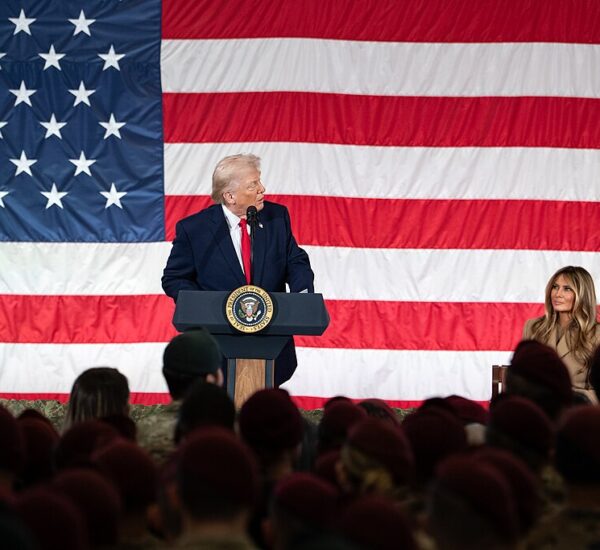
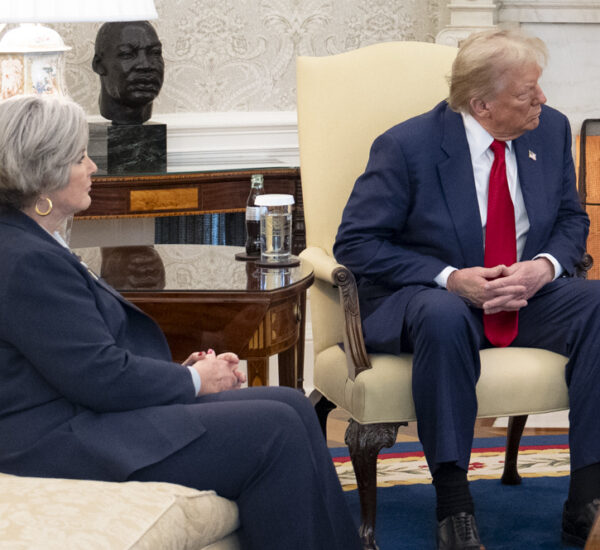
President Donald Trump is facing renewed criticism from European leaders after reviving his long-standing interest in bringing Greenland under U.S. control — a move the White House says is driven by national security, not politics.
The controversy intensified after Trump appointed Jeff Landry, a Republican governor and close ally, as a special envoy focused on Greenland and Arctic strategy.
Trump has repeatedly argued that Greenland’s location makes it critical to protecting American interests in the Arctic, especially as Russia and China expand their military and commercial presence in the region.
Greenland and Denmark Push Back Hard
Officials in Greenland and Denmark quickly rejected the idea.
In a joint statement, Greenlandic Prime Minister Jens-Frederik Nielsen and Danish Prime Minister Mette Frederiksen said Greenland’s future will be decided only by its people — not Washington.
They emphasized that Greenland is not for sale and will not be taken by any foreign power.
Greenland has a population of about 57,000 people and maintains limited self-rule while Denmark handles defense and foreign policy.
Trump: This Is About Security, Not Resources
Although Greenland contains vast deposits of critical minerals, President Trump has downplayed economic motives.
Speaking from his Mar-a-Lago resort, Trump said the U.S. already has abundant natural resources and does not need Greenland for mining or oil.
“We need Greenland for national security,” Trump said. “When you look at the Arctic, you see Russian and Chinese ships everywhere. We have to protect our interests.”
Greenland’s strategic position places it directly between North America and Europe — a key location for missile defense, satellite monitoring, and early-warning systems.
Diplomatic Tensions Escalate
Denmark reacted strongly to the appointment of Landry, summoning U.S. Ambassador Ken Howery to explain Trump’s remarks.
Greenland’s foreign minister, Vivian Motzfeldt, later reiterated that Greenlanders do not want to become American or Danish.
“Our country belongs to us,” she said. “It will not be owned or controlled by others.”
Experts Warn of European Blowback
Foreign-policy analysts say Trump’s push could strain relationships with U.S. allies.
“This would be seen worldwide as a major challenge to existing norms of national sovereignty,” said Christopher Chivvis of the Carnegie Endowment for International Peace.
Others argue the administration may be seeking leverage rather than ownership — using economic investment, defense agreements, or diplomatic pressure to expand U.S. influence.
Arctic Defense at the Center of the Debate
The island falls under NATO protections through Denmark and already hosts U.S. military assets, including the Pituffik Space Base.
Vice President J.D. Vance visited the base earlier this year and criticized Denmark for failing to invest enough in Arctic security.
Denmark responded by pledging additional defense spending and reaffirming cooperation with Washington — while still rejecting any transfer of sovereignty.
Political Reactions Split Along Familiar Lines
Several European nations, including France and Sweden, publicly backed Denmark and Greenland.
Meanwhile, congressional Democrats accused Trump of damaging alliances and urged him to focus instead on Russia.
Republicans and Trump allies counter that protecting the Arctic is essential to U.S. security and that past administrations failed to act.
A Potential “Win” Without Taking Greenland?
Some analysts believe the standoff could end with a revised defense agreement among the U.S., Denmark, and Greenland — allowing Trump to claim a national-security victory without changing borders.
“It may not look much different on paper,” said Marc Jacobsen of the Royal Danish Defence College, “but it would give the president a visible outcome he could present as a win.”