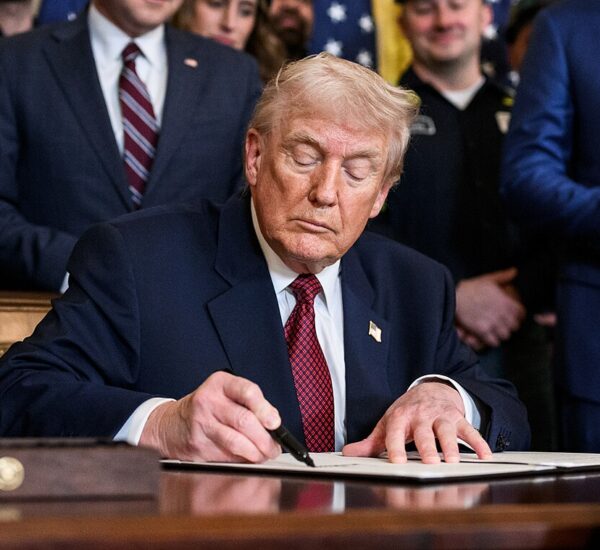
Trump says it’s too late.
President Donald Trump said Sunday that it is now “too late” to stop construction on a major new White House ballroom, dismissing a lawsuit filed after the project was already underway.
The legal challenge, brought by the National Trust for Historic Preservation, seeks to block the construction despite the project being fully funded through private donations and involving no taxpayer dollars.
Trump: Ballroom Paid for With Private Money
In a post on Truth Social, President Trump made clear that American taxpayers are not footing the bill.
The ballroom, which Trump described as “a GIFT (ZERO taxpayer funding) to the United States of America,” carries an estimated cost of $300 million. According to the administration, the entire project is being financed by private donors.
Trump sharply criticized the timing of the lawsuit, arguing that opponents waited until construction had already begun before filing their complaint.
“Why didn’t these obstructionists and troublemakers bring their baseless lawsuit much earlier?” Trump wrote.
East Wing Has Been Altered for Decades
Responding to claims that the project threatens the White House’s historic character, Trump pointed out that the East Wing has been modified repeatedly over the years.
He noted that the structure has been “changed, built, and rebuilt” numerous times and no longer resembles the original White House design.
Administration officials echoed that assessment, stating that the new ballroom will maintain the classical architectural style Americans expect from the White House.
Details of the New White House Ballroom
On July 31, White House press secretary Karoline Leavitt announced the official plans for the project.
The ballroom will span approximately 90,000 square feet and is designed to seat around 650 guests. The White House has never had a formal ballroom, and the new structure will replace the current East Wing.
Supporters argue the addition will allow the White House to host major events without relying on temporary tents or outside venues.
Trump Reshapes the White House and National Mall
Since returning to office, President Trump has moved quickly to leave his mark on the White House and surrounding areas, emphasizing tradition, national pride, and American history.
One of the most ambitious proposals is a new monument known as the “Arc de Trump,” planned in anticipation of the nation’s 250th anniversary next year.
Modeled after Paris’s Arc de Triomphe, the massive arch is designed to welcome visitors as they enter Washington, D.C., from Arlington National Cemetery via the Arlington Memorial Bridge.
Gold Accents Return to the Oval Office
Inside the White House, Trump’s design choices are equally noticeable.
The Oval Office now features expanded gold accents, including decorative trim along ceilings and doorways. Ornamental details, including cherubs above the door frames, have also received a gold finish.
Supporters say the updates restore a sense of grandeur and respect to the presidency.
Presidential Walk of Fame Unveiled
Outside the Oval Office, the administration introduced the “Presidential Walk of Fame,” a display of portraits honoring past U.S. presidents along the West Wing colonnade.
The display also features large mirrors set in gold frames alongside portraits of past presidents. Former President Joe Biden’s portrait includes a signature created using an autopen, a machine designed to replicate handwriting.
Lincoln Bathroom Renovation Sparks Discussion
Trump has also addressed renovations to the Lincoln Bathroom, arguing that previous updates failed to reflect the historical era of President Abraham Lincoln.
“I renovated the Lincoln Bathroom in the White House,” Trump wrote in an October 31 Truth Social post. “It was renovated in the 1940s in an art-deco green tile style, which was totally inappropriate for the Lincoln Era.”
Legal Fight Unlikely to Slow Construction
Despite the lawsuit, Trump has shown no sign of backing down. With construction already underway and private funding secured, the administration appears confident the project will move forward.
As the legal challenge unfolds, the White House ballroom project has become another flashpoint in the broader debate over Trump’s leadership style, priorities, and vision for America’s most iconic building.