Trump is not happy.
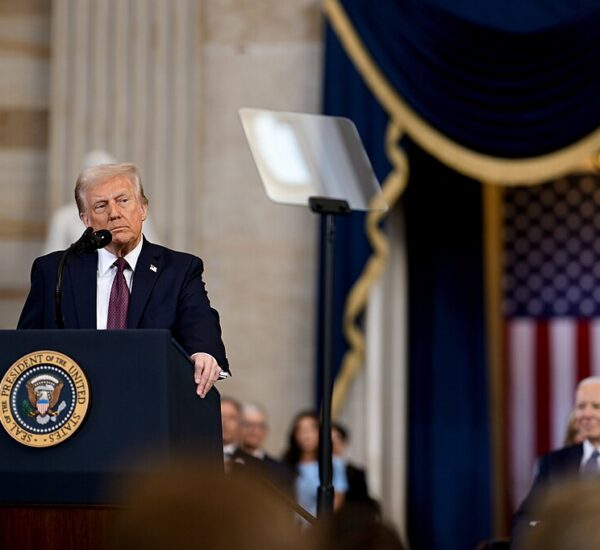
President Donald Trump voiced growing frustration with the U.S. Supreme Court on Friday, criticizing several recent rulings that have created legal roadblocks for his administration’s policies.
During a White House roundtable focused on reforms in college athletics, Trump openly questioned several recent decisions from the nation’s highest court, saying the rulings have had serious consequences for both government policy and the future of American institutions.
The president’s remarks come after a series of legal setbacks involving trade policy, executive authority, and upcoming constitutional cases that could shape key parts of his second-term agenda.
Trump Criticizes Recent Supreme Court Decisions
Speaking to attendees at the White House meeting, Trump suggested that several court decisions have hindered efforts to implement policies that he believes would strengthen the country.
“I think the Supreme Court ought to be ashamed of itself for a lot of reasons,” Trump said during the discussion.
Despite his criticism, the president indicated that his administration will continue pushing forward with its policy priorities.
“I’ve got to live with these people,” Trump remarked. “But at this point, we’re going to keep doing what we believe is right for the country.”
Trump also argued that some rulings reflect a broader issue in Washington, where unelected judges sometimes play a decisive role in shaping major national policies.
According to the president, these decisions can carry far-reaching consequences that affect everything from trade to education and the economy.
“They’ve done serious damage to this country because they haven’t shown the courage to make the right decisions,” Trump said.
Debate Over the Future of College Sports
Much of the White House roundtable centered on the changing landscape of college athletics, particularly the impact of the Supreme Court’s 2021 decision in NCAA v. Alston.
In that unanimous ruling, the court determined that the NCAA’s limits on education-related benefits for student athletes violated federal antitrust laws.
Following the decision, the NCAA introduced rules allowing college athletes to earn money from their name, image, and likeness (NIL).
While many athletes welcomed the new opportunities, the changes have also sparked widespread debate about the long-term future of college sports.
Trump argued that the current NIL system has created confusion and instability for schools, athletic programs, and fans.
“The system we had before worked,” the president said. “Everybody was happy, and now you’ve got a mess.”
For decades, college athletes primarily received scholarships and educational benefits rather than direct compensation. Trump suggested that a modified version of that model may offer a more stable path forward.
Possible Executive Action on NIL Rules
Trump indicated that his administration may explore executive action aimed at addressing the current NIL system.
However, the president acknowledged that any attempt to reform the structure of college sports would likely face immediate legal challenges.
“No matter what you do, someone is going to sue,” Trump said.
He also raised concerns about how court rulings can dramatically reshape industries such as college athletics, even when judges may not have direct experience with those systems.
“I don’t think it’s right that someone who knows nothing about college sports can make decisions that completely change it,” Trump said during the meeting.
The debate over NIL policies has become one of the most significant issues in modern college athletics, with lawmakers, universities, and athletic organizations all proposing different solutions.
Tariff Policy Ruling Adds to Tensions
The president’s criticism of the Supreme Court has intensified since the court recently struck down a major component of his tariff policy.
In a 6–3 ruling, the Supreme Court determined that the administration’s broader use of the International Emergency Economic Powers Act (IEEPA) went beyond the authority permitted under the statute.
The 1977 statute allows presidents to regulate international economic transactions during declared national emergencies.
However, the court’s majority determined that the administration’s interpretation of the law went beyond what Congress originally intended.
Trump responded to the ruling during his annual State of the Union address, calling the decision “very unfortunate.”
The ruling represented one of the most significant legal setbacks for the administration’s trade agenda, which has focused heavily on protecting American industries and addressing global trade imbalances.
A Major Case on Birthright Citizenship Ahead
Looking ahead, the Supreme Court is preparing to examine another major legal issue involving the Trump administration.
The justices agreed in December to review the constitutionality of restrictions connected to Trump’s January 2025 executive order on birthright citizenship.
The case could become one of the most consequential constitutional battles of Trump’s second term.
Supporters argue the executive order addresses longstanding concerns about immigration policy and the interpretation of the 14th Amendment, while critics contend the move challenges well-established legal precedent.
Legal experts expect the case to draw intense national attention once oral arguments begin.
Ongoing Tension Between the White House and the Courts
Disagreements between presidents and the Supreme Court are not unusual in American history. However, the current disputes highlight the growing influence of the judiciary in shaping major national policies.
For Trump, the rulings represent significant hurdles as he continues advancing his second-term agenda on trade, immigration, and education policy.
With several high-profile legal battles still ahead, the relationship between the Trump administration and the Supreme Court is likely to remain a major topic in Washington for months to come.