For years, late-night television has served as a comfortable home for critics of President Donald Trump. But now, in a surprising twist, some of Trump’s loudest opponents appear to be turning on each other — and it’s playing out in front of millions of viewers.
What began as a routine interview booking has spiraled into a public feud involving CBS, The Late Show, a Texas Senate race, and even the Federal Communications Commission (FCC).
And for many Americans watching closely, it raises a bigger question: Is this really about “censorship” — or political theater?
The Stephen Colbert Controversy Explained
Earlier this week, Stephen Colbert told his audience that an interview with Texas Democrat James Talarico could not air on CBS due to concerns tied to the FCC’s “equal time” rule.
For those unfamiliar, the equal-time provision is a long-standing federal rule requiring broadcast networks to offer comparable airtime to opposing political candidates during an election cycle.
Colbert claimed network lawyers informed him the interview could not be broadcast.
“He was supposed to be here,” Colbert told viewers, suggesting legal restrictions stopped the segment from airing.
But CBS quickly released a statement denying censorship. According to the network, the decision to post the interview online — rather than air it on television — was made to avoid triggering equal-time requirements.
In other words: not censorship, but compliance.
Jasmine Crockett Speaks Out
Enter Rep. Jasmine Crockett, D-Texas — Talarico’s political opponent in the Democratic Senate primary.
Crockett revealed she was never invited to appear on Colbert’s show to discuss the Senate race, either before or after the controversy.
She acknowledged that CBS representatives contacted her after the incident, explaining that if the interview aired on television, equal time would need to be offered.
However, she emphasized she was never actually extended that invitation.
That revelation has added fuel to the debate — because if equal time was required, why wasn’t she invited?
A $2.5 Million Fundraising Boost
While Democrats argue over who said what, one thing is clear: the controversy has been financially beneficial.
The online interview reportedly drew millions of views and helped Talarico raise more than $2.5 million.
FCC Chairman Brendan Carr dismissed the entire episode as a “hoax,” suggesting the situation was amplified to generate clicks and donations.
Whether one agrees with Carr or not, the episode demonstrates something many conservatives have long argued: political outrage often translates directly into campaign cash.
Media Bias — Or Media Confusion?
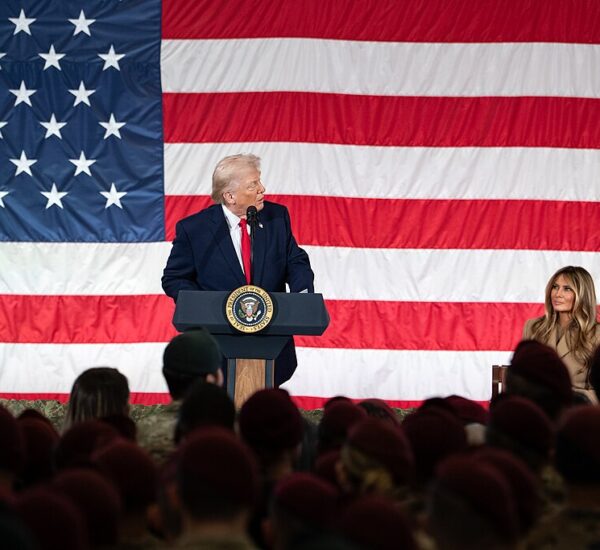
For decades, conservatives have pointed out that late-night television tends to lean heavily left. President Trump has frequently criticized major networks and comedians for what he calls one-sided attacks.
Now, ironically, the conflict isn’t between Trump and the media.
It’s between Democrats and the very media institutions that typically support them.
The disagreement between Colbert, CBS, Crockett, and Talarico has exposed internal friction that rarely becomes public.
For voters — especially older Americans who value transparency — the episode may reinforce concerns about how political narratives are shaped behind the scenes.
Why This Matters to Voters Over 50
Americans over 50 remember when broadcast rules like the FCC’s equal-time provision were widely understood and respected. Today, those regulations are often misunderstood or used as political talking points.
This controversy highlights three important realities:
- Federal election rules still apply to broadcast networks
- Online platforms operate under different standards
- Political drama often generates fundraising and media buzz
In a rapidly changing media environment, clarity matters more than ever.
Final Thoughts
What began as a late-night booking issue has evolved into a full-scale media debate — complete with accusations of censorship, network denials, and millions in campaign donations.
For critics of President Trump, the moment is uncomfortable: the spotlight has shifted inward.
Instead of attacking the former president, the focus is now on internal Democratic disagreements and the role major media outlets play in shaping political narratives.
Whether voters see this as hypocrisy, confusion, or simply politics as usual, one thing is certain:
The loudest anti-Trump voices are suddenly facing turbulence from within their own ranks.
And in today’s political climate, that kind of irony doesn’t go unnoticed.