This is how a real president gets things done.
In a major breakthrough for U.S. border security, Venezuela announced Tuesday that it will once again accept deportation flights from the United States—after direct pressure from President Donald Trump. The move marks a significant victory for Trump and a major setback for Venezuelan socialist leader Nicolás Maduro, who had briefly attempted to halt all incoming flights.
Trump’s Pressure Forces Maduro to Back Down
Over the weekend, President Trump warned that he was prepared to declare all airspace above and around Venezuela “fully closed” if Maduro continued blocking U.S. deportation flights. The threat worked almost instantly. After canceling the twice-weekly flights on Saturday, Maduro reversed course and resumed cooperation by Tuesday.
The decision comes as the United States continues to battle historic illegal immigration numbers. For many Americans—especially older voters—this is a clear example of Trump using strong leadership to restore order at the border.
More Than 13,000 Migrants Already Returned
Immigrants continue arriving back in Caracas on flights operated by either a U.S. government contractor or Venezuela’s state airline. More than 13,000 migrants have already been returned in 2025, with the most recent flight touching down Friday.
For years, Venezuela refused to take back its nationals, even if they were in the U.S. illegally. That policy collapsed once President Trump applied direct pressure earlier this year, forcing Maduro’s socialist regime to cooperate.
Rising Tensions as the U.S. Builds Military Pressure
The deportation flights remain one of the only areas where the two countries are working together. Outside of that narrow channel, tensions continue to increase rapidly.
U.S. forces have already carried out precision strikes on suspected narco-traffickers operating in Caribbean waters near Venezuela. President Trump has strongly suggested that operations may soon expand to land-based targets inside Venezuela, a potential turning point in the region.
“Land operations are easier. We know the routes. We know the locations,” Trump said during a White House Cabinet meeting. “We know where the bad actors live, and we’re going to address that very soon.”
Massive U.S. Military Presence Now Positioned Near Venezuela
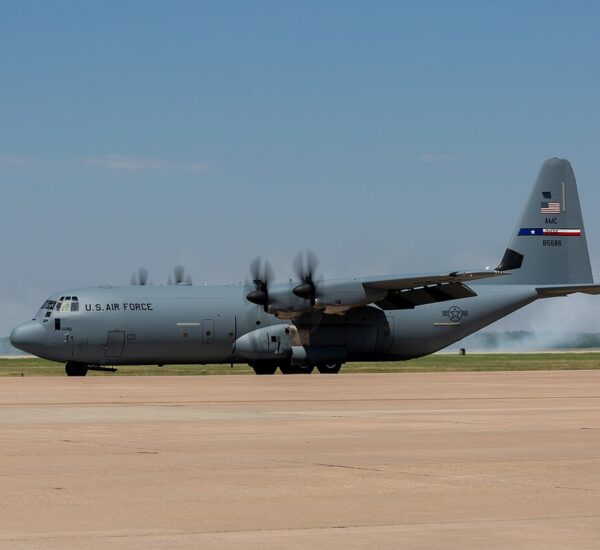
Dozens of U.S. bombers are now deployed in the region, backed by the USS Gerald R. Ford, the world’s largest aircraft carrier. The display of force is unmistakable—and it has drawn global attention.
With powerful U.S. assets already in place, the world is watching to see whether President Trump will authorize the next phase of operations. Experts say this could reshape the Western Hemisphere for decades.
Trump Delivers an Ultimatum
According to the Miami Herald, Trump confronted Maduro during a recent phone call, demanding that the embattled leader either step down voluntarily or face the possibility of U.S. military action. Maduro allegedly pushed for international amnesty, requested to keep control of the military, and resisted any immediate transition of power.
Why This Story Matters for American Voters
For many conservative Americans—especially those age 50+—this moment highlights:
- Strong U.S. leadership instead of appeasement
- Real border enforcement, not empty promises
- A President willing to confront hostile socialist regimes
- A foreign policy that protects American families and national security
With the border crisis dominating national headlines, Trump’s decisive action against Venezuela is already shaping the political landscape—and sending a clear message to world leaders who test American strength.