US enemies won’t like this.
President Trump Launches Major Plan to Restore American Shipbuilding and Protect National Security
President Donald Trump has unveiled a sweeping maritime recovery plan aimed at stopping what administration officials describe as a looming economic and national security emergency.
The new initiative focuses on rebuilding America’s commercial shipbuilding industry, expanding the U.S.-flagged fleet, and reducing dangerous dependence on foreign-built ships — especially those tied to China.
For millions of Americans over 50 who remember when “Made in America” meant something on the world stage, this move represents a return to strength, independence, and strategic leadership.
The Shocking Reality of America’s Maritime Dependence
According to senior administration officials, nearly 99% of U.S. international maritime trade moves on foreign-built, foreign-owned, and foreign-flagged ships.
Let that sink in.
About half of all U.S. trade flows through ocean shipping. Yet almost none of those vessels are American.
That level of foreign reliance, officials warn, creates a serious vulnerability in times of:
- Military conflict
- Trade disputes
- Global supply chain disruptions
- Economic warfare
In today’s world — especially with China aggressively expanding its influence — that’s a risk President Trump says the country can no longer afford.
Executive Order Sparks Historic Maritime Rebuilding Plan
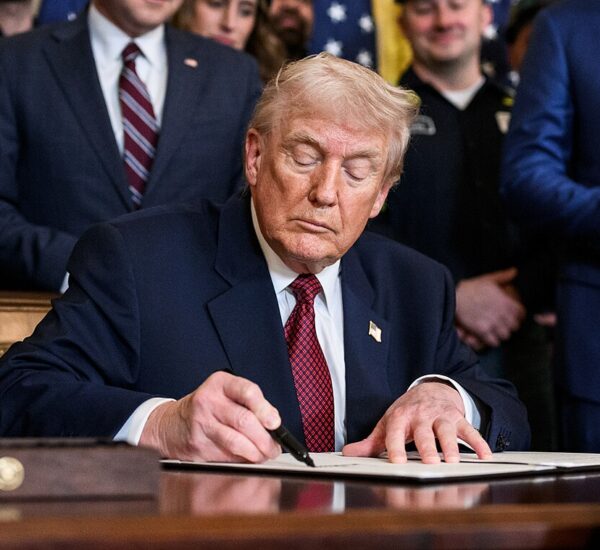
The maritime action plan follows an executive order signed by President Trump in April directing federal agencies to rebuild America’s commercial shipbuilding base.
Administration officials describe it as the most significant maritime revitalization effort in decades.
The strategy includes:
- Expanding U.S.-flagged commercial shipping
- Modernizing shipyards and infrastructure
- Strengthening domestic maritime supply chains
- Rebuilding a skilled American workforce
- Reducing reliance on Chinese and foreign ship production
The goal? Restore American maritime dominance and secure long-term economic independence.
China’s Massive Advantage — And Why It Matters
China now produces more than half of the world’s commercial ship tonnage.
U.S. shipyards account for only a tiny fraction of global output.
According to naval intelligence assessments, China’s shipbuilding capacity exceeds America’s by more than 200 times — fueled by aggressive state investment and AI-driven automation in modern shipyards.
Meanwhile, America’s once-thriving shipbuilding industry has steadily declined since World War II.
Decades ago, the U.S. operated dozens of major commercial shipyards. Today, only a small number remain capable of building large oceangoing vessels.
That imbalance doesn’t just affect trade — it impacts military readiness.
How Commercial Shipbuilding Impacts the U.S. Navy
Administration officials argue that rebuilding commercial shipbuilding would strengthen national defense.
Here’s why:
When commercial shipyards closed, the ripple effects included:
- Fewer skilled tradespeople
- Reduced supplier networks
- Higher Navy shipbuilding costs
- Production delays
- Supply chain bottlenecks
The cost of building U.S. Navy warships has risen dramatically — outpacing inflation — in part because the broader maritime industrial base has shrunk.
Historically, many shipyards built both commercial vessels and Navy ships. That dual-use model helped sustain a strong workforce and resilient supply chain.
Rebuilding commercial capacity could lower costs, increase efficiency, and improve military readiness.
A Highly Consolidated Defense Industry
Today, only a handful of facilities build America’s most critical warships.
Nuclear-powered aircraft carriers and submarines are constructed primarily by:
- Huntington Ingalls Industries’ Newport News Shipbuilding (Virginia)
- General Dynamics’ Electric Boat (Connecticut and Rhode Island)
Submarine production delays and supply chain challenges have raised concerns among defense officials.
Secretary of the Navy John Phelan has warned that American shipbuilders must operate with wartime urgency as China rapidly expands its fleet.
Economic Growth, American Jobs, and Industrial Revival
Beyond defense, this maritime strategy could have major economic implications.
Rebuilding shipyards means:
- High-paying skilled manufacturing jobs
- Revitalized coastal communities
- Stronger domestic supply chains
- Greater economic resilience
For older Americans who witnessed the golden age of U.S. manufacturing, this initiative signals a serious effort to reverse decades of industrial decline.
Why This Matters Now
Global competition is intensifying.
China is modernizing its navy and dominating global ship production. Supply chains remain fragile. Economic leverage increasingly determines geopolitical power.
The Trump administration’s position is clear: America cannot remain dependent on foreign ships to carry its own trade.
Restoring maritime strength is not just an economic policy — it is a national security priority.
The Bottom Line
President Trump’s maritime action plan represents one of the most significant industrial policy shifts in decades.
If successful, it could:
- Strengthen national security
- Lower Navy shipbuilding costs
- Create American jobs
- Reduce reliance on China
- Restore U.S. maritime dominance
For Americans who believe in economic independence and strong national defense, the message is simple:
America is getting back in the shipbuilding business.