Here’s what Americans need to know.
A new warning from Iran has rattled global energy markets and raised concerns that oil prices could skyrocket to $200 per barrel, a move that could send gasoline prices soaring across the United States.
The warning comes as tensions continue to rise in the Middle East following ongoing U.S. and Israeli military actions against Iranian targets, creating fears that the conflict could disrupt the global oil supply.
Energy analysts say that if tensions continue to escalate, the world could face one of the most significant energy market shocks in decades, with American drivers feeling the impact at the gas pump.
Oil Prices Could Push Gas Above $5 Per Gallon
Experts say that if crude oil reaches $200 per barrel, the average price of gasoline in the United States could climb above $5 per gallon, putting pressure on millions of American households.
According to data from the American Automobile Association (AAA), the national average price for regular gasoline currently stands at $3.57 per gallon.
But analysts warn that prices could rise rapidly if global oil supplies are disrupted.
Iranian officials say that instability in the region could have major consequences for the global energy market.
Ebrahim Zolfaqari, spokesperson for Iran’s Khatam al-Anbiya Central Headquarters, issued a warning directed at Washington regarding potential oil price spikes.
“Prepare for oil to reach $200 per barrel,” Zolfaqari said, adding that oil prices depend heavily on stability in the Middle East.
Global Oil Markets Already Showing Volatility
Oil markets have already been experiencing significant volatility in recent weeks.
Crude oil prices recently surged above $100 per barrel for the first time since 2022, briefly approaching $120 per barrel before pulling back during a short relief rally.
On Wednesday, prices settled closer to $90 per barrel.
Meanwhile, West Texas Intermediate (WTI), the primary benchmark for U.S. crude oil, was trading just under $86 per barrel.
Energy traders say the biggest concern now is the security of one critical shipping lane that carries a massive portion of the world’s oil supply.
Strategic Oil Reserves Being Released
In an effort to prevent a major spike in fuel prices, the International Energy Agency (IEA) announced a coordinated emergency plan to stabilize oil markets.
Thirty-two member nations agreed to release approximately 400 million barrels of oil and refined products from global emergency reserves.
The United States will also contribute a significant amount from its own reserves.
Energy Secretary Chris Wright confirmed that 172 million barrels will be released from the U.S. Strategic Petroleum Reserve, beginning next week.
According to the Department of Energy, the release will occur over roughly 120 days, allowing oil markets time to adjust and helping to prevent a severe supply shock.
Trump Administration Moves to Protect Energy Security
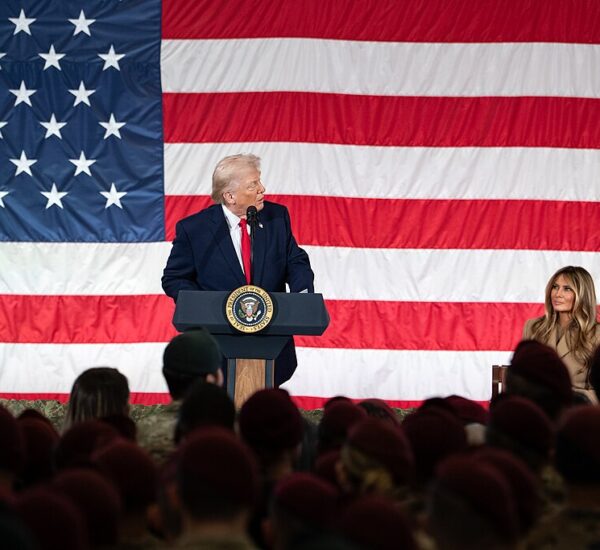
Officials say the coordinated oil release was approved following a request from President Donald Trump as part of an effort to stabilize energy prices.
Energy Secretary Chris Wright said that all 32 member countries of the International Energy Agency agreed to support President Trump’s effort to stabilize energy costs by jointly releasing about 400 million barrels of oil and refined petroleum products from their emergency reserves.
The administration also announced plans to replenish the Strategic Petroleum Reserve in the coming year.
Government officials say roughly 200 million barrels will be added back into the reserve, which would restore supplies while taking advantage of lower prices in the future.
Energy officials emphasized that the United States remains committed to maintaining strong energy independence and national energy security.
Rare Move in Global Energy Policy
The International Energy Agency has released emergency oil reserves only five times in its history.
Previous releases occurred during major global disruptions, including:
- The 1990 Gulf War
- Hurricane Katrina in 2005
- The 2011 Libyan civil war
- Two emergency releases following Russia’s invasion of Ukraine
The latest coordinated release highlights growing concerns about the stability of global oil markets.
Strait of Hormuz Raises Major Global Concerns
Another major concern for global energy markets is the Strait of Hormuz, a narrow shipping channel that carries roughly 20 percent of the world’s oil supply.
Iran issued a warning that ships connected to the United States, Israel, or allied nations could face potential threats if they travel through the strategic waterway.
Iranian officials said vessels linked to those countries could be considered potential targets.
The warning follows reports of increased maritime tensions in the region, including attacks on commercial ships and possible deployment of naval mines.
According to reports, at least 14 merchant vessels have been struck since the conflict began, raising fears that global oil transportation could face further disruptions.
Energy Markets Watching Closely
With global oil markets already under pressure, analysts say the situation remains extremely fluid.
Any further escalation in the region could push oil prices sharply higher and impact gasoline prices around the world.
For American drivers and businesses alike, the coming weeks could determine whether fuel prices stabilize — or whether the world faces a new global energy crisis.