Here’s what happened.
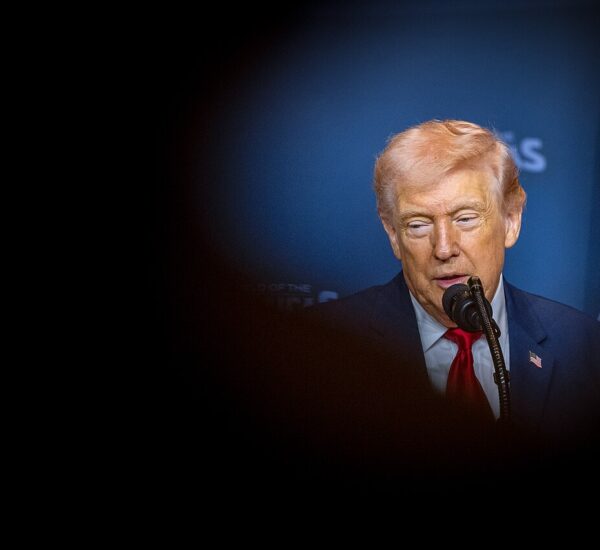
President Donald Trump revealed surprising details Monday about a serious medical emergency involving a Republican congressman, explaining how quick action by White House doctors helped save the lawmaker’s life.
Speaking at the White House alongside House Speaker Mike Johnson, Trump described how Rep. Neal Dunn (R-FL) faced what was believed to be a devastating medical diagnosis before receiving urgent treatment.
The president’s comments offered a rare behind-the-scenes look at how medical resources tied to the presidency can sometimes assist members of Congress in critical moments.
Trump Describes Dire Prognosis
During remarks to reporters, Trump explained that Dunn’s situation appeared extremely serious at first.
“He would have been dead by June,” Trump said, underscoring the severity of the health crisis Dunn was facing before receiving treatment.
Johnson confirmed that he had spoken with the president about Dunn’s condition and that Trump immediately suggested involving White House medical staff.
The decision ultimately led to swift action that may have changed the course of the congressman’s health.
WATCH:
Trump: Representative Dunn would be dead by June.
— Clash Report (@clashreport) March 16, 2026
Mike Johnson: Well, that wasn’t public. pic.twitter.com/5O5QP2PZFS
White House Doctors Move Quickly
According to Johnson, White House doctors quickly coordinated with medical professionals at Walter Reed National Military Medical Center, one of the nation’s premier medical facilities.
Dunn was transported for treatment and underwent emergency surgery shortly after being evaluated, according to the speaker.
Johnson later described the outcome as remarkable.
“The man has a new lease on life,” Johnson said. “He acts like he’s 30 years younger.”
Trump Praises White House Medical Team
President Trump praised the White House physicians for acting quickly and decisively when they learned about Dunn’s situation.
“I said I have to call them,” Trump told reporters. “I called the two doctors. They’re both great. They immediately went over to see the congressman, and he was on the operating table like two hours later.”
Trump described the doctors involved as “miracle workers,” crediting their expertise and rapid response for turning a grim outlook into a hopeful recovery.
Neal Dunn’s Background In Medicine And Military Service
Rep. Neal Dunn is not only a longtime Republican lawmaker but also a physician and former U.S. Army surgeon.
He represents Florida’s 2nd Congressional District and has served five terms in the House of Representatives.
In January, Dunn announced that he would not seek re-election in 2026, saying he wanted to return home to Panama City and spend more time with his family.
Dunn said in a statement at the time that serving the country had been a tremendous privilege, noting that he worked to support lower taxes, strengthen the military and care for veterans, defend the unborn, encourage innovation in healthcare, and promote policies that put American citizens ahead of government bureaucracy.
He also highlighted the importance of confronting global threats posed by China, Russia, and other adversaries while defending American interests.
Wave Of Congressional Retirements Ahead Of 2026
Dunn’s retirement comes as a growing number of lawmakers prepare to step away from Congress ahead of the 2026 election cycle.
According to the U.S. House Press Gallery’s “Casualty List,” approximately 60 members of the House of Representatives have already announced they will not seek re-election.
That total includes 37 Republicans and 23 Democrats.
Some lawmakers are leaving to run for higher office, including campaigns for governor or the U.S. Senate, while others are simply choosing to retire after years of public service.
Political turnover is already reshaping the Republican field as well. Texas Republican Dan Crenshaw recently lost his primary election to state Rep. Steve Toth, highlighting the competitive nature of upcoming races.
A Close Call In Washington
For Rep. Dunn, however, the focus now appears to be on recovery and spending time with family after what Trump described as a life-threatening medical situation.
The episode also revealed how quickly Washington’s leadership can mobilize medical resources in emergencies — and how, in this case, rapid action may have made all the difference.