President Trump had some very powerful words.
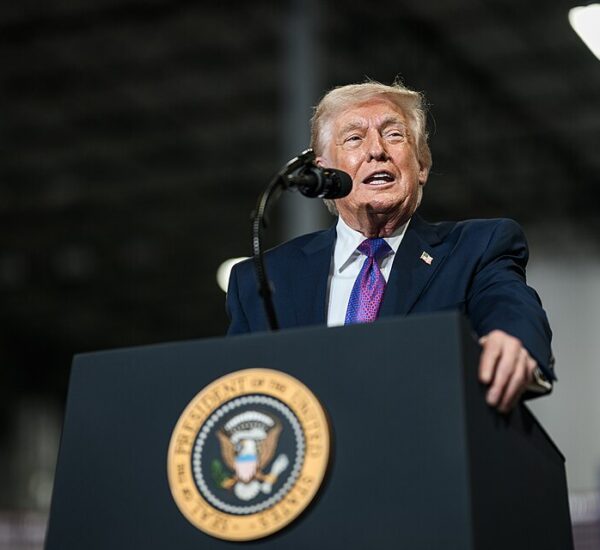
President Donald Trump delivered sharp criticism Tuesday toward several Republican senators who have opposed key parts of his agenda, speaking during a high-profile address at the Detroit Economic Club.
The remarks came during a broader speech focused on economic growth, national strength, and America’s global leadership. However, Trump also addressed recent Senate votes in which a small group of Republicans sided with Democrats to limit his authority over military action involving Venezuela.
Just days earlier, the president had warned that Republicans who undermine his national security decisions risk losing voter support, arguing that party unity is essential when confronting foreign threats.
Trump contrasted Republican dissent with what he described as near-total discipline within the Democratic Party.
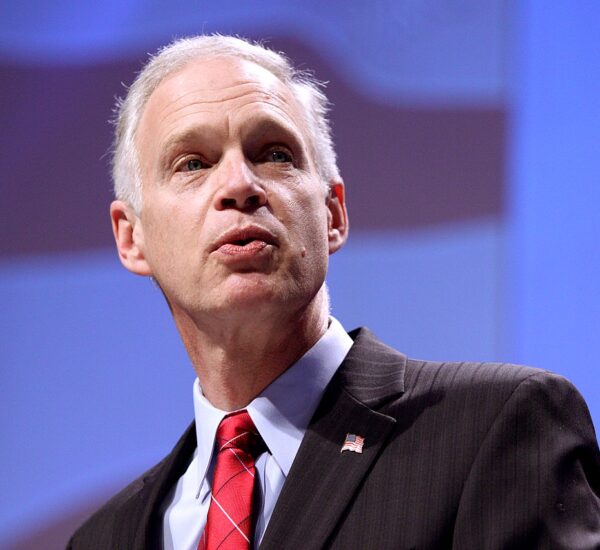
“Democrats don’t have a Mitt Romney voting against everything,” Trump said, referencing Mitt Romney. He also criticized Rand Paul, suggesting repeated opposition weakens Republican leadership.
The president went on to name Lisa Murkowski and Susan Collins, arguing their voting records have repeatedly conflicted with conservative priorities and the will of Republican voters.
Trump also questioned the reasoning behind Sen. Todd Young’s opposition, stating that lawmakers who voted against the Venezuela operation struggled to explain their position—even after learning the mission had been successful.
Paul, Young, Collins, and Murkowski were among five Republican senators who joined Democrats to advance a bipartisan War Powers Act resolution designed to restrict the president from authorizing military force against Venezuela without prior congressional approval. Sen. Josh Hawley also voted to advance the measure, though Trump did not single him out publicly.
Following the vote, Trump addressed the issue on Truth Social, stating that Republicans who side with Democrats on critical national security matters should be held accountable by voters. He warned that such actions weaken America’s negotiating power abroad.
Tensions reportedly escalated further after accounts surfaced of a heated phone call between Trump and Collins, who is considered one of the most electorally vulnerable Republican senators ahead of the November election.
The episode highlights a growing divide within the GOP as Trump continues pressing for stronger alignment behind his economic, foreign policy, and defense agenda—while making clear that Republican voters, not Washington insiders, will ultimately decide the party’s future.