President Trump won’t like this move from Schumer.
Senate Minority Leader Chuck Schumer is drawing sharp criticism after announcing legislation that would elevate the Pride flag to the same federal recognition status as the American flag.
The proposed bill would classify the Pride flag as a congressionally authorized banner — placing it in the same legal category as the U.S. flag, military service flags, and the POW/MIA flag.
The move comes after a recent decision by the Trump administration to remove a Pride flag from federal property near the Stonewall National Monument in New York City.
What Sparked the Controversy?
Earlier this month, the Department of the Interior issued guidance directing national parks to remove “non-agency” flags from federal property. The memo, signed by National Park Service leadership, allowed certain exceptions — including historical flags, official military flags, and federally recognized tribal banners.
The Pride flag was not included on that list.
As a result, it was temporarily removed from a flagpole outside the Stonewall Inn, the site of the 1969 riots widely viewed as a pivotal moment in the gay rights movement. The location was designated a national monument in 2016.
Shortly after public backlash, the Pride flag was reinstalled.
President Trump’s Flag Policy
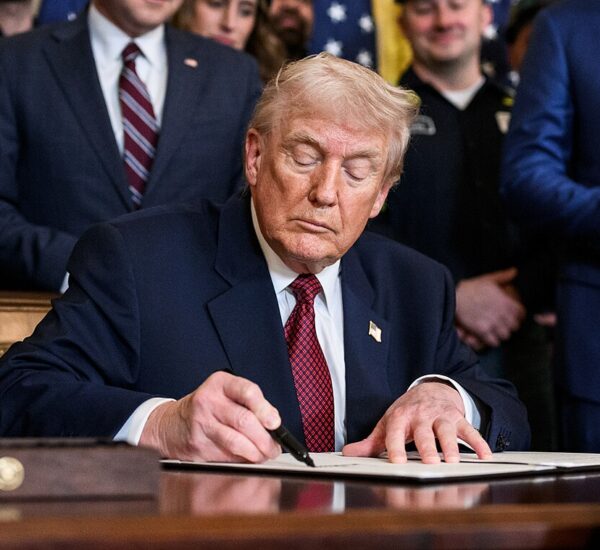
President Donald Trump has not issued an order specifically targeting the Pride flag. However, he previously signed an executive order aimed at restricting which flags may be displayed on federal property.
Administration officials have stated that the purpose of the policy is to ensure the American flag remains the primary and most prominent symbol on government grounds.
Supporters argue the measure reinforces respect for national unity and prevents federal spaces from becoming platforms for political or cultural messaging.
Schumer’s Legislative Response
Schumer says his legislation would permanently protect the Pride flag at sites like Stonewall by giving it official congressional authorization.
In a public statement, he described Stonewall as “sacred ground” and argued that Congress should ensure protections for what he views as a historic symbol.
If passed, the bill would limit the ability of future administrations to remove the flag from certain federal locations.
A Larger Debate About National Symbols
For many Americans — especially voters over 50 who have watched decades of cultural shifts unfold — the dispute raises deeper questions:
- Should only the American flag represent the federal government?
- Should Congress expand the list of officially recognized banners?
- Where is the line between historic recognition and political symbolism?
Critics of Schumer’s proposal argue that equating any banner with the U.S. flag diminishes the unique status of America’s national symbol. Supporters say the bill protects civil rights history.
Either way, the issue reflects the broader cultural debate shaping today’s political landscape.
As Congress prepares to consider the legislation, one thing is clear: the conversation about national identity, federal authority, and American values is far from over.