Whistleblower Calls Out Trump’s ICE
As the Department of Homeland Security (DHS) accelerates hiring to strengthen immigration enforcement under President Donald Trump, a former Immigration and Customs Enforcement (ICE) official is raising concerns about changes to officer training programs.
The debate comes as the administration moves forward with expanded border security measures, interior enforcement operations, and increased deportation efforts — policies President Trump has said are essential to restoring rule of law and national security.
Former ICE Instructor Questions Training Adjustments
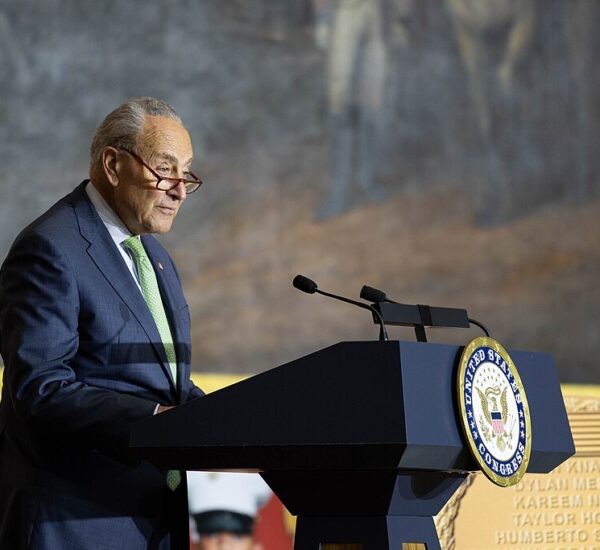
Ryan Schwank, a former ICE attorney and academy instructor in Georgia, recently spoke at a forum hosted by congressional Democrats, where he alleged that ICE leadership reduced portions of its training curriculum during a hiring surge.
According to Schwank, approximately 240 hours were condensed from what he described as a 584-hour academy program. He claims the changes affected instruction related to:
- Constitutional law
- Fourth and Fifth Amendment protections
- Firearms and use-of-force standards
- Lawful arrest procedures
- Officer authority limitations
- Detention and enforcement protocols
One of his primary concerns centers on legal instruction regarding use of deadly force. Schwank stated that recruits were no longer receiving classroom-based education on the legal standard of “objective reasonableness,” which courts use when reviewing officer actions.
He also argued that testing procedures were streamlined in order to move candidates through the system more quickly amid large-scale recruitment goals.
DHS Response: Training Standards Remain Strong
The Department of Homeland Security firmly disputes the allegations.
In official statements, DHS said no subject matter has been removed from ICE training. Instead, the department says the curriculum has been modernized and streamlined to eliminate redundancy and incorporate updated technology.
According to DHS:
- Training hours have not been reduced
- Recruits continue to receive extensive firearms instruction
- Officers are trained in de-escalation tactics
- Constitutional education remains a core component
- Graduates enter structured, supervised field training programs
ICE Director Todd Lyons also addressed the issue publicly, explaining that the weekly training schedule was adjusted from five eight-hour days to six twelve-hour days — compressing the timeline while maintaining the same instructional content.
He further noted that new pre-employment training components have been added before recruits attend the Federal Law Enforcement Training Academy, increasing preparation prior to full field deployment.
Context: Historic Immigration Enforcement Expansion
This controversy surfaces as Congress recently approved $170 billion in DHS funding through major border and homeland security legislation.
The funding supports:
- Expanded ICE hiring
- Increased detention capacity
- Border wall construction and reinforcement
- Interior immigration enforcement
- Advanced surveillance and security technology
President Trump has repeatedly emphasized that restoring border integrity is critical to protecting American communities, reducing fentanyl trafficking, and upholding immigration law.
Supporters argue that increased enforcement is long overdue after years of record border crossings and policy instability.
Critics counter that rapid hiring increases the need for rigorous oversight and accountability.
Deadly Incidents Increase Scrutiny
The training debate has gained additional attention following several high-profile officer-involved shootings connected to DHS personnel, including incidents in Minneapolis.
Investigations into those cases are ongoing. While no direct link has been established between training adjustments and specific incidents, critics argue that consistency in use-of-force education is vital when officers operate in high-pressure environments.
DHS maintains that all enforcement actions must comply with constitutional standards and federal law.
Disagreement Over Warrant Authority
Another point of contention involves whether ICE officers may enter homes using administrative warrants issued internally by DHS, rather than judicial warrants signed by a judge.
Schwank alleges that trainees were told they could conduct home entries without judicial authorization. DHS clarifies that certain administrative warrants are legally permitted under federal immigration law, though the issue continues to generate debate among legal analysts and civil liberties advocates.
The department states that all officers receive comprehensive training on constitutional boundaries and are repeatedly tested to ensure compliance.
The Core Question: Can Speed and Standards Coexist?
At the heart of the issue is a broader question facing federal agencies during large-scale expansion efforts:
Can immigration enforcement be rapidly scaled while maintaining rigorous training standards?
For supporters of the administration, strengthening ICE and DHS is necessary to restore rule of law, deter illegal immigration, and protect American sovereignty.
For critics, oversight and accountability must remain a priority as enforcement increases.
DHS leadership insists training integrity remains intact and that officers continue to meet high professional standards before entering the field.
As immigration enforcement expands under President Trump, scrutiny of ICE operations is expected to continue — reflecting the national importance of border security, constitutional protections, and public safety.