Here’s what was said.
As tensions rise in the Middle East following U.S. and Israeli strikes on Iran, Pope Leo XIV — the first American pope in history — has entered the conversation with a message that is drawing global attention.
But is it a rebuke of President Donald Trump’s firm stance on Iran… or something more nuanced?
Pope Leo XIV Calls for Peace Amid Escalating Iran Conflict
On Sunday, Pope Leo XIV addressed the growing conflict in the Middle East, expressing what he described as “deep concern” over developments in Iran.
In a public message posted to X, the American-born pontiff stated that peace cannot be achieved through “mutual threats” or the use of “weapons” that bring destruction and suffering.
Instead, he urged leaders to pursue what he called “reasonable, sincere, and responsible dialogue.”
The Pope warned that the current trajectory could lead to a tragedy of immense proportions if leaders fail to step back from the brink.
He appealed directly to all parties involved to halt what he described as a dangerous spiral of violence before it becomes impossible to reverse.
For Catholics and Christians across America — particularly older voters who have witnessed decades of war and diplomacy in the Middle East — the Pope’s message carries moral weight.
President Trump Signals Strikes Could Continue
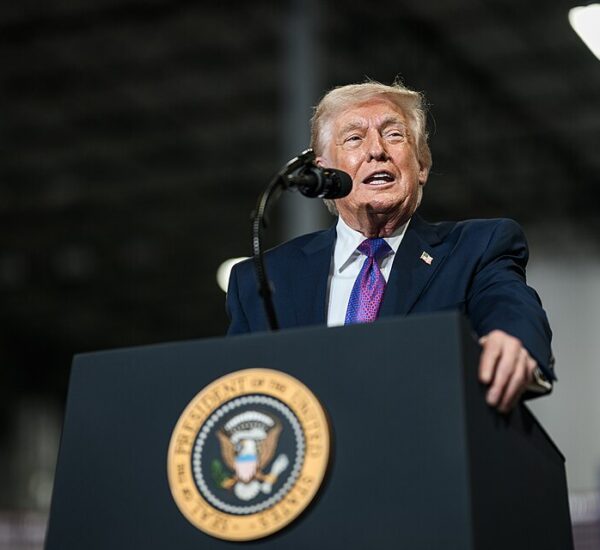
Meanwhile, President Donald Trump indicated that military operations targeting Iran may continue “throughout the week,” depending on conditions on the ground.
The administration has made it clear that preventing Iran from expanding its influence and supporting extremist groups remains a top national security priority.
For many conservatives, the issue is straightforward: strength prevents greater conflict.
Iran has long been labeled by U.S. officials as the world’s largest state sponsor of terrorism — a designation that has shaped decades of American foreign policy.
Supporters of the president argue that failing to confront Tehran now could invite greater instability later.
Washington Divided Over Iran Strategy
As expected, Washington is sharply divided.
Democrats have raised concerns about escalation and executive authority.
Most Republicans, however, have rallied behind President Trump’s actions, emphasizing America’s right to defend its interests and allies.
Senator Lindsey Graham reinforced that view during an appearance on NBC’s Meet the Press, stating that it is firmly in America’s interest to ensure Iran can no longer operate as a leading sponsor of terrorism.
He suggested that pressure on Iran may be yielding results and made clear that allowing Tehran to reestablish its terror networks is not an option.
Is the Pope Criticizing Trump — or Calling for Responsible Strength?
This is where interpretation matters.
Pope Leo XIV did not single out the United States or President Trump by name. His appeal was directed at “all parties involved.”
Historically, the Catholic Church has consistently emphasized peace and diplomacy — while also acknowledging a nation’s right to defend itself under just war principles.
For many conservative Americans over 50, the question is not whether peace is desirable — it is how peace is achieved.
Is it through deterrence and strength?
Or through negotiation alone?
The coming days may provide clarity.
Why This Moment Matters
The situation unfolding in Iran is more than a regional dispute. It has implications for:
- Global oil markets
- American national security
- Israel’s stability
- Terrorism prevention
- U.S. diplomatic credibility
With an American pope urging restraint and an American president signaling resolve, the world is watching two powerful moral and political forces move in parallel.
Whether this moment leads to broader conflict or renewed diplomacy remains to be seen.
One thing is certain: the stakes are high — and leadership matters.