Here’s what some Republicans are saying now,
A growing debate inside the Republican Party is raising a serious question: Who is really shaping U.S. foreign policy right now — President Donald Trump, or longtime Washington hawks like Sen. Lindsey Graham?
Sen. Rand Paul (R-Ky.) believes the answer is troubling.
After news broke of a dramatic U.S. special operations mission connected to Venezuela, Paul publicly suggested that the move represents a clear departure from President Trump’s long-standing opposition to foreign regime-change efforts and endless overseas involvement.
According to Paul, the driving force behind the shift isn’t the MAGA base — it’s Sen. Lindsey Graham.
Rand Paul Sounds the Alarm
Speaking to reporters, Paul pointed directly at Graham, arguing that the South Carolina senator has steadily pushed President Trump away from his America First instincts.
“This is Lindsey Graham,” Paul said. “The president has repeatedly said that regime change doesn’t work. He’s said it leads to chaos and failure. Somehow, they’ve convinced him that this time is different.”
Paul warned that Washington insiders who favor aggressive foreign policy interventions are once again gaining influence — especially when it comes to Latin America.
For many conservative voters, this raises red flags. Trump’s original appeal was built on rejecting the foreign policy failures of both parties and keeping America out of unnecessary conflicts.
Graham Pushes for a Harder Line
Sen. Graham has made little effort to hide his frustration with the administration’s previous approach to Venezuela.
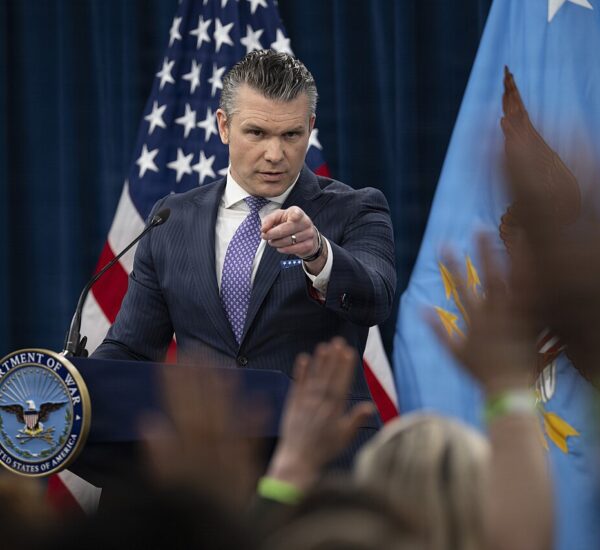
Following a classified briefing last month with Defense Secretary Pete Hegseth and Secretary of State Marco Rubio, Graham criticized officials for ruling out the removal of Venezuelan leader Nicolás Maduro.
“I want to know what happens next,” Graham said. “If taking Maduro down isn’t the policy, it should be. And when he’s gone, what happens then?”
Those comments underscored what many conservatives see as Graham’s long-standing preference for intervention-heavy foreign policy decisions.
From Venezuela to Cuba?
After Maduro’s capture, Graham quickly expanded his focus beyond Venezuela, signaling that Cuba could be next.
Posting online, Graham wrote simply: “Free Cuba,” claiming the collapse of socialist governments in the region is now underway.
During a Fox News interview, Graham predicted that Cuban leader Miguel Díaz-Canel’s days are numbered, stating that the communist government in Havana “cannot survive” without support from Venezuela.
“It’s over,” Graham said. “It’s just a matter of time.”
MAGA Allies Push Back
Not everyone aligned with President Trump is comfortable with this direction.
Several MAGA-aligned conservatives have voiced concern that the administration may be drifting away from its original America First promises.
Former Rep. Marjorie Taylor Greene (R-Ga.) reminded voters why Trump won in the first place — by pledging to focus on the United States, not foreign entanglements.
“He campaigned on putting America first,” Greene said. “People voted for that message.”
She added that Venezuela is not an immediate priority for everyday Americans.
“Our neighborhood is right here in the United States,” Greene said. “Not halfway around the world.”
The Question Conservatives Are Asking
As this internal GOP debate continues, many conservative voters — especially those who remember the cost of past foreign policy mistakes — are asking a simple but serious question:
Is America First still in charge, or is Lindsey Graham calling the shots?