
The hypocrisy is insane.
A new law out of Connecticut is raising eyebrows across the country—and for many Americans, it’s exposing what looks like a glaring contradiction in how voter identification is treated.
ID Required for Bottles—But Not for Voting?
Connecticut lawmakers recently passed an emergency anti-fraud measure requiring residents to show a valid driver’s license when redeeming large quantities of bottles and cans for cash.
The rule applies to anyone returning more than 1,000 containers in a single day.
State officials say the move was necessary after ongoing reports that out-of-state individuals were crossing into Connecticut to take advantage of its higher 10-cent deposit—double what many neighboring states offer. The practice was reportedly costing the state significant revenue.
The legislation, SB 299, was quickly introduced, passed, and signed into law by Governor Ned Lamont on March 3.
But critics say the bigger story isn’t about recycling—it’s about priorities.
A Growing Debate Over Voter ID Laws
While Connecticut now requires ID for certain cash transactions, the state still does not require a government-issued photo ID to vote.
Instead, voters can cast a ballot by simply signing a statement confirming they are U.S. citizens, under penalty of law.
For many conservatives, that contrast is difficult to ignore.
Supporters of stricter voter ID laws argue that requiring identification is a basic safeguard to protect election integrity, similar to what is already required in many everyday activities.
SAVE Act Sparks National Showdown
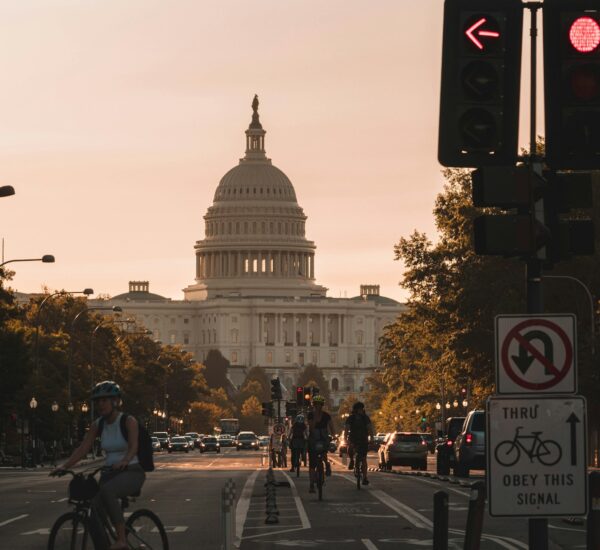
The issue gained national attention this week as the U.S. Senate took up debate on the SAVE Act, a Republican-backed proposal aimed at strengthening election security.
The bill would require proof of citizenship—such as a passport or birth certificate—when registering to vote in federal elections.
Both Connecticut senators, Richard Blumenthal and Chris Murphy, voted against advancing the measure.
Supporters of the SAVE Act say it’s a commonsense step to ensure only U.S. citizens vote.
Opponents argue it could make registration more difficult for some Americans who may not have immediate access to official documents.
Critics Call Out ‘Double Standard’
Election integrity advocates say the situation highlights what they view as an inconsistent approach.
Anna Pingel of the America First Policy Institute put it bluntly:
If identification is required to collect money from recycled bottles, she argued, it raises a fair question—why wouldn’t similar safeguards apply to voting?
That argument is gaining traction among voters who believe election security should be treated as a top priority.
Democrats Push Back on Concerns
Democratic lawmakers maintain that voter fraud is extremely rare and caution against policies they say could unintentionally limit access to the ballot.
Senator Blumenthal argued the SAVE Act goes beyond voter ID and could create barriers for millions of Americans who may not have documents like passports or birth certificates readily available.
On the Senate floor, leaders including Chuck Schumer and Raphael Warnock acknowledged isolated cases involving non-citizens—but emphasized that such instances are minimal compared to the overall number of voters.
Senate Battle Continues
The Senate voted 51-48 to begin debate on the SAVE Act, but the bill still faces a major hurdle.
With a 60-vote threshold required to advance, Democrats are expected to block the legislation, setting up a prolonged standoff.
Lawmakers are now heading into extended sessions as the debate over voter ID—and election security—continues to intensify.
Bottom Line
For many Americans, the Connecticut law has become more than a local policy—it’s part of a much larger national conversation.
At its core, the debate comes down to a simple question:
Should verifying identity be easier when casting a ballot—or when cashing in bottles?


The idiots aren’t worried about voter ID, but if something is costing them money, they’re on top of it!!!