
This was low, even for Ossoff.
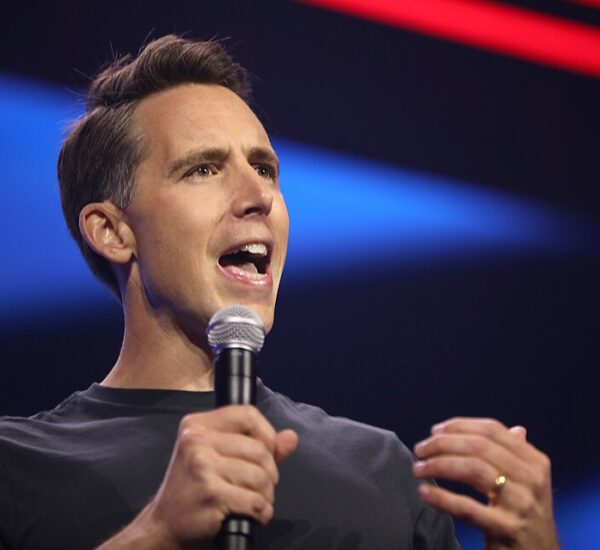
Georgia Democratic Sen. Jon Ossoff is escalating his attacks on President Donald Trump — and this time, the senator brought one of Trump’s female aides directly into the political fight.
During a campaign appearance, Ossoff accused Trump of being more interested in building his White House ballroom and traveling with aide Natalie Harp than carrying out his responsibilities as president.
The highly personal remark quickly drew attention, particularly because Ossoff singled out Harp while criticizing Trump’s travel and priorities.
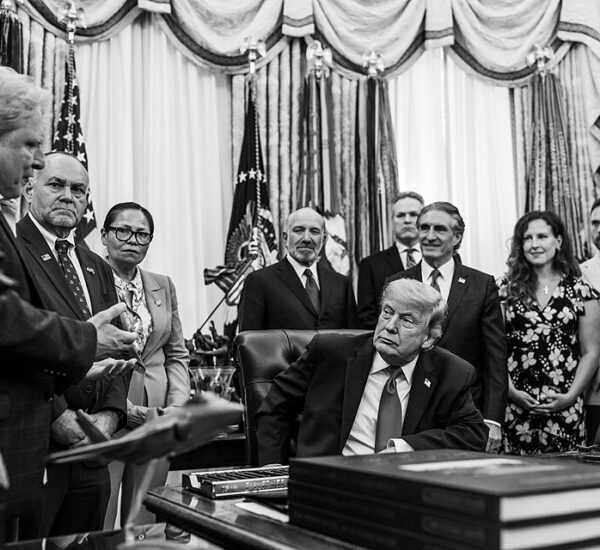
Trump was asked about the comments at the White House on Monday.
His response was immediate.
“You mean Pee-Wee Herman? Pee-Wee Herman lookalike,” Trump said, mocking the Georgia Democrat before launching into a defense of the White House construction project.
But behind the colorful exchange is a serious political battle involving Trump, a vulnerable Democratic Senate seat in Georgia and a controversial White House project that the president says has important national security benefits.
Ossoff Targets Trump Over Ballroom and Natalie Harp
Ossoff’s attack came as he criticized Trump’s leadership and priorities.
The Georgia Democrat claimed Trump would rather focus on his ballroom project and travel with Harp aboard the aircraft provided by Qatar than devote his attention to governing.
By specifically mentioning Harp, Ossoff transformed what could have been a conventional policy attack into something far more personal.
Harp is a longtime Trump aide who has worked closely with the president and has frequently been seen accompanying him.
Ossoff did not simply criticize White House staffing decisions. His wording drew attention to Trump’s relationship with the female aide while attempting to contrast the president’s lifestyle with the responsibilities of the presidency.
That approach immediately triggered a furious response from Trump’s allies.
Trump Fires Back at Ossoff
When a reporter asked Trump about Ossoff’s remarks Monday, the president first mocked the senator’s appearance by comparing him to the late Paul Reubens’ famous Pee-Wee Herman character.
Trump then turned his attention to the substance of the criticism.
The president said the White House had suffered from years of neglect and argued that his administration is making badly needed improvements to one of America’s most recognizable historic buildings.
“We’re building a great facility here,” Trump said. “We’re fixing the White House that hasn’t been taken care of.”
Trump claimed parts of the property had deteriorated significantly.
“The exteriors were falling apart. The columns were falling apart. The whole place was a mess,” he said.
The president also argued that plans for a proper White House ballroom are hardly a new idea.
According to Trump, presidents and administrations have wanted a larger facility for major White House functions for generations.
But Trump says the project has evolved into something considerably more important than a place for state dinners and formal events.
Trump Says Project Could Strengthen Washington Security
Trump said military officials saw the ballroom construction as an opportunity to develop major security infrastructure beneath the White House complex.
He also highlighted plans for a rooftop drone facility designed to help defend the White House and Washington, D.C., against emerging threats.
Trump has previously described the concept as a “drone port” capable of supporting defenses around the nation’s capital.
That national security component has become increasingly important to the administration’s defense of the project.
The ballroom has faced legal and political challenges over its construction and authorization, with critics arguing that Trump exceeded presidential authority by moving forward without congressional approval.
Trump and his administration, however, have emphasized the security improvements associated with the broader project.
That creates a much different argument than Ossoff’s characterization of the ballroom as a presidential vanity project.
The dispute now gives voters two sharply different interpretations: Democrats can portray the construction as an example of misplaced priorities, while Trump and his supporters can point to modernization, security and the long-term needs of the White House.
White House Unloads on Ossoff
Trump wasn’t the only administration official who responded.
White House Communications Director Steven Cheung accused Ossoff of attacking people who are working for the country.
“Instead of denigrating hard working people serving their country, Jon should look deep into his soul,” Cheung wrote in a social media response.
Cheung went on to deliver a much harsher political attack against the Democratic senator.
White House spokesperson Davis R. Ingle also blasted Ossoff, mocking the senator and comparing his political persona to former President Barack Obama.
The intensity of the reaction demonstrates just how quickly Ossoff’s comments struck a nerve.
Instead of limiting his criticism to Trump’s policies, the Georgia senator had brought a White House employee into the fight — and Trump’s team responded in kind.
Why This Fight Matters for Georgia
There is another reason this exchange deserves attention.
Ossoff is not merely another Democratic senator criticizing Trump.
He is running for reelection in Georgia, one of the most important political battlegrounds in America.
Republicans spent decades dominating presidential politics in Georgia before Democrats made major gains in the state. The result has been a series of extraordinarily expensive and closely watched statewide elections.
Ossoff’s Senate seat is therefore a major prize.
For Republicans, defeating him would strengthen the party’s position in a state Trump carried in the 2024 presidential election.
For Democrats, protecting Ossoff is critical to maintaining their foothold in Georgia and their ability to compete across the South.
That means virtually every major confrontation involving Ossoff has the potential to become part of the broader battle over control of Washington.
Personal Attacks Take Center Stage
American voters have grown accustomed to heated political rhetoric, but Ossoff’s decision to mention Harp adds another dimension to this dispute.
There is nothing unusual about criticizing a president’s schedule, travel or use of government resources. Those are legitimate subjects of political debate.
But dragging an individual staff member into that criticism can quickly change the character of the argument.
Trump’s allies clearly believe Ossoff crossed that line.
Democrats and Ossoff’s supporters, meanwhile, are likely to argue that the senator was raising legitimate questions about Trump’s priorities and the people with whom the president chooses to travel.
Either way, the exchange illustrates how personal the 2026 political environment has become.
The Bigger Question for Voters
Strip away the insults and nicknames, and voters are left with a more important debate.
Is Trump spending too much time and attention on reshaping the White House?
Or is his administration making long-overdue improvements while simultaneously upgrading security around the seat of the American presidency?
Ossoff has clearly chosen the first argument.
Trump is making the second.
And with Georgia once again at the center of the fight for power in Washington, this feud is unlikely to disappear anytime soon.
For conservative voters, particularly those who remember when Georgia was considered safely Republican territory, Ossoff’s increasingly aggressive posture toward Trump is another reminder of just how dramatically the state’s politics have changed.
The ultimate verdict will not come from the White House press corps or angry exchanges on social media.
It will come from voters.


Ossoff u are a disrespectful, arrogant, narcistic, loudmouth, of your death party. U best, watch, what comes out of that pie hole of yours. Someone might, just bitch slap, that foul mouth, or shove a bar, of soap, down your throat, to clean up your act. I am always available, to help your campaign, just ask.