GOP Candidate Urges US-Canada Peace
Michigan Republican gubernatorial nominee John James is calling on the United States and Canada to return to the negotiating table, warning that an escalating trade battle could have serious consequences for Michigan’s auto industry, manufacturing companies, and working families.
James, a Republican congressman, Army veteran, and automotive supply company executive, said Michigan has too much at stake to allow the dispute between Washington and Ottawa to spiral into a prolonged tariff fight.
At the same time, James made clear that he does not support simply returning to business as usual.
“I recognize how important and crucial our partnership with our friends and family in Canada is,” James said during an appearance Sunday on CBS’ “Face the Nation.” “But I also recognize how crucial it is that the status quo not continue.”
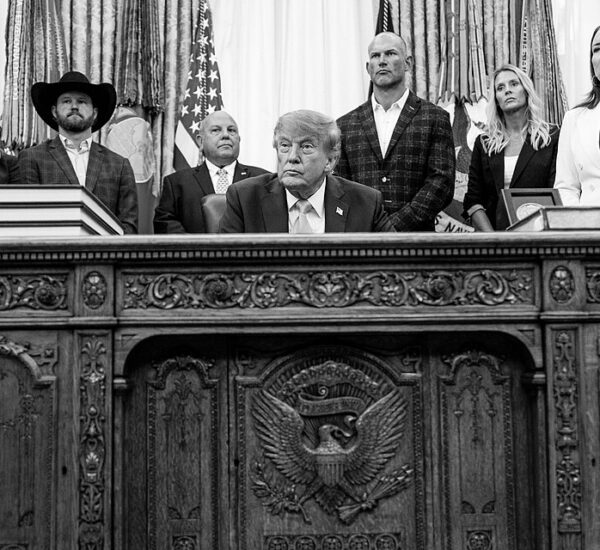
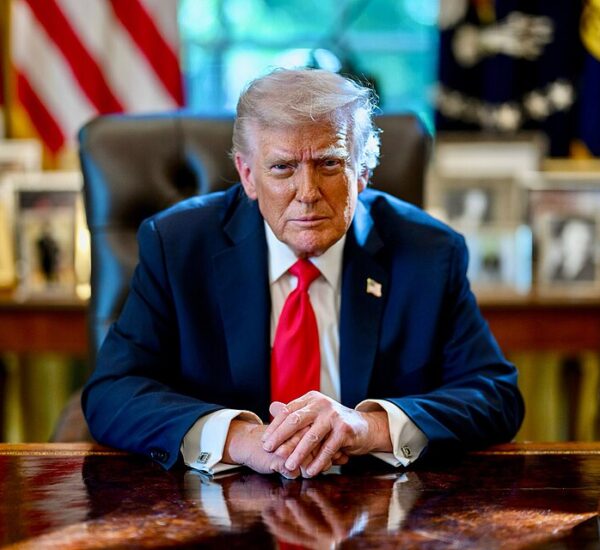
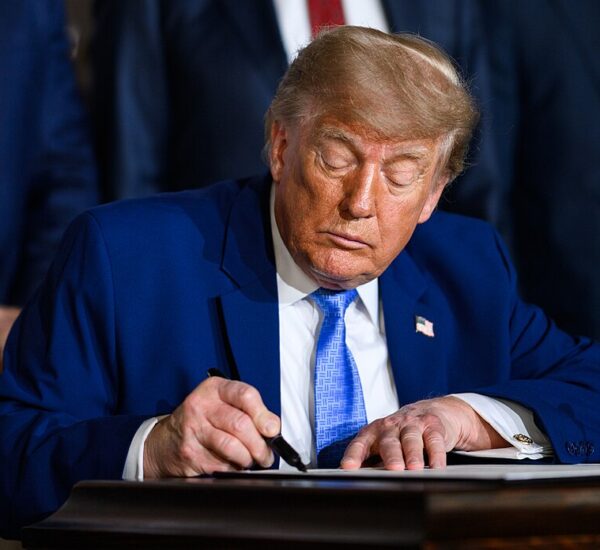
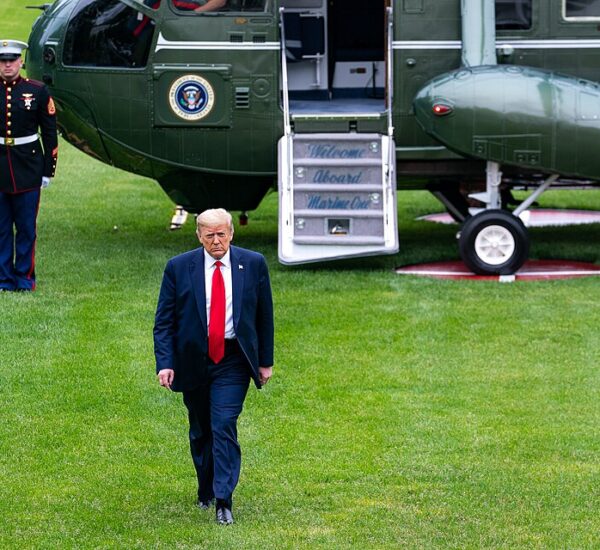
The debate could become increasingly important for Michigan voters as President Donald Trump pushes an aggressive trade agenda designed to protect American manufacturing and bring more production back to the United States.
For James, however, the ultimate goal should be protecting Michigan jobs — not tariffs for the sake of tariffs.
Trump’s Canada Tariffs Put Michigan in the Spotlight
The stakes could soon become much higher.
Canadian Prime Minister Mark Carney has said Canada plans to match U.S. tariffs dollar for dollar beginning Sept. 8.
Trump has also threatened a 50% tariff on Canadian cars, trucks, auto parts, and steel beginning Jan. 1, 2027.
That date is particularly significant in Michigan because it is also the day the state’s next governor is scheduled to take office.
Michigan could find itself on the front lines of the dispute because of its enormous automotive manufacturing industry and its close economic relationship with Canada.
Cars and automotive components frequently move across the U.S.-Canada border as part of highly integrated North American supply chains.
That means decisions made in Washington and Ottawa can have consequences for factories, suppliers, dealerships, employees, consumers, and communities throughout Michigan.
James said he has already been communicating with members of the Trump administration’s trade team as officials work through the dispute.
“Tariffs are not the objective,” James said. “The objective is to protect Michigan jobs. The objective is to make sure that we deepen and continue our relationship with Canada.”
James Says Michigan Jobs Must Come First
James’ position reflects a larger challenge facing Republicans as the Trump administration uses tariffs to push trading partners toward new agreements.
Supporters of Trump’s trade strategy argue that tariffs can give the United States additional leverage, protect domestic industries from unfair competition, and encourage companies to manufacture more products in America.
But states with major international supply chains can also face economic uncertainty when tariffs increase the cost of imported materials and components.
Michigan is one of the clearest examples.
James said the state has already suffered decades of manufacturing losses and cannot afford policies that put additional pressure on workers.
According to James, Michigan has lost more than 300,000 manufacturing jobs since the 1990s.
His proposed solution is renewed negotiation.
“We need the negotiators to go back to the table, stop acting like children, and negotiate a fair, mutually beneficial, reciprocal deal that will benefit the United States of America and the state of Michigan,” James said.
The key word for James appears to be “reciprocal.”
Rather than abandoning Trump’s push for fairer trade, James is arguing that Washington should use negotiations to reach an agreement that strengthens American manufacturing without forcing Michigan workers to bear the cost of a prolonged trade confrontation.
Michigan Auto Industry Could Become Major Election Issue
The U.S.-Canada dispute could also reshape Michigan’s race for governor.
Few economic issues carry as much political importance in Michigan as the automotive industry.
Generations of Michigan families have depended on automobile manufacturing and related industries for good-paying jobs, retirement security, and economic stability.
The industry also supports an enormous network of suppliers, transportation companies, dealerships, repair businesses, technology firms, and other employers.
That gives James an opportunity to make manufacturing and trade central parts of his campaign.
His message is that Michigan should support policies that strengthen American production while making sure the state’s workers are not caught in the middle of an international trade dispute.
James Backs Trump Administration on Iran
James also addressed the continuing U.S. conflict with Iran, which has now reached the six-month mark.
The Republican congressman brings personal experience to the debate.
James graduated from West Point and served in the Army during the Iraq War. He said his military experience has shaped his views about sending Americans into combat.
“We understand the cost of war. We hate war, and we want to use every method, diplomatic or economic, to make sure that we keep Americans safe and we keep our young military members out of war,” James said.
James said he supports using diplomatic and economic pressure whenever possible while maintaining America’s national security.
He also praised the Trump administration’s effort to prevent Iran from obtaining nuclear weapons.
“I applaud the administration’s effort to make sure that Iran has no nukes, so they cannot threaten America and our allies,” James said.
James also noted that his West Point graduating class of 2004 suffered what he described as the most casualties of any service academy graduating class since the Vietnam War.
That experience gives James a personal connection to debates over war, diplomacy, military readiness, and America’s responsibilities overseas.
James Goes After Michigan Democrats
The Republican nominee also used the national television appearance to attack his Democratic opponents.
James criticized Michigan Democratic gubernatorial nominee Jocelyn Benson and Democratic Senate nominee Abdul El-Sayed over their associations with individuals James characterized as extremists.
“They’re campaigning with extremists who say that America deserved 9/11,” James said.
James argued that such rhetoric deserves scrutiny as the country approaches the 25th anniversary of the Sept. 11 terrorist attacks.
“Coming up on the 25th anniversary of 9/11, these are statements that are way out of bounds and should definitely be clarified,” he said.
The criticism signals that national security, patriotism, and political extremism could join economic issues as major themes in Michigan’s upcoming elections.
Data Centers and Electricity Costs Become Growing Concern
Another issue receiving increasing attention in Michigan is the rapid expansion of large data centers.
The facilities are necessary for cloud computing, artificial intelligence, internet services, and America’s growing digital economy.
But massive data centers can also require significant amounts of electricity, water, land, and infrastructure.
James said Michigan should welcome economic development without forcing ordinary residents to absorb the costs.
“My position is that we need to have a plan to protect our communities,” James said.
He supports local control and a moratorium on new data center projects until protections are established.
James said those safeguards should prevent household electricity bills from rising, protect Michigan’s water resources, reduce pollution risks, and encourage developers to build on blighted or previously developed property rather than productive farmland.
His message was straightforward:
“Michigan is open for business, but we are not for sale,” James said.
James Calls for Changes to Michigan Energy Policy
James also wants Michigan lawmakers to reverse two significant state energy laws.
He called for repealing Public Acts 233 and 235.
Public Act 233 established a state-level siting process for certain large renewable energy and energy-storage developments, while Public Act 235 established clean-energy and renewable-energy requirements.
The policies have become part of a broader debate about who should control major energy projects, how Michigan will generate electricity in the future, and what those decisions could mean for consumers.
For many households, the most immediate concern is simple: How much will electricity cost?
James is attempting to connect that pocketbook concern with the rapid growth of data centers and Michigan’s broader energy strategy.
His argument is that economic development should not come at the expense of homeowners, farmers, or communities that may have limited control over major projects.
James Says Michigan Is Falling Behind
Ultimately, James wants the governor’s race to focus heavily on Michigan’s economic performance.
He pointed to rankings that put the state behind many others in areas including infrastructure, education, and economic competitiveness.
James also rejected efforts to turn the election primarily into a referendum on Trump.
“Democrats want to make this about the president,” James said. “But there are 45 states doing better than Michigan, and we all have the same president.”
That could become one of the defining arguments of his campaign.
James wants voters to focus on what state leaders can control — jobs, infrastructure, education, energy, development, taxes, and Michigan’s business environment.
What Happens Next With Trump’s Canada Tariffs?
The immediate question is whether American and Canadian negotiators can reach an agreement before additional tariffs begin taking effect.
Canada’s planned retaliatory measures create the first major deadline on Sept. 8.
An even larger issue looms on Jan. 1, when Trump’s proposed 50% tariffs on Canadian vehicles, auto parts, trucks, and steel are scheduled to begin unless circumstances change.
For Michigan, the outcome could have consequences far beyond Washington politics.
Automotive manufacturing remains a cornerstone of the state’s economy, while Canada remains deeply connected to Michigan through trade, manufacturing, tourism, agriculture, and cross-border commerce.
James’ position is that America should continue fighting for fair and reciprocal trade — but that Michigan workers should not become collateral damage.
As the governor’s race moves forward, voters will have to decide which candidates they trust to protect manufacturing jobs, control energy costs, attract investment, defend local communities, and improve Michigan’s economic competitiveness.
For James, that means finding a way to preserve Trump’s push for fairer trade while preventing a tariff battle from landing hardest on the very American workers those policies are intended to protect.