House GOP Advances Defense Bill
House Republicans scored a major legislative victory Tuesday after ending a weeks-long dispute that had delayed consideration of a $1.15 trillion National Defense Authorization Act (NDAA), moving one of President Donald Trump’s top defense priorities closer to final passage.
The House approved a procedural rule by a 214-211 vote, allowing lawmakers to begin debate on the annual defense bill. Republican leaders are hoping to hold a final vote as early as Wednesday before sending the legislation to the Senate.
The measure not only funds America’s military but also advances several Trump-backed priorities involving national security, election integrity, and Pentagon reforms.
Conservative Deal Clears the Way
The breakthrough came after House Speaker Mike Johnson (R-La.) reached an agreement with conservative lawmakers led by Rep. Anna Paulina Luna (R-Fla.), ending a standoff that had blocked the bill since June.
At the center of the dispute was the SAVE America Act, legislation requiring proof of U.S. citizenship to register to vote in federal elections.
Under the agreement, Republicans will attach the SAVE Act to the defense package before it heads to the Senate, ensuring Trump’s election integrity proposal remains part of one of Congress’ most important annual bills.
For many conservatives, combining election security reforms with must-pass legislation represents another step toward strengthening confidence in the nation’s voting system.
One Republican Breaks With Leadership
Despite overwhelming Republican support, Rep. Thomas Massie (R-Ky.) cast the only GOP vote against advancing the bill.
Massie opposed the rule after House leadership declined to allow his amendment removing language that expands U.S.-Israel cooperation on military technology.
Even with Massie’s opposition, Republican leaders secured enough votes to keep the legislation moving forward.
Hundreds of Amendments Target Conservative Priorities
Lawmakers are expected to debate roughly 320 amendments, many designed to reshape Pentagon policy and reduce government spending.
Among the most closely watched proposals are measures that would:
- Permanently codify President Trump’s policy restricting transgender military service.
- Ban Tricare from paying for gender transition procedures.
- Require the Pentagon to study reducing its civilian workforce by up to 200,000 employees.
- Block future Pentagon funding for additional military aid to Ukraine.
- Strengthen military readiness while shifting resources toward core national defense missions.
Supporters argue the amendments focus the military on combat readiness, accountability, and protecting taxpayer dollars.
Democrats Fail to Block Defense Spending
Democrats introduced several amendments aimed at reducing defense spending below $1 trillion and preventing additional funding for military operations involving Iran.
Those efforts failed to gain enough Republican support.
During debate, Rep. Jim McGovern (D-Mass.) criticized the legislation, arguing that increased military spending benefits defense contractors more than ordinary Americans and accusing President Trump of breaking campaign promises regarding foreign conflicts.
Republicans strongly rejected those claims.
House Rules Committee Chair Virginia Foxx (R-N.C.) defended the legislation, saying protecting the nation remains the federal government’s highest constitutional responsibility.
Republican leaders argued that growing global threats require continued investment in military strength and readiness.
Republicans Also Push Additional Defense Funding
Alongside the NDAA, House Republicans also advanced a budget blueprint that begins the reconciliation process for another $95 billion spending package.
The proposal includes approximately $60 billion in additional defense funding connected to the ongoing conflict involving Iran, signaling that national security will remain a major focus for congressional Republicans in the months ahead.
Why the NDAA Matters
The National Defense Authorization Act is one of Congress’ few annual must-pass bills.
The legislation establishes Pentagon policy, authorizes military programs, determines force structure, and sets priorities for the upcoming fiscal year. While it does not directly appropriate funding, it establishes the framework for future defense spending.
Because of its importance, the NDAA has traditionally received bipartisan support, although this year’s version has become a focal point for debates over military culture, election security, government spending, and America’s role overseas.
What Happens Next?
House Republican leaders hope to approve the defense bill before lawmakers leave Washington this week.
Once passed, the legislation will move to the Senate, where negotiations are expected to be more challenging as lawmakers debate military funding levels, Ukraine assistance, election integrity provisions, and several of Trump’s defense priorities.
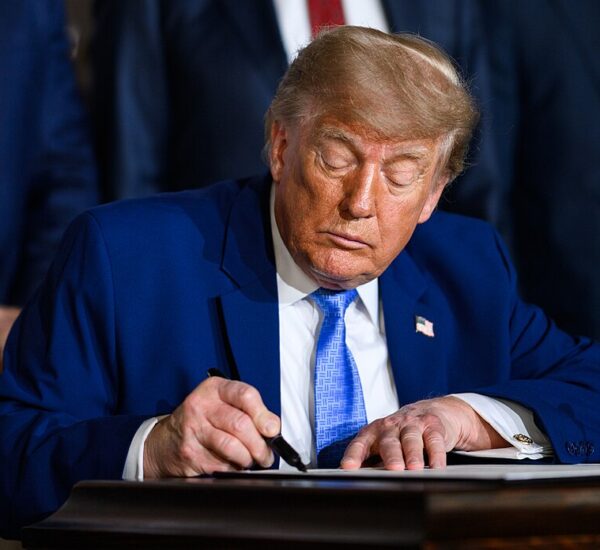
If approved by both chambers, the final version will head to President Trump for his signature.