Trump and Vance Hit Campaign Trail
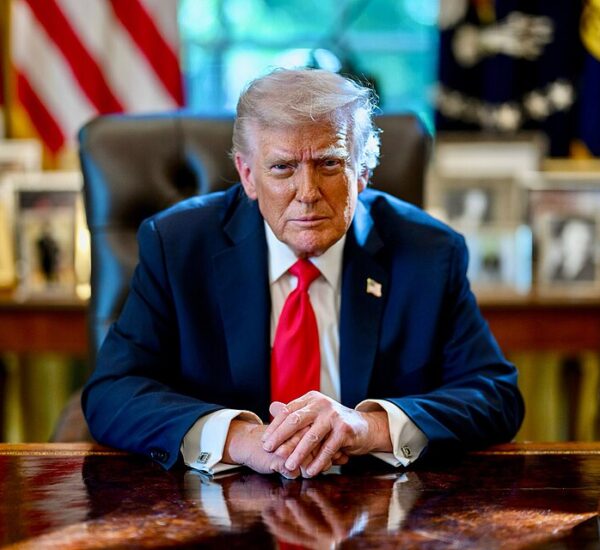
President Donald Trump is launching an intensive final campaign push as Republicans prepare for the November 3 midterm elections, with control of Congress and several important state offices hanging in the balance.
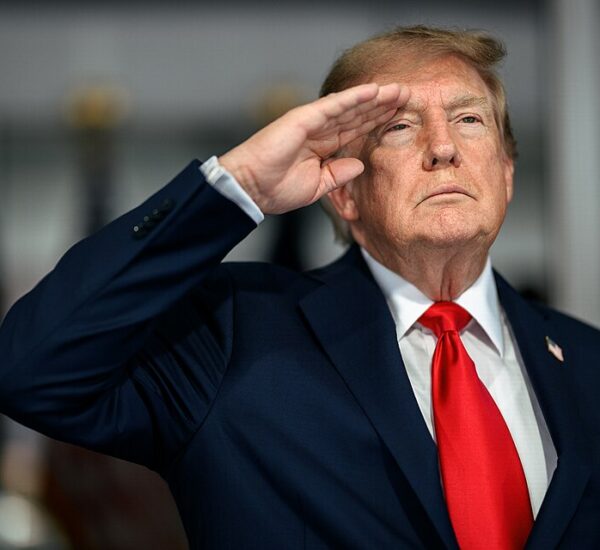
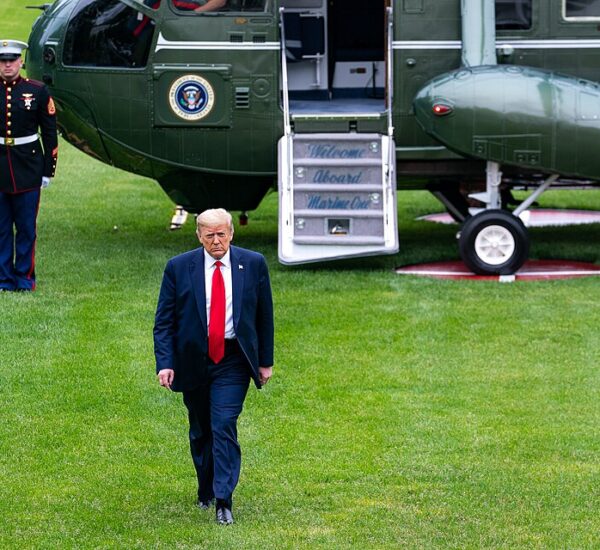
Trump traveled through Texas and Oklahoma on Thursday, beginning what he described as a 32-day campaign blitz designed to energize Republican voters and support GOP candidates around the country.
Vice President JD Vance was also on the campaign trail, appearing in Florida as Republican leaders increased their focus on turnout, the economy, inflation and the rising cost of living.
With Election Day approaching, Trump is expected to become an increasingly visible presence at rallies and campaign events across several states.
Trump Says His “Heart Is In It” Ahead of Midterms
Speaking at a truck facility in Denton, Texas, northwest of Dallas, Trump dismissed suggestions that he was not fully committed to campaigning during the midterm elections.
“My heart is in it like never before,” Trump told supporters.
Trump also predicted that Republicans would perform strongly in November, pointing to his previous success campaigning for GOP candidates.
The president’s remarks signal that he intends to use his personal political following to help drive Republican turnout during the final weeks before voters head to the polls.
Midterm elections often receive less attention than presidential elections, making voter enthusiasm particularly important for both parties.
JD Vance Campaigns for Republicans in Florida
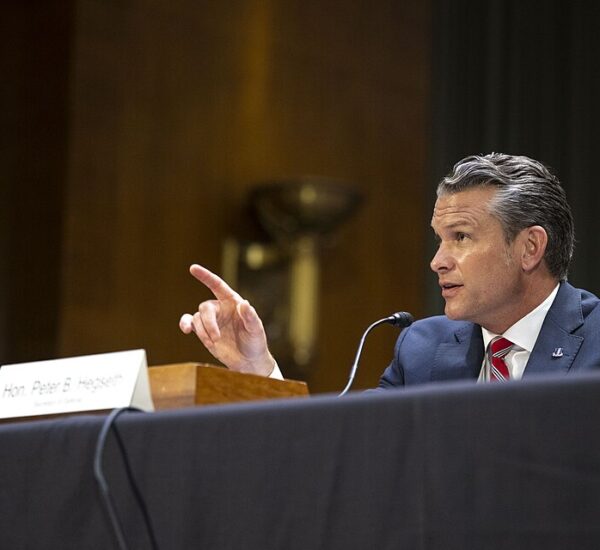
While Trump focused on Texas and Oklahoma, Vice President JD Vance traveled to Lakeland, Florida.
Vance used his appearance to emphasize the political and policy differences between Republicans and Democrats.
“I have the easiest job in the world,” Vance told the crowd. “I get to talk about how crazy the Democrats are.”
His appearance was aimed partly at supporting Republican Rep. Byron Donalds, who is running for governor of Florida.
Donalds is facing Democrat David Jolly, a former Republican who later became an independent before joining the Democratic Party.
Florida has shifted significantly toward Republicans in recent election cycles, but economic concerns continue to influence voters.
Among the issues receiving attention are housing costs, household expenses, development and the rapid expansion of artificial intelligence data centers.
Cost of Living Could Become a Major Midterm Issue
Despite Trump’s confidence, economic concerns could create political challenges for Republicans.
A recent Associated Press-NORC Center for Public Affairs Research poll cited in reporting on the campaign found that 17% of U.S. adults approved of Trump’s handling of the cost of living.
The same survey found that 26% approved of his handling of the overall economy.
Those numbers highlight one of the most important issues facing the administration ahead of the midterms: convincing Americans that economic conditions are moving in the right direction.
For millions of households, economic debates are not simply political talking points.
Families continue to pay close attention to grocery bills, housing costs, electricity rates, insurance premiums, gasoline prices and other everyday expenses.
Those concerns can be particularly important for older Americans and retirees living on fixed or limited incomes.
Trump Says Republicans Need to Improve Their Message
Trump acknowledged during his Texas appearance that Republicans may have struggled to communicate what he considers the administration’s economic accomplishments.
“Maybe we’re doing a bad job selling it,” Trump said.
That admission could become an important part of the Republican strategy during the final month of campaigning.
Instead of relying only on policy announcements, Trump and Republican candidates are likely to spend more time explaining how their economic agenda affects household budgets, jobs, energy prices and retirement security.
The cost of living is expected to remain one of the dominant issues as voters make their decisions.
Trump Blames Biden for Inflation Problems
During his remarks, Trump repeatedly blamed former President Joe Biden and the previous administration for inflation and elevated consumer prices.
“I think inflation is very real, but they’re the ones that caused the inflation,” Trump said.
Trump argued that his administration is now working to bring inflation down.
He also criticized Democrats for focusing heavily on the word “affordability,” suggesting Republicans need to communicate more effectively about the direction of prices and the economy.
The debate over responsibility for inflation is likely to remain a major political issue throughout the midterm campaign.
Democrats are expected to focus on current household costs, while Republicans are likely to emphasize the economic conditions Trump inherited when he returned to office.
Grocery, Energy and Housing Costs Remain Important to Voters
For many Americans, the broader economic debate ultimately comes down to monthly expenses.
Food prices, utilities, housing, transportation and healthcare costs can significantly affect household finances.
Older Americans may feel these pressures especially strongly because many retirees depend heavily on Social Security, pensions, savings or other fixed-income sources.
Even relatively small increases in recurring expenses can reduce disposable income.
That makes affordability an especially important campaign issue heading into November.
Both parties are expected to spend considerable time arguing over which policies would provide Americans with greater economic stability.
Trump Campaigns for Mike Mazzei in Oklahoma
After his Texas appearance, Trump traveled to Oklahoma, where he campaigned alongside Republican gubernatorial candidate Mike Mazzei.
Mazzei is running against Democratic state House Minority Leader Cyndi Munson.
The campaign event took place on the Choctaw Nation of Oklahoma.
Trump’s visit was notable because relatively few sitting U.S. presidents have visited tribal nations while serving in office.
The Oklahoma event allowed Trump to promote another Republican candidate while continuing his broader effort to increase GOP turnout across reliably Republican parts of the country.
Texas Senate Race Draws National Attention
Trump’s stop in Texas also highlighted the state’s closely watched U.S. Senate race.
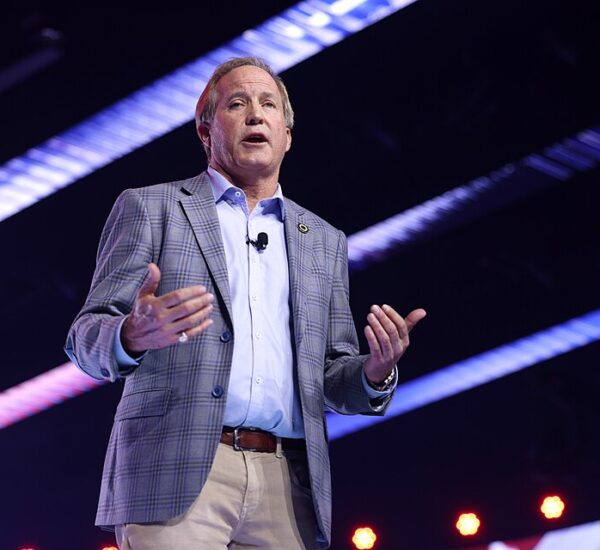
Republican Texas Attorney General Ken Paxton is running against Democratic state Rep. James Talarico.
Republicans have invested heavily in the contest as they work to protect their position in the Senate.
Paxton joined Trump during the Denton event.
Trump joked that Paxton “could be a pain” at times before stressing the importance of keeping the Senate seat in Republican hands.
“We need Ken so badly, and that’s why I’m here,” Trump said.
Texas has long favored Republicans in statewide elections, but national political groups are watching the contest closely.
Every Senate seat could matter as both parties compete for control of Congress.
Control of Congress Is at Stake
The political importance of Trump’s campaign tour stretches beyond individual candidates.
Republicans and Democrats are battling for control of the U.S. House and Senate.
The party that controls Congress will have significant influence over taxes, federal spending, immigration policy, energy policy, healthcare legislation and the administration’s broader agenda.
Congress also plays a critical role in approving federal budgets and major spending packages.
For voters concerned about the national debt, taxes, Social Security, Medicare and government spending, the outcome of the midterm elections could have substantial policy consequences.
That gives both parties a powerful incentive to maximize turnout.
Trump Heads to Alabama
Trump’s campaign schedule will continue Friday with a stop in Mobile, Alabama.
The appearance is intended in part to support Republican Sen. Tommy Tuberville, who is running for governor.
The location also places Trump near the Florida Panhandle, potentially generating additional attention for Byron Donalds’ gubernatorial campaign in neighboring Florida.
Republicans have historically performed well in both Alabama and the Florida Panhandle.
The campaign appears to be using those favorable regions to generate enthusiasm before moving into more competitive areas.
Ohio and Nebraska Are Also on Trump’s Schedule
Trump is scheduled to campaign Saturday in Vandalia, Ohio.
He is then expected to travel Monday to Grand Island, Nebraska.
The growing travel schedule demonstrates how aggressively Trump intends to campaign during the final weeks before Election Day.
Additional campaign stops are likely as Republican strategists determine where Trump’s appearances could generate the most voter attention.
Trump’s ability to attract large crowds has long made campaign rallies an important part of his political strategy.
Vance Focuses on House and Governor Races
Vice President Vance is also expected to remain active on the campaign trail.
Before traveling to Florida, Vance appeared in Texas with Republican candidate Eric Flores, who is competing in a closely watched U.S. House race in South Texas.
Republicans have made major gains in portions of South Texas in recent elections, making the region increasingly important to both parties.
Vance’s campaign appearances allow the administration to cover multiple states while Trump holds separate events elsewhere.
That could become increasingly important during the final weeks of the campaign.
Midterm Turnout Could Be Crucial
Republicans are hoping Trump can persuade voters who supported him in presidential elections to return to the polls during the midterms.
That is not always guaranteed.
Presidential elections typically attract considerably more voters than midterm contests.
Both parties therefore devote significant resources to reminding supporters to vote and encouraging participation.
Campaign rallies, television appearances, digital advertising, mail campaigns and grassroots organizing will all intensify as November approaches.
Economy Remains at the Center of the Election
Even with debates over immigration, foreign policy and government spending, economic conditions are likely to remain central to the 2026 midterm elections.
Americans continue to evaluate the economy through their own household finances.
Questions about wages, retirement savings, energy bills, groceries, interest rates and housing costs can influence how voters view Washington.
Trump’s comments in Texas suggest the White House understands that economic messaging will be critical.
The administration is attempting to convince voters that its policies are improving economic conditions while Democrats argue that many Americans are still struggling with affordability.
What Happens During the Final 32 Days?
Trump’s 32-day campaign push represents an effort to place the president at the center of the Republican Party’s closing argument.
His upcoming schedule includes appearances supporting gubernatorial, Senate and House candidates.
Vance is expected to continue making campaign appearances as well.
Republicans will likely emphasize the economy, immigration, energy, taxes and government spending.
Democrats are expected to continue focusing heavily on affordability, healthcare, administration policies and their own economic proposals.
The competing messages will intensify as Election Day approaches.
The Bottom Line
The final month of the 2026 midterm campaign is underway, and President Trump is making clear that he plans to be heavily involved.
His campaign swing through Texas and Oklahoma marks the beginning of an aggressive schedule designed to support Republican candidates and motivate GOP voters.
At the same time, concerns about inflation and the cost of living remain significant political challenges.
That creates a straightforward question heading into November 3: whether Republicans can persuade voters that the country’s economic direction is improving while maintaining enthusiasm among Trump’s political base.
With control of Congress and several governorships at stake, the final weeks of the campaign are likely to bring an intense nationwide fight for turnout.