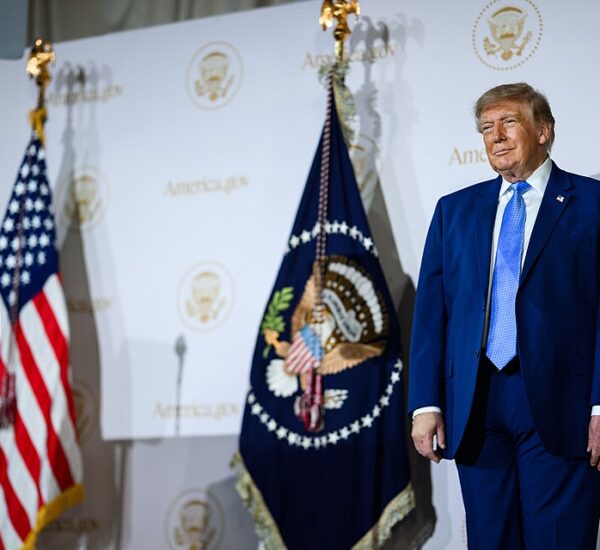
Trump Causes Oil Prices To Drop
Oil prices fell Monday as investors awaited new Iran sanctions from the Trump administration, putting renewed attention on the Middle East, the Strait of Hormuz and the potential impact on gasoline prices for American consumers.
Brent crude futures declined $1.22, or about 1.3%, to $93.17 per barrel in early trading. U.S. West Texas Intermediate crude, commonly known as WTI, dropped $1.20, or nearly 1.4%, to $85.86 per barrel.
The decline came after two consecutive weeks of gains for crude oil. Both major benchmarks climbed more than 5% last week as tensions involving the United States and Iran continued to create uncertainty across global energy markets.
Now investors are watching Washington closely as the Trump administration prepares another round of economic pressure against Tehran.
Trump Administration Prepares New Iran Sanctions
Treasury Secretary Scott Bessent is expected to announce additional measures targeting Iran as Washington seeks to increase economic pressure on the Iranian government.
Bessent has signaled that the administration intends to pursue extremely aggressive sanctions.
President Donald Trump has also warned that countries doing business with Iran could face U.S. sanctions, potentially expanding the economic impact of Washington’s strategy.
The policy could have major implications for Iranian oil exports, global crude supplies and energy prices.
If tougher sanctions substantially reduce the amount of Iranian crude reaching international markets, the resulting supply pressure could help push oil prices higher.
For American consumers, that raises an important question: Could Iran sanctions lead to higher gas prices?
Strait of Hormuz Remains Critical to Global Oil Supply
Much of the uncertainty centers on the Strait of Hormuz, one of the world’s most important energy shipping routes.
Historically, approximately one-fifth of global petroleum supplies have traveled through the narrow waterway connecting the Persian Gulf to international markets.
That makes instability surrounding the Strait particularly important to the United States and other major economies.
Disruptions affecting oil shipments can quickly influence crude oil prices, gasoline prices, diesel costs, transportation expenses and inflation.
The situation has become more closely watched as negotiations between Washington and Tehran struggle to produce a resolution.
Could Iran Sanctions Send Oil Prices Higher?
Analysts remain divided over how successful Washington’s strategy will ultimately be.
Vivek Dhar, a commodities analyst at Commonwealth Bank of Australia, questioned whether efforts to economically isolate Iran will achieve their intended objective.
The larger concern for energy markets is what Tehran might do if economic pressure becomes increasingly severe.
A reduction in Iranian exports could tighten global supplies. A broader escalation involving regional shipping routes could create even greater uncertainty for oil markets.
Either scenario could put upward pressure on energy costs.
Iran has criticized Washington’s plans for additional sanctions, although Iranian President Masoud Pezeshkian has continued to advocate for a diplomatic solution.
Iran Faces Growing Economic Pressure
There are also questions about divisions within Iran’s leadership.
IG market analyst Tony Sycamore said more pragmatic Iranian officials may favor reducing tensions, while hardline factions could be more willing to continue the confrontation.
Which approach prevails could help determine the direction of the crisis — and potentially the direction of oil prices in 2026.
Signs of pressure are already appearing in Iran’s energy trade.
Offers of Iranian crude to Chinese buyers have reportedly declined, while prices have risen as restrictions have reduced Tehran’s ability to move oil into international markets.
China has historically been an important destination for Iranian crude, meaning any significant reduction in those shipments could become another factor affecting global supply.
Iraqi Oil Tankers Receive Permission to Pass
Despite continuing tensions, there have been limited signs of oil traffic moving through the region.
Iran reportedly granted permission for several Iraqi oil tankers to travel through the Strait of Hormuz after repeated requests from the Iraqi government.
The development could provide some reassurance to energy traders, but uncertainty surrounding the broader shipping situation remains.
Any major disruption to the Strait could have consequences far beyond the Middle East because of the enormous amount of energy historically transported through the waterway.
What Falling Oil Prices Mean for Americans
Monday’s decline in crude prices could provide some short-term relief after last week’s sharp increase.
But for American households, especially retirees and families living on fixed incomes, the longer-term trend matters more than a single day’s movement in the market.
Oil prices influence much more than what motorists pay at the gas station.
Higher energy costs can eventually affect:
- Gasoline and diesel prices
- Grocery and food transportation costs
- Airline fares and travel expenses
- Home heating and energy bills
- Manufacturing and shipping expenses
- Inflation and household budgets
That means developments involving Iran and the Strait of Hormuz could eventually reach Americans through higher everyday expenses.
Trump’s Iran Strategy Puts Energy Markets in Focus
The Trump administration is attempting to use America’s economic power to increase pressure on Tehran while avoiding further disruption to global energy supplies.
Whether that strategy succeeds could become an important issue for both U.S. national security and the American economy.
Stronger sanctions could weaken Iran’s ability to generate revenue from oil exports. At the same time, removing additional Iranian crude from global markets could contribute to tighter supplies and higher prices if other producers do not make up the difference.
That balancing act will be closely watched by investors, energy companies and American consumers.
What Happens Next With Oil and Gas Prices?
The next several days could provide important clues about where oil prices and U.S. gasoline prices are headed.
Investors will be watching the details of Washington’s new sanctions, Iran’s response, the movement of tankers through the Strait of Hormuz and any signs that diplomatic negotiations could resume.
For American consumers, the central question is whether the confrontation remains primarily economic or develops into a broader disruption of Middle Eastern energy supplies.
Monday’s drop in oil prices provides temporary relief, but uncertainty remains high.
With Trump’s Iran sanctions, global oil supplies, the Strait of Hormuz and gas prices all closely connected, what happens next in the Middle East could have a direct impact on household budgets across the United States.