Trump’s New Iran Plan Shocks Everyone
President Donald Trump raised the possibility Sunday that the United States could maintain a presence in Iran and benefit from the country’s oil resources, comparing the idea to his administration’s energy arrangement with Venezuela.
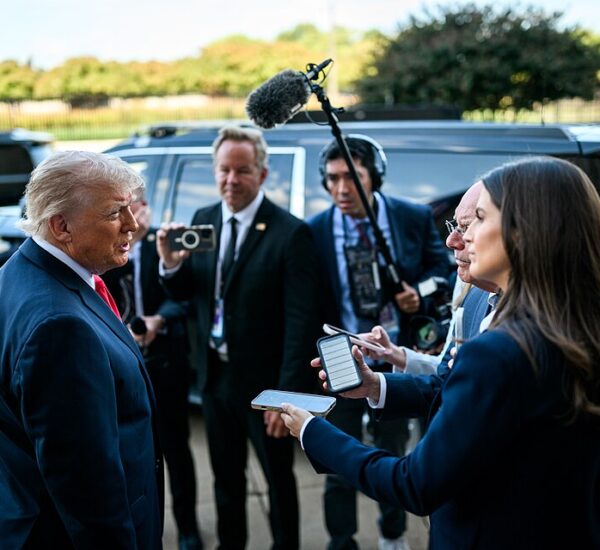
Speaking to reporters during a visit to Doonbeg, Ireland, Trump said he believes the conflict with Iran will eventually come to an end and claimed Iranian leaders are eager to negotiate with Washington.
But Trump also suggested there could be another option for the United States after the fighting stops.
“We’ll ultimately get out unless we decide to stay and keep the oil, like Venezuela,” Trump said.
The president did not provide details about how such an arrangement involving Iranian oil would operate. His remarks therefore represent an idea he is publicly considering rather than an announced or finalized U.S. policy.
The comments come as Americans continue to face higher energy costs and renewed concerns about the security of the global oil supply.
Trump Says Iran Is Looking for a Deal
Trump told reporters that Iran “wants to make a deal so badly” and has been contacting the United States.
The president has repeatedly indicated that he expects the conflict to eventually end, while arguing that an agreement must be favorable to the United States.
Trump has also connected the situation in Iran to another issue affecting millions of Americans: fuel prices.
Instability in the Middle East has put substantial pressure on global energy markets, particularly because of disruptions involving the Strait of Hormuz.
The narrow waterway between Iran and Oman is one of the most important oil transportation routes in the world. Problems affecting shipping through the region can quickly influence international oil prices—and eventually what American drivers pay at the pump.
Gas Prices Put Pressure on American Households
For many Americans, especially retirees, working families and people living on fixed incomes, the immediate concern is the rising cost of everyday necessities.
Gasoline is one of the most visible examples.
The national average price for regular gasoline reached approximately $4.31 per gallon Sunday, according to AAA data cited in reports surrounding Trump’s remarks.
Higher fuel prices rarely stop at the gas station.
Businesses that depend on trucks and other vehicles can face higher transportation expenses. Farmers and manufacturers can see operating costs rise. Shipping becomes more expensive, potentially placing additional pressure on prices throughout the economy.
That gives the debate surrounding Iran’s oil resources direct economic significance for American consumers.
Trump Points to Venezuela as a Possible Model
Trump specifically compared his idea for Iran with the administration’s approach toward Venezuela, another country possessing enormous petroleum reserves.
The Trump administration previously reached an arrangement involving Venezuelan oil production and North American Blue Energy Partners.
Under the agreement, the United States can purchase a portion of the company’s Venezuelan oil production at production cost.
The arrangement is part of a broader energy relationship between Washington and Caracas that Venezuelan officials have described as a long-term project involving multiple oil fields and potentially substantial production.
Trump’s comments suggest he sees similarities between the economic opportunities presented by Venezuela’s petroleum industry and those that could potentially emerge in Iran.
However, the political, military and legal circumstances surrounding Iran are substantially different, and the president has not announced a formal plan for taking control of Iranian petroleum resources.
Could Iranian Oil Help the United States?
The United States is already one of the world’s leading oil producers, meaning America does not necessarily need Iranian petroleum to meet its basic domestic energy requirements.
But control over additional supplies could have broader strategic implications.
Oil is traded in a global market. Major disruptions in one part of the world can affect prices elsewhere, including in the United States.
Iran also possesses significant energy resources and occupies an important position near the Strait of Hormuz.
That makes the future of Iran’s petroleum industry relevant not only to American foreign policy but also to the larger question of global energy security.
Strategic Petroleum Reserve Remains Part of the Debate
The situation also brings renewed attention to the Strategic Petroleum Reserve, America’s emergency stockpile of crude oil.
Presidents can authorize releases from the reserve during serious supply disruptions in an effort to increase available petroleum supplies.
Both Republican and Democratic administrations have used the reserve in recent years, leading to continuing debate in Washington over when it should be tapped and how quickly it should be replenished.
Additional sources of oil could potentially give the United States more flexibility during periods of international instability, although any arrangement involving Iranian resources would face complicated political and legal questions.
Trump Has Discussed Iran’s Oil Before
Sunday’s remarks were not the first time Trump has publicly focused on Iran’s petroleum resources.
Earlier in the conflict, the president made clear that oil was part of his broader thinking about the country’s future.
Supporters of greater American economic involvement have argued that a future opening of Iran’s energy industry could create opportunities for U.S. companies.
Victoria Coates of the conservative Heritage Foundation previously argued that American businesses could potentially participate in rebuilding Iran’s petroleum industry under the right circumstances, drawing comparisons with opportunities in Venezuela.
Any such effort, however, would depend heavily on what happens politically and militarily in Iran and on the terms of any future agreement.
Iran’s Oil Could Become a Major Postwar Question
Trump’s latest comments raise a significant question about what American policy toward Iran could look like after the current conflict eventually ends.
Would the United States completely withdraw?
Could American companies become involved in rebuilding or operating portions of Iran’s energy industry?
Could Iranian petroleum eventually help stabilize international energy supplies?
Or would legal and geopolitical obstacles make such an arrangement impractical?
For now, those questions remain unanswered.
Trump has floated the possibility of the United States staying involved and benefiting from Iran’s oil, but his administration has not released a detailed policy establishing how that would happen.
What is already clear is that energy has become a major part of the discussion surrounding Iran.
With American motorists facing elevated gasoline prices and disruptions around the Strait of Hormuz continuing to affect global markets, decisions involving Iran’s enormous oil resources could have consequences far beyond the Middle East.
For households watching every dollar they spend at the grocery store and gas station, what happens next could ultimately matter much closer to home.