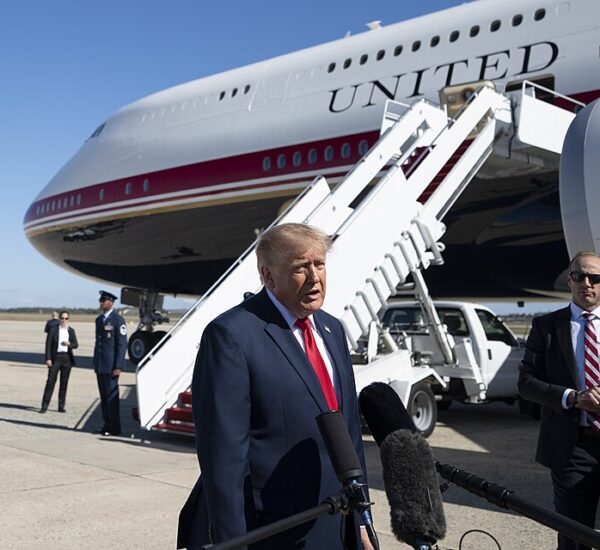
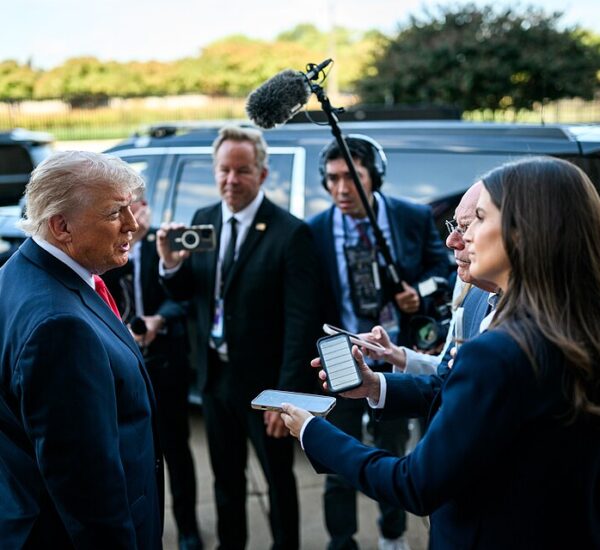
Democrats lose again!
President Donald Trump has secured another major courtroom victory after a federal appeals court delivered a serious setback to a Democratic congresswoman accused of assaulting immigration enforcement officers.
Rep. LaMonica McIver, a New Jersey Democrat and outspoken critic of the Trump administration’s immigration policies, suffered a significant legal defeat Thursday when judges rejected her latest effort to escape federal criminal charges.
The ruling allows the Justice Department to continue pursuing at least two charges against McIver following a controversial confrontation at an Immigration and Customs Enforcement (ICE) detention facility.
The decision marks another victory for the Trump administration in a legal battle that has raised serious questions about congressional immunity, immigration enforcement, and the responsibility of elected officials to follow federal law.
Federal Judges Hand Trump Administration Another Victory
On November 19, 2026, the U.S. Court of Appeals for the Third Circuit refused to reconsider an earlier decision against McIver.
The Democratic congresswoman had requested another review of an August ruling that rejected her claim of constitutional immunity from prosecution on two criminal charges.
However, the appeals court declined to revisit the decision, leaving the earlier ruling in place.
That development represents a significant setback for McIver, who has repeatedly argued that her actions were protected because she was performing official congressional duties.
The court’s earlier decision determined that the constitutional protections afforded to members of Congress do not automatically shield them from prosecution over alleged physical confrontations with federal officers.
The ruling means McIver can still face prosecution on at least two charges, although the court has not determined whether she is guilty.
For the Trump administration, the outcome strengthens the Justice Department’s position as the case continues through the federal court system.
Democrat Faces Serious Charges Following ICE Confrontation
The controversy dates back to May 2025, when McIver joined other Democratic officials during a visit to the Delaney Hall immigration detention facility in Newark, New Jersey.
The visit was intended to examine conditions inside the detention center, which had become a source of disagreement between local Democratic leaders and federal immigration authorities.
What began as an oversight visit quickly escalated into a confrontation involving lawmakers, federal officers, and Newark Mayor Ras Baraka.
Baraka was arrested during the incident, although the charges against him were later dropped.
McIver subsequently faced three federal charges involving allegations of assaulting, resisting, or impeding federal officers.
According to federal prosecutors, the congresswoman made physical contact with officers during the confrontation.
One allegation involves McIver using her forearm against an officer who was attempting to arrest the Newark mayor.
Another concerns allegations that she struck an officer while moving toward a secured area of the detention facility.
McIver has disputed the prosecution and maintains that she was exercising her congressional oversight responsibilities.
The allegations remain unproven, and she is entitled to the presumption of innocence.
Judges Reject Democrat’s Immunity Argument
A central issue in the case involves the Constitution’s Speech or Debate Clause.
The provision protects lawmakers from certain legal proceedings involving legitimate legislative activities.
McIver’s legal team argued that her visit to the ICE facility qualified as official congressional business and that the criminal charges should therefore be dismissed.
However, a divided federal appeals court panel rejected that argument in August 2026.
In a 2-1 decision, the judges concluded that the alleged physical actions underlying two of the charges were not protected legislative activities.
The majority reasoned that congressional oversight authority does not extend to every action a lawmaker might take while performing official duties.
The court allowed two charges to proceed and returned the third to a lower court for additional consideration.
Judge Thomas Ambro disagreed with aspects of the majority’s reasoning, raising concerns about protecting Congress’s ability to oversee executive branch agencies.
McIver then sought another hearing before the original panel and the broader appeals court.
That effort failed on November 19, leaving the administration’s earlier courtroom victory intact.
McIver Blasts Trump Following Courtroom Defeat
Following the latest decision, McIver criticized President Trump and accused his administration of using the Justice Department for political purposes.
The New Jersey Democrat argued that she was being prosecuted because she challenged the administration’s immigration enforcement practices.
She also claimed that the charges could expose her to a potential prison sentence of 17 years.
McIver suggested that the legal case could discourage other members of Congress from conducting oversight of federal agencies.
She indicated that her attorneys were evaluating additional options as the dispute continues.
Her response illustrates the sharp political divisions surrounding the case.
While McIver argues that the prosecution threatens congressional independence, federal prosecutors maintain that the alleged conduct falls outside constitutional protections for legislative work.
Those competing positions will remain central to the ongoing proceedings.
Trump Administration Holds Firm On Immigration Enforcement
The courtroom development comes as President Trump continues emphasizing immigration enforcement and the importance of maintaining federal authority.
Throughout his administration, Trump has made border security, immigration law enforcement, and the removal of individuals unlawfully present in the country major policy priorities.
His approach has frequently brought the White House into conflict with Democratic officials who oppose various enforcement measures.
Those disagreements have extended to immigration detention facilities, cooperation between local authorities and federal agencies, and the treatment of individuals facing deportation proceedings.
The McIver case presents an especially sensitive situation because it involves a sitting member of Congress and federal officers carrying out immigration-related duties.
The legal question extends beyond disagreement over immigration policy: Does a lawmaker’s official position provide protection from prosecution when alleged conduct involves physical interference with federal officers?
The appeals court’s decision indicates that congressional status alone does not resolve that question in McIver’s favor.
For supporters of stronger immigration enforcement, the case also highlights the importance of allowing federal officers to perform their duties under the law.
At the same time, lawmakers retain legitimate oversight authority, and the courts must determine how that authority applies to the particular facts of this dispute.
Could The Supreme Court Become Involved?
Although McIver has suffered another legal setback, the case could still take additional turns.
Her attorneys may ask the U.S. Supreme Court to consider whether the appeals court properly interpreted the constitutional protections available to members of Congress.
The Supreme Court is not required to accept such a request, and there is no guarantee that the justices would review the dispute.
In the meantime, the criminal case can proceed under the existing appellate rulings.
The third charge remains subject to further consideration in the lower court.
The outcome could have consequences extending beyond McIver herself, particularly when disputes arise between congressional oversight teams and federal law enforcement agencies.
A final ruling may help clarify the boundaries between protected legislative activity and conduct that can be prosecuted under federal criminal law.
Why This Court Decision Matters
The latest ruling addresses an issue that many Americans consider fundamental to the nation’s justice system: whether elected officials must answer to the same laws as everyone else.
Members of Congress have constitutional protections designed to preserve the independence of the legislative branch.
However, those protections are not unlimited.
Courts must distinguish between legitimate legislative activities and conduct that may fall outside the duties protected by the Constitution.
In McIver’s case, federal judges have determined that at least two of the allegations can be prosecuted despite her congressional immunity argument.
That does not mean she has been convicted or that the government has proven its allegations.
It does mean her legal team has failed, so far, to prevent the prosecution from moving forward on those charges.
The distinction is important because the case involves both the rights of an elected representative and the authority of federal officers performing their jobs.
Trump Scores Important Win As Legal Battle Continues
For President Trump, the latest appeals court ruling represents another significant victory in a politically charged legal fight involving his administration’s immigration enforcement policies.
McIver had hoped to convince federal judges that her congressional responsibilities protected her from criminal prosecution.
Instead, the court refused to reconsider its earlier ruling, keeping two of the charges against her alive.
The New Jersey Democrat now faces difficult legal decisions as her attorneys consider whether to pursue additional appeals.
The case also serves as a reminder that political disagreements do not eliminate the legal obligations of public officials.
Regardless of party affiliation, allegations of criminal misconduct must be evaluated through the judicial process, with the government responsible for proving its case.
For now, Trump’s Justice Department has secured an important legal victory, while McIver’s efforts to dismiss the charges have suffered another major setback.
With immigration enforcement remaining a prominent national issue, the final outcome of this case could help define the limits of congressional authority for years to come.