Trump Official Makes Bold Declaration
Secretary of State Marco Rubio delivered a strong message about Iran’s future, declaring that the Trump administration has weakened the Iranian regime to the point where additional American military action may no longer be necessary.
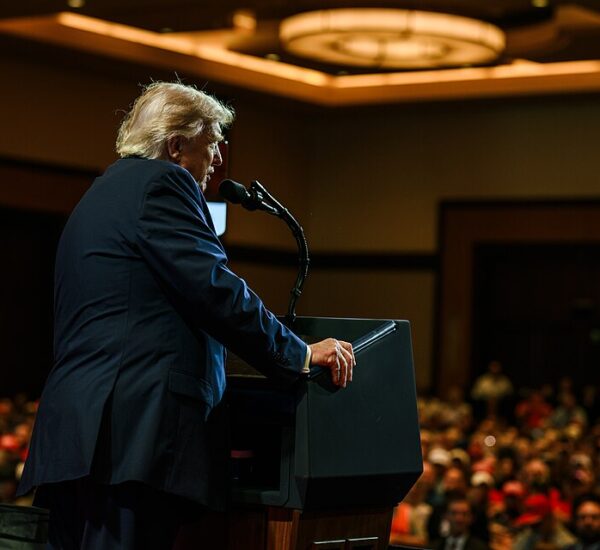
Speaking Friday at the Federalist Society’s National Lawyers Convention in Washington, D.C., Rubio argued that the economic pressure imposed on Tehran has significantly reduced its ability to challenge the United States.
However, the secretary of state made clear that President Donald Trump’s administration has not abandoned its central objective: preventing Iran from ever obtaining a nuclear weapon.
Rubio described the economic damage facing Iran as severe enough to make further military operations unnecessary under current circumstances.
His remarks reinforced Trump’s recent assessment that the military phase of the conflict has largely accomplished its objectives.
Rubio Draws A Firm Line On Iran’s Nuclear Ambitions
Despite expressing confidence in Washington’s current position, Rubio emphasized that the United States cannot afford to underestimate the threat posed by Iran’s leadership.
The secretary of state argued that Tehran’s ruling establishment operates according to a revolutionary ideology that makes it particularly dangerous.
Unlike governments primarily concerned with economic prosperity or national stability, Rubio suggested that Iran’s religious leadership places ideological ambitions ahead of the well-being of its own citizens.
He also pointed to Iran’s history of supporting militant organizations throughout the Middle East, describing the regime as a persistent source of regional instability.
For Rubio, the ultimate measure of American success is straightforward.
Victory, he explained, means ensuring Iran never develops nuclear weapons, regardless of whether that outcome is achieved through economic restrictions, military deterrence, or diplomatic pressure.
The secretary of state warned that allowing Tehran to acquire such weapons could create serious security consequences for the United States and future generations.
Trump Administration Defends Its Tough Approach
Rubio also defended President Trump’s decision to confront Iran rather than leave the growing nuclear threat for a future administration.
According to Rubio, avoiding the confrontation might have been politically easier, particularly given the economic consequences associated with military operations in the Middle East.
However, he argued that postponing difficult national security decisions could ultimately expose Americans to even greater dangers.
The secretary of state acknowledged that the conflict has created financial challenges, including higher energy costs that have affected American households and businesses.
Those pressures have become an important concern for families already dealing with expensive groceries, transportation, and other everyday necessities.
Rubio maintained that the administration understands those hardships, even as it continues pursuing its national security objectives.
His comments highlighted the difficult balance Washington faces between protecting American interests overseas and limiting the financial burden on taxpayers at home.
Economic Pressure Becomes A Key Weapon
The administration’s current strategy appears increasingly focused on maintaining economic pressure against Tehran while avoiding unnecessary military escalation.
Rubio suggested that Iran’s weakened financial position has given Washington additional leverage without requiring another round of American strikes.
That approach could prove significant as the administration considers its next steps in the region.
For many Americans, the question is whether the United States can successfully contain Iran’s nuclear ambitions without becoming involved in another prolonged conflict.
The administration has argued that preventing Tehran from acquiring nuclear weapons remains essential to protecting American national security.
At the same time, the financial consequences of the conflict have demonstrated how developments thousands of miles away can directly affect household budgets across the United States.
Energy prices, international shipping disruptions, and broader economic uncertainty remain important considerations as Washington evaluates its policy.
A Major Test For American Foreign Policy
Rubio’s declaration comes at a critical moment for the Trump administration, which faces pressure to demonstrate that its strategy toward Iran is producing lasting results.
While Rubio believes economic pressure has substantially weakened Tehran, questions remain about whether those restrictions will permanently prevent the regime from pursuing nuclear capabilities.
Iran’s leadership has continued to resist American demands, and tensions throughout the Middle East remain elevated.
Nevertheless, Rubio expressed confidence that the United States has established a stronger position from which to confront future threats.
His message was clear: Washington does not necessarily need additional military action to maintain pressure on Iran, but the administration remains committed to preventing the country from becoming a nuclear-armed power.
For President Trump and his national security team, the challenge now is turning that position into a lasting outcome while protecting American interests and minimizing further economic disruption.
The coming months could determine whether the administration’s combination of military strength and economic pressure delivers the long-term security results Rubio believes are within reach.