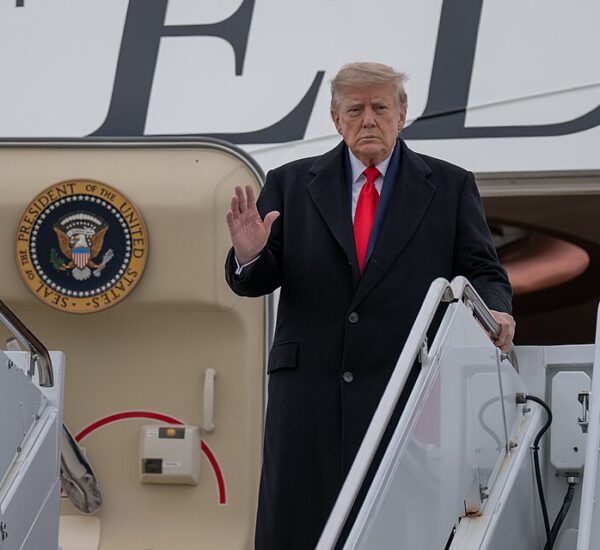
President Donald Trump is facing an unusual national security concern, and it has nothing to do with enemy nations, missiles, or military spending.
Instead, officials are warning that a troubling decline in the health of American men could threaten the nation’s ability to maintain a strong fighting force.
The Trump administration is taking a closer look at declining testosterone levels, obesity, and chronic health problems as the Pentagon works to strengthen military readiness.
Senior federal health officials say the issue could have consequences far beyond individual medical concerns, particularly as the military struggles to find enough young Americans who qualify for service.
And the numbers being discussed are raising serious questions about the country’s future defense capabilities.
Military Officials Sound Alarm Over American Men’s Health
Adm. Brian Christine, a senior official at the Department of Health and Human Services, recently warned that declining testosterone levels among American men deserve greater attention.
In an interview with Fox News Digital published October 24, Christine connected the issue to America’s long-term military readiness.
Christine, a urologist with more than 35 years of experience in men’s health, explained that testosterone levels have been declining for decades.
The hormone plays an important role in maintaining muscle mass, bone strength, and other aspects of physical health.
Those functions are particularly relevant to military personnel, who must meet demanding physical requirements and remain prepared for difficult assignments.
While testosterone naturally decreases with age, researchers have also documented broader population-level declines.
The causes remain a subject of scientific investigation.
For the Trump administration, the concern is whether these changes, combined with other widespread health problems, could make it increasingly difficult to maintain a physically capable military.
Stunning Military Recruitment Numbers Reveal Bigger Problem
The testosterone issue comes against the backdrop of an already challenging military recruiting environment.
According to figures cited by Christine, approximately 77% of Americans between the ages of 17 and 24 cannot qualify for military service without a waiver.
Among young men, more than 70% reportedly fall into that category.
The reasons extend beyond physical fitness and can include medical conditions, weight problems, and other eligibility requirements.
Another figure presents a separate challenge.
Christine said only about 3% of young Americans express interest in serving in the military.
These statistics point to two different obstacles: finding individuals who meet military qualifications and finding those who actually want to enlist.
For a nation that depends on an all-volunteer fighting force, both issues matter.
Even the world’s most advanced military equipment requires trained, capable people to operate it.
And although the recruitment figures do not establish that low testosterone is causing military ineligibility, they help explain why administration officials are examining the nation’s overall health.
Trump Administration Orders New Military Health Screenings
The Pentagon has already moved to address one part of the problem.
In September 2026, military officials issued new testosterone deficiency screening guidelines for male service members ages 30 and older.
The policy requires screening intended to identify symptoms and risk factors associated with low testosterone.
Further medical testing may follow when necessary.
Those who are found to have a clinically significant deficiency may be offered appropriate treatment after medical evaluation.
However, the new guidelines do not require service members to take testosterone.
The distinction is important because hormone replacement therapy is not appropriate for everyone, and medical decisions depend on individual health circumstances.
The purpose of the screening initiative is to identify potentially overlooked medical problems before they interfere with a service member’s health or ability to perform assigned duties.
Whether the initiative produces measurable improvements in military readiness will become clearer as its results are evaluated.
Why Are Testosterone Levels Declining?
One of the most concerning aspects of the issue is that medical researchers still do not have a complete explanation.
Christine pointed to a substantial decline in testosterone levels among American men over several decades.
He cited estimates suggesting average levels were above 650 in the mid-1970s but have since moved closer to 350.
Those figures reflect Christine’s comparison, rather than a universally established measurement of the entire male population. Differences in testing methods, ages, and study populations can complicate comparisons across generations.
Several possible contributing factors are receiving attention.
Obesity and chronic illnesses have recognized associations with lower testosterone levels.
Researchers are also examining whether environmental exposures, including microplastics and other chemicals, could affect reproductive and hormonal health.
But the evidence does not yet establish that any single environmental factor explains the broader trend.
That uncertainty is one reason officials say additional research is needed.
Top Federal Health Official Raises Additional Questions
National Institutes of Health Director Dr. Jay Bhattacharya has also expressed concern about long-term changes in men’s reproductive health.
Speaking separately with Fox News Digital, Bhattacharya acknowledged that researchers have observed declining testosterone levels without identifying a definitive cause.
He also pointed to declining sperm counts as another issue worthy of scientific investigation.
The questions are significant because reproductive health can provide researchers with information about broader medical and environmental trends.
Bhattacharya said the NIH is investing in research to better understand these developments and determine what medical guidance may be appropriate.
There is also an important distinction between having a testosterone level that is lower than a historical population average and having a medical condition requiring treatment.
Clinical guidelines generally require symptoms and consistently low laboratory measurements before diagnosing testosterone deficiency.
That means the administration’s screening initiative is not simply about raising hormone numbers. It is intended to help identify service members who may benefit from further medical attention.
Trump’s Military Readiness Push Takes New Direction
The new health initiative comes as Trump and Defense Secretary Pete Hegseth place renewed emphasis on military standards, recruitment, and combat preparedness.
The administration has pursued changes involving physical fitness expectations, personnel policies, and military operations.
Much of that agenda has focused on ensuring American troops are equipped and trained to meet demanding missions.
But the health concerns raised by federal officials highlight a problem that military leaders cannot address through equipment purchases or expanded defense budgets alone.
The Pentagon can establish rigorous physical standards, but the number of Americans capable of meeting those standards is influenced by broader public health conditions.
Obesity, chronic disease, and other medical problems affect the civilian population long before potential recruits ever visit a military recruiting office.
That creates a long-term challenge for defense planners.
Maintaining a strong military requires not only effective training after enlistment, but also a sufficiently large pool of healthy Americans who are eligible and willing to serve.
New Health Guidelines Could Also Affect Female Troops
The administration’s attention to hormonal health is not limited to men.
Christine said separate medical guidance is being developed for female military personnel.
According to the Defense Health Agency information discussed in the Fox News report, women’s health specialists are expected to contribute to the recommendations.
Those guidelines are intended to address medical considerations specific to female service members.
The effort reflects a broader initiative to evaluate health conditions that could influence military personnel’s ability to perform their duties.
The specific recommendations for women had not been detailed in the October 24 report.
Why the Military Health Problem Matters to Every American
Although the new screening initiative focuses on active-duty personnel, the underlying questions extend beyond the military.
Federal officials are examining whether long-term changes in American health could affect the country’s ability to maintain the armed forces it needs.
The issue also raises questions about how obesity, chronic illness, and reproductive health may affect future generations.
For military leaders, there is a practical concern.
If too few Americans qualify for service, maintaining personnel levels could become more difficult, particularly during a period of increased international tension or expanded military commitments.
Still, testosterone screening alone cannot resolve the nation’s broader recruitment challenges.
Factors such as career opportunities, military eligibility rules, willingness to serve, and public perceptions of military life also influence recruiting outcomes.
The administration’s latest initiative addresses one potential health-related part of that larger picture.
What Happens Next?
For now, the Pentagon’s new testosterone screening guidance represents an effort to identify and evaluate a potential problem among existing military personnel.
Federal health researchers will continue investigating why testosterone levels appear to have changed over time and what those findings may mean for public health.
The administration is also moving forward with separate hormonal health recommendations for women in uniform.
What remains uncertain is how much these initiatives will improve military effectiveness or recruitment.
The larger concern is straightforward: America needs healthy, qualified men and women to defend the country, and federal officials are questioning whether long-term public health trends could make that mission more difficult.
For Trump, it is a military problem unlike the usual debates over troop deployments, defense budgets, or foreign adversaries.
And solving it may require looking well beyond the Pentagon.