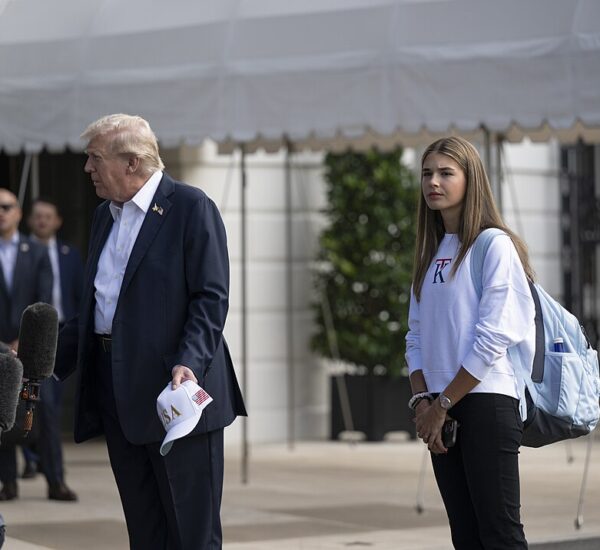
Democrats are fuming again.
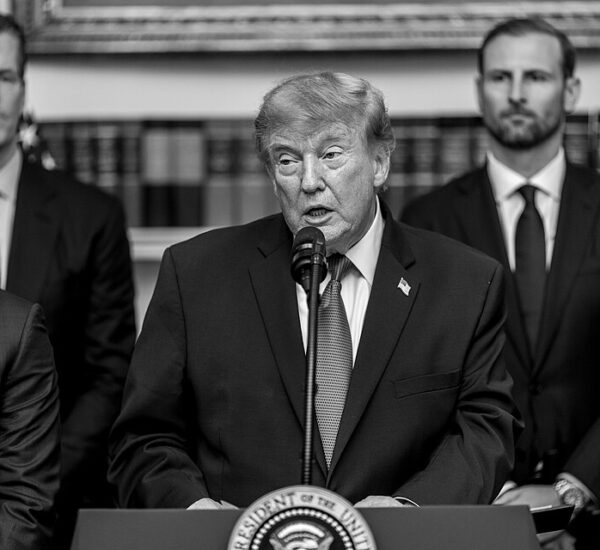
President Donald Trump has never been shy about defending his intelligence. But his latest remarks at an Arizona rally have reignited a national conversation after he described himself as a “freaking genius” for remembering five words during a cognitive examination.
The president made the statement on October 14, 2026, while addressing supporters in Bullhead City, Arizona, ahead of the upcoming midterm elections.
Trump, now 80 years old, was discussing his mental sharpness when he explained how he had performed on cognitive tests administered by medical professionals.
According to Trump, his ability to remember five words in the correct order was so impressive that the people administering the examination were amazed.
His explanation prompted an enthusiastic response from the crowd. It also quickly attracted attention from political commentators and news organizations across the country.
But what exactly happened during the test, and why does Trump believe his performance demonstrates exceptional intelligence?
Trump Says His Memory Test Proves He’s Exceptionally Smart
During his speech, Trump described an exercise that required him to memorize five unrelated words and repeat them after a period of time.
The words he identified were “hat, hair, logo, white, black.”
According to the president, the examination began with relatively simple questions before progressing to more demanding exercises.
Trump explained that after hearing the five words, he repeated them correctly. He said the examiner later asked him to recall the same words after approximately 30 minutes and numerous additional questions.
The president claimed that he successfully remembered all five words in their original order.
He also described the reaction of the medical professionals, claiming they were astonished by his performance.
Trump then offered his own explanation for why he had succeeded.
“Because I’m a freaking genius,” the president declared.
The statement became one of the most widely discussed moments of his Arizona appearance.
Trump maintained that recalling the words in their correct order was particularly impressive and suggested that very few people could accomplish the same task.
His comments reflected his longstanding belief that his intelligence and mental abilities have been underestimated by political opponents.
Trump Defends His Mental Sharpness at Age 80
The president’s remarks come as questions about the age and fitness of American political leaders remain prominent in public discussion.
Trump celebrated his 80th birthday in June 2026, making him the oldest person to serve as president of the United States.
Throughout his political career, he has frequently challenged critics who question his mental sharpness, physical stamina, or ability to manage the demands of the presidency.
Trump has repeatedly cited cognitive examinations as evidence that he remains capable of handling difficult responsibilities.
At the Arizona rally, he said he had taken multiple cognitive tests and performed well on them.
He also described additional examination questions involving arithmetic, arguing that the tests became increasingly difficult.
For Trump, discussing these examinations provides an opportunity to counter criticism and emphasize his confidence in his own abilities.
However, the president’s statements about the difficulty of the tests and the reactions of the examiners represent his account of those experiences.
They do not independently establish his intelligence level or provide a complete medical evaluation.
What Do Cognitive Tests Actually Measure?
The distinction between a cognitive examination and an intelligence test is important.
Cognitive screenings are designed to help medical professionals assess several mental functions, including memory, attention, language, and problem-solving.
One commonly used examination is the Montreal Cognitive Assessment, also known as the MoCA.
According to the National Library of Medicine, cognitive testing can help identify possible problems with memory and other thinking abilities.
These examinations may include tasks such as remembering words, identifying animals, drawing a clock, or completing basic calculations.
The purpose is generally to screen for possible cognitive impairment rather than determine whether someone possesses extraordinary intelligence.
A person who performs well on a cognitive screening may demonstrate healthy functioning in the areas being assessed.
However, remembering five words does not automatically establish that someone has a genius-level IQ.
Traditional intelligence tests evaluate a different range of abilities and use different scoring methods.
Similarly, an individual who performs poorly on a single screening exercise cannot be diagnosed with a medical condition based on that result alone.
Medical professionals evaluate the broader picture before drawing conclusions about cognitive health.
This distinction matters because presidential health is a serious subject, regardless of political affiliation.
Why Trump’s Comments Are Generating So Much Attention
Trump’s remarks were delivered during an important political moment.
With the November 3 midterm elections approaching, the president has been working to rally Republican voters and encourage support for candidates aligned with his administration.
His Arizona appearance was part of that broader political effort.
While economic issues, immigration, government spending, and national security remain major concerns for voters, Trump’s discussion of his cognitive testing quickly became a separate news story.
That is partly because of his unusual choice of words.
Presidents have traditionally relied on medical reports, public appearances, and statements from physicians when discussing their health.
Trump, however, frequently addresses personal criticism directly during campaign speeches.
His willingness to speak openly about his own intelligence has become a recognizable part of his political style.
Supporters often appreciate his confidence and refusal to retreat from public criticism.
Opponents frequently challenge his descriptions of events and question whether the claims he makes about himself are supported by independent evidence.
The result is another political disagreement surrounding a president who has spent years at the center of national attention.
Should Presidents Be Required to Take Cognitive Tests?
Beyond Trump’s personal remarks, the controversy raises an issue that extends to every American president.
Should the public receive more detailed information about the cognitive health of elected leaders?
The president of the United States holds responsibilities involving military decisions, international relations, national emergencies, and the nation’s economy.
Those duties require concentration, judgment, communication, and the ability to process complicated information.
For that reason, presidential health has long been considered a legitimate matter of public interest.
Some Americans believe regular cognitive screenings and voluntary disclosure of results could provide reassurance about a president’s fitness for office.
Others argue that medical privacy deserves consideration and that no single examination can determine whether someone is qualified to lead the nation.
There is also an important difference between medical fitness and political effectiveness.
A president can perform well on a cognitive assessment without necessarily making decisions that every voter supports.
Likewise, disagreements over government policy are not medical evidence of cognitive problems.
Understanding that distinction can help Americans evaluate presidential performance without confusing political opinions with medical conclusions.
Trump Continues to Make His Intelligence a Political Issue
Trump’s latest comments are consistent with his longstanding approach to responding to criticism.
Rather than avoiding questions about his age or mental abilities, he frequently uses public appearances to challenge those raising doubts.
His description of the five-word memory exercise offered another example of that strategy.
The president portrayed his reported performance as evidence of unusual mental ability and suggested that critics were failing to recognize his accomplishments.
The actual medical significance of the exercise is more limited than his description suggested.
Nevertheless, the episode illustrates how questions about presidential age and health continue to influence American political conversation.
As voters prepare for the midterm elections, those concerns will compete with broader debates about the economy, border security, government priorities, and the direction of the country.
For many Americans, the ultimate measure of presidential leadership will not be a memory exercise but the decisions made in the White House and their consequences for the nation.
The Bigger Question About Presidential Leadership
Trump’s declaration that he is a “freaking genius” may have provided an attention-grabbing moment, but it also raises a question worth considering.
What qualities matter most when evaluating a president?
Intelligence and memory certainly play important roles, but the responsibilities of the presidency require much more.
Experience, sound judgment, effective leadership, and the ability to navigate difficult situations also matter.
Trump clearly believes his reported cognitive test performance demonstrates that he remains mentally sharp and capable.
His critics disagree with the significance he attaches to the results.
Ultimately, Americans are free to reach their own conclusions based on the available evidence and their assessment of his presidency.
One thing is certain: Trump has once again turned a personal response to criticism into a national political headline.
And with the midterm elections approaching, discussions about his leadership and fitness for office are unlikely to disappear.
What do you think? Does Trump’s performance on cognitive tests demonstrate his mental sharpness, or should his record as president be the deciding factor?